
The model of raising eels in cement tanks generates over 600 million VND per year.
(Baonghean.vn) - With a total area of only 132 m2 of mudless eel farming tanks, but using a scientific and unique farming method, the family of Mr. Ngo Sy Quan in Hamlet 6, Quynh Doi Commune, Quynh Luu District, earns over 600 million VND in profit each year from selling commercial eels. This is also the first successful mudless eel farming model in Quynh Doi.
Always harboring the dream of becoming wealthy in his homeland, Mr. Ngo Sy Quan has been quite proactive in economic development, pursuing various professions. In particular, after numerous visits and learning from experience and techniques, Mr. Quan boldly chose to invest in a mudless eel farming model.
In early 2021, he began constructing 22 square tanks, each measuring 6 square meters, tiled around the sides and bottom to create a smooth surface, preventing animals from getting injured or scratched when moving around.
After completing the disinfection of the tanks, he chose to buy 10,000 semi-artificially bred eel fry of various sizes, ranging from 500 to 2,000 eels per kilogram, from the South to raise. Thanks to scientific and proper care, he encountered many advantages right from the first steps in the process of raising the fry.
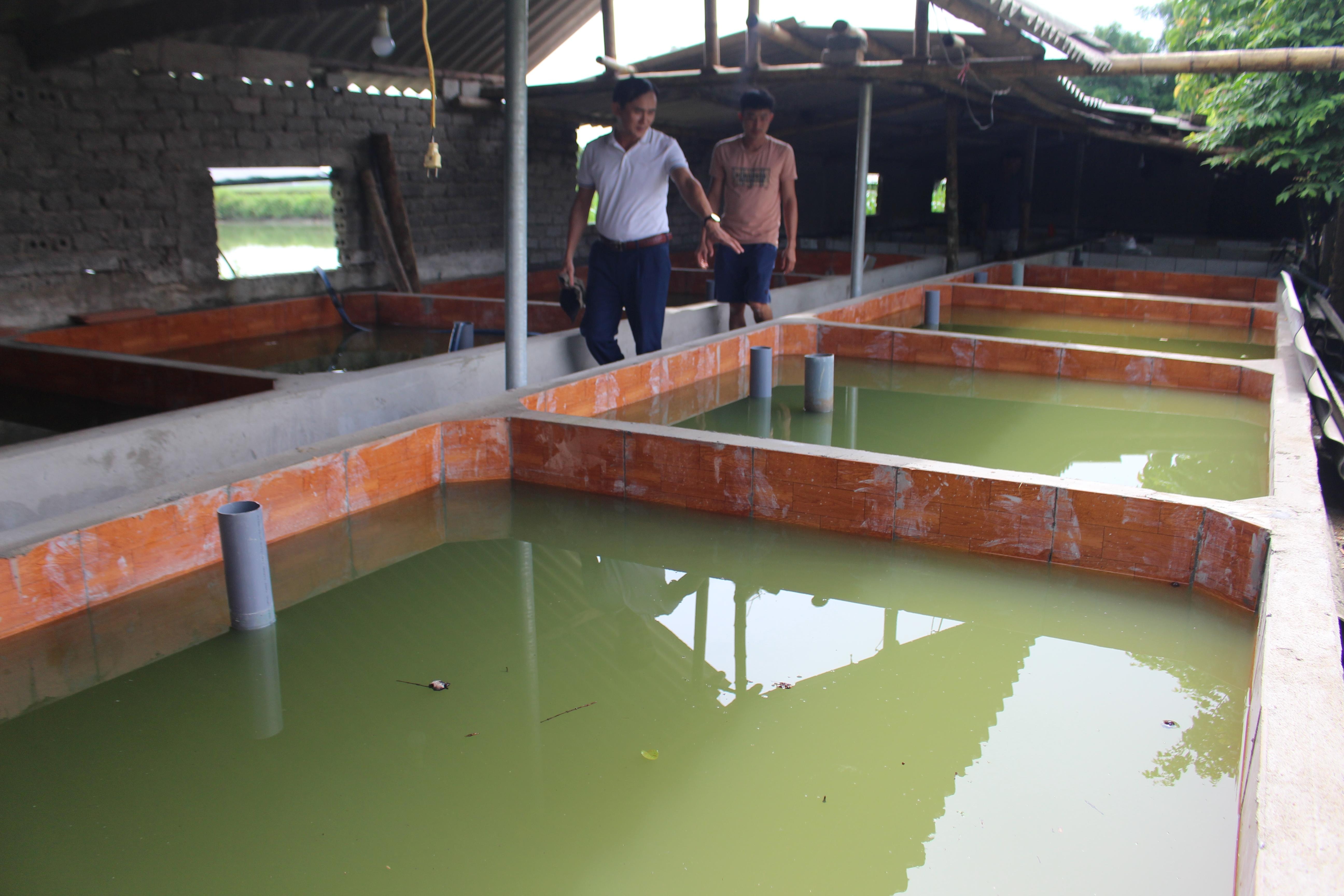 |
| The eel farm of Mr. Ngo Sy Quan's family has a total area of 132 square meters.2,It is planned to be built into 22 pools. Photo: Hong Dien |
Anh Quân shared: "To ensure eels grow and develop well, the first thing to focus on when setting up a breeding farm is to ensure good ventilation in the summer and provide shelter to create warmth in the winter."
At the same time, eels are quite sensitive to the water environment in the breeding tank, so he changes the water twice a day, at the same time every morning and afternoon. The water is sourced from canals, so before putting it into the breeding tank, he usually passes the water through a filtration system containing charcoal, sand, and stones to filter out impurities such as iron sulfates. After changing the water for 30 minutes, when the eels have stabilized, he then feeds them to avoid shock.
In addition, he always focuses on preventing and treating common eel diseases such as intestinal hemorrhagic fever, fungal infections, diarrhea, etc., by mixing antibiotics and sprinkling them on the surface of the tank. What's special is that every day he plays music for the eels to help them get used to unfamiliar sounds, preventing them from being startled or dying suddenly.
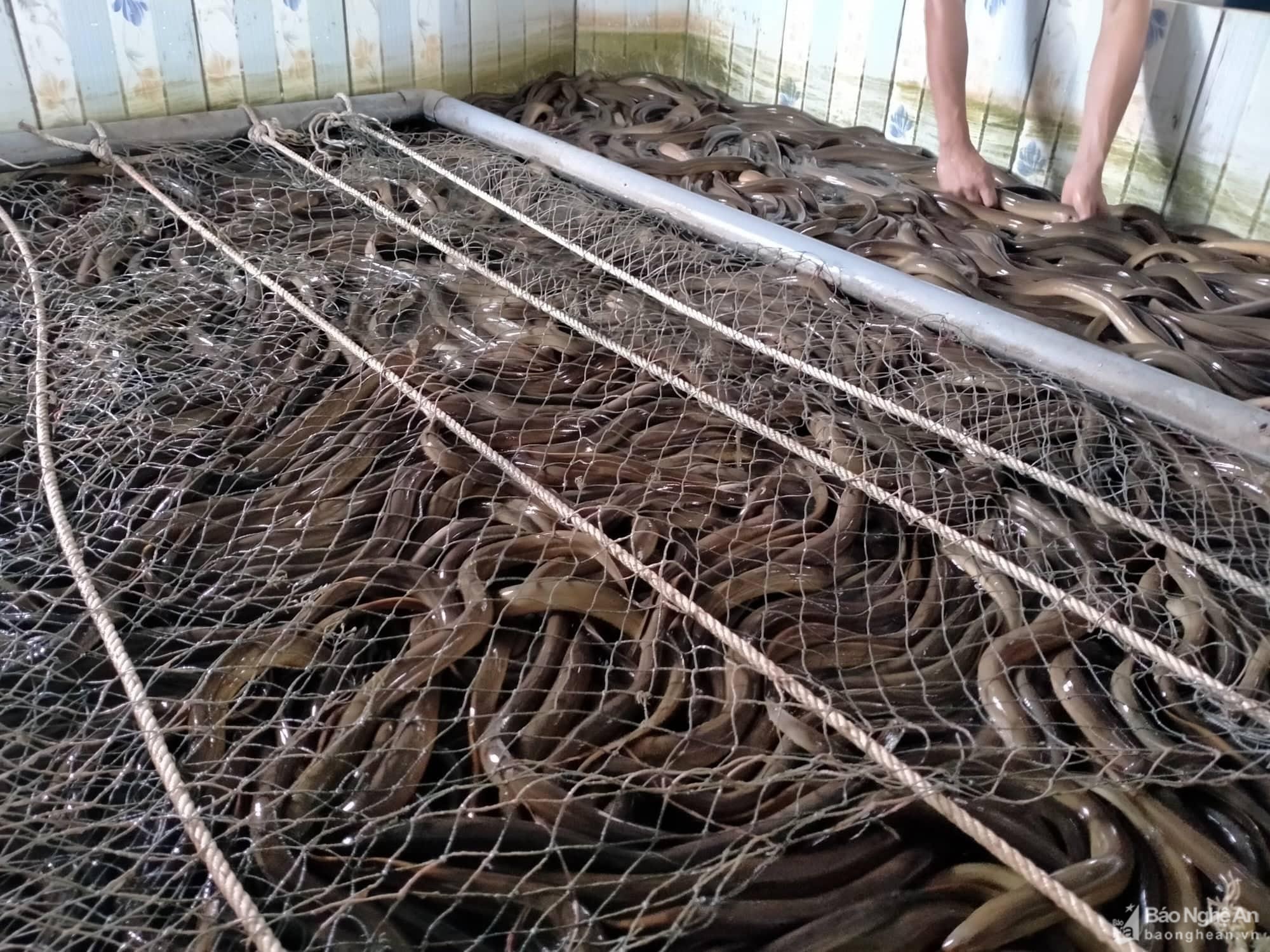 |
| After 12 months of raising, when the eels reach a weight of 300-400 grams each, Mr. Quan's family proceeds to sell them. Photo: Hong Dien |
During the breeding process, Mr. Quan realized that eels are very easy to raise, require less complicated care than other animals, have a survival rate of over 97%, and are especially valuable economically.
After 12 months, when the eels reach a weight of 300-400 grams per eel and a length of 55-60 cm, he proceeds to sell them. At his farm, when traders from the northern provinces come to buy the product, they always test the eels for residues of growth hormones, antibiotics, or other growth stimulants. Only if they meet the standards do they proceed with the purchase, ensuring the health of consumers. Thanks to adhering to the care steps, Mr. Quan sells 6-7 tons of eels to the market each year. At a purchase price of 170,000 VND/kg, after deducting expenses, he earns a profit of 30-35 million VND per 6m² tank.2To limit the amount of produce available at the same time, Mr. Quan chose to raise them in rotation, with each tank typically harvested two months apart.
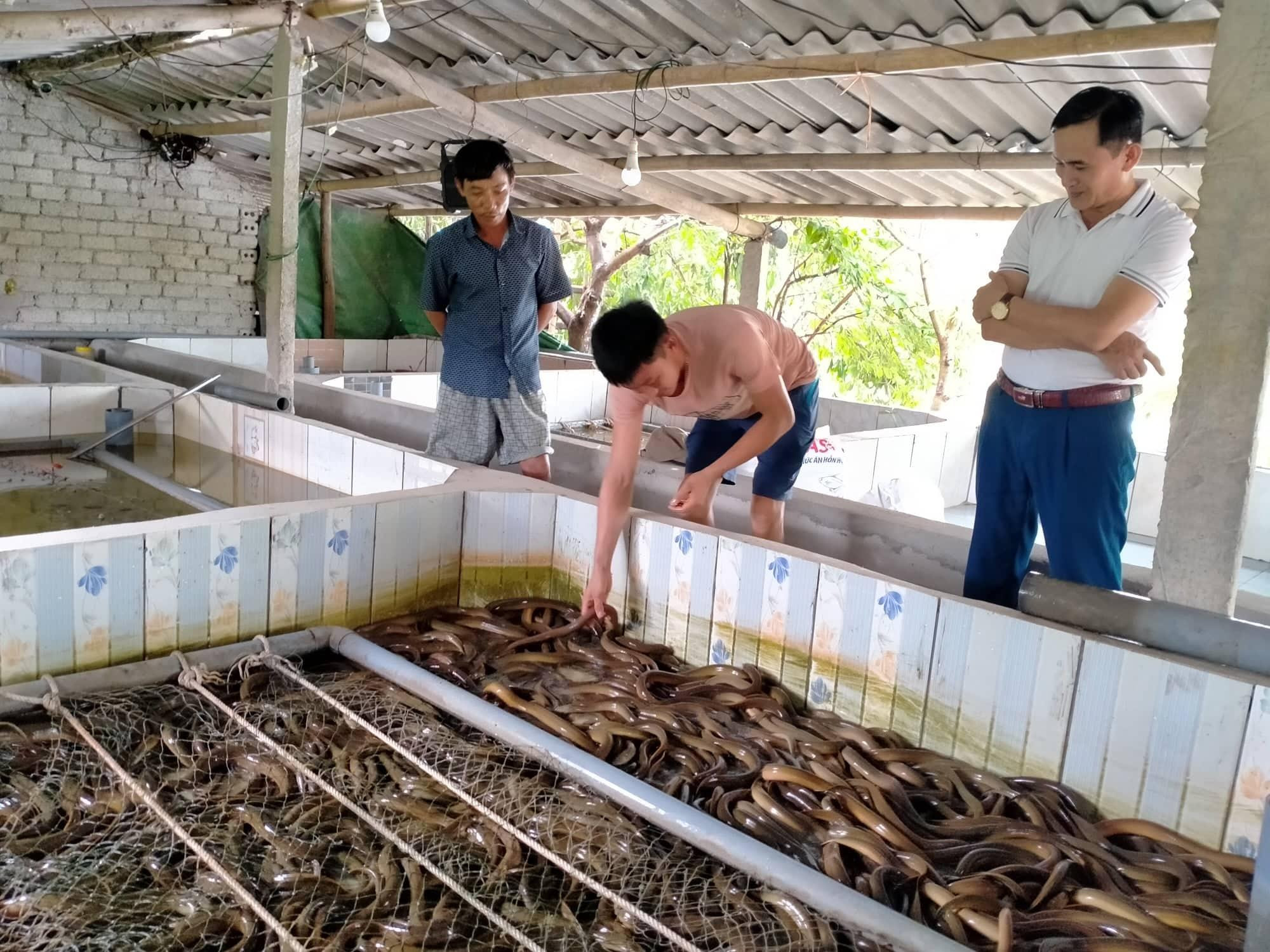 |
Each pool has an area of only 6 square meters.2However, after harvesting and deducting expenses, the farmers earn a profit of 30-35 million VND. Photo: Hong Dien |
Recognizing the strong market demand for commercial eels, Mr. Quan plans to further expand his operation, increasing the number of mudless eel farming tanks. Furthermore, he is willing to share his tank construction methods, experience, techniques, disease prevention and treatment methods, and supply breeding stock to those interested in semi-artificial eel farming, thereby developing household economies and contributing to the diversification of livestock in the locality.
“The mudless eel farming model of Mr. Ngo Sy Quan's family is a new and highly economically valuable model in Quynh Doi commune. Surveys show that this type of eel is easy to raise, yields high productivity, and most importantly, the market and prices are stable, and the quality of the eels sold is verified; its economic value is significantly higher than other types of farmed animals. The People's Committee of the commune will coordinate with the Farmers' Association to organize visits and learning experiences for those interested in farming eels, in order to replicate the model throughout the area and increase income per unit area,” said Mr. Ho Bao Thong, Chairman of the People's Committee of Quynh Doi commune, Quynh Luu district.


