
Nguyen Sinh Cung accompanied his father to worship at the Quả Sơn temple.
The Quả Sơn Temple in Bạch Ngọc (now Bồi Sơn commune, Đô Lương district) is dedicated to Lý Nhật Quang. He was the eighth son of King Lý Thái Tổ and was granted the title of Uy Minh Vương. In the spring of 1902, Nguyễn Sinh Cung, while traveling with his father to teach and explore his homeland, visited the Quả Sơn Temple – one of the four most sacred temples in Nghệ An province.
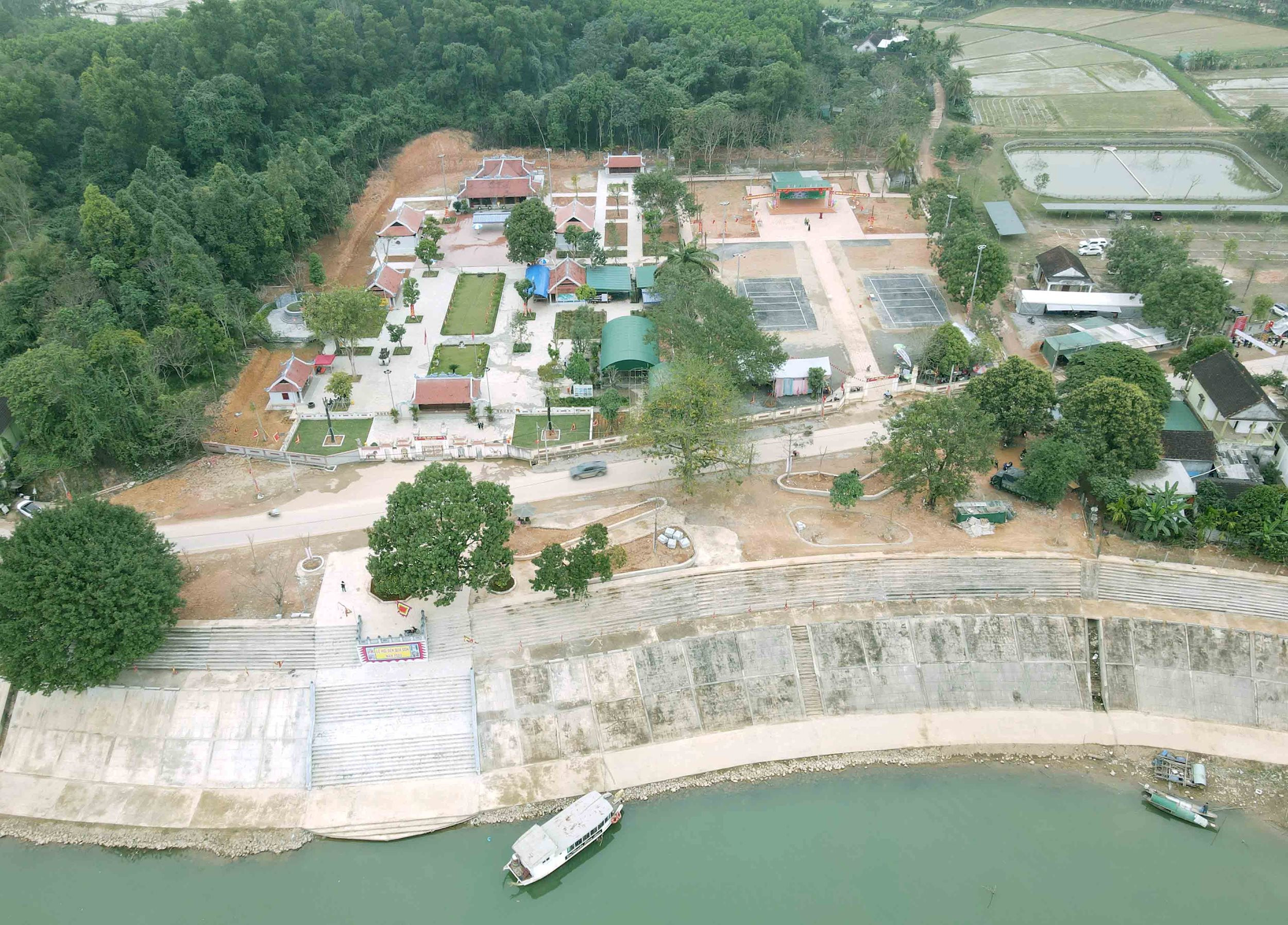
In H. Le Bereton's "An Tinh Ancient Records," it is stated that in Nghe An province, there are four famous and most sacred temples: Corn Temple, Qua Temple, Bach Ma Temple, and Chieu Trung Temple.
Cờn Temple, the most sacred temple dedicated to the "Four Divine Holy Mothers," is located in Phuong Can village, Quynh Phuong commune, Quynh Luu district.
The Bach Ma Temple, whose official name is "Bach Ma Tu," is located in Tan Ha village, now part of Vo Liet commune, Thanh Chuong district. It is dedicated to General Phan Da, a young general of the rebel army of King Le Loi of Binh Dinh, and is called "Do Thien Dai De Bach Ma Thuong Dang Phuc Than."
The Chiêu Trưng Temple is located on Long Ngân Mountain, Thạch Bàn commune, Thạch Hà district, Hà Tĩnh province. It is dedicated to Chiêu Trương Đại Vương Lê Khôi, a general of Bình Định Vương Lê Lợi.
In two unfinished manuscripts, writer Son Tung, titled "Stories about President Ho Chi Minh from a hundred years ago that are not easily understood" and "Dao Tan's reflection after a hundred years," mentions a story from his childhood when President Ho Chi Minh accompanied his father to worship at the Qua Son temple in Bach Ngoc (Boi Son) commune, Do Luong district, Nghe An province.
In early spring, in January, it was common for officials, teachers, or those working far from home to return to their hometowns for Tet (Lunar New Year). Taking advantage of the pleasant weather, Deputy Scholar Sac took his two sons, Nguyen Sinh Khiem and Nguyen Sinh Con (Ho Chi Minh's childhood names), to visit benefactors and friends who had helped him achieve his academic success. This trip also provided an opportunity for his sons to learn about current events and to connect with prominent scholars of the time, progressive intellectuals, and to experience the lives of the people and admire the scenery of the mountains, rivers, temples, and palaces in the province. Another reason was that Deputy Scholar Sac wanted to teach in Vo Liet (Thanh Chuong), at the invitation of families there who had heard of his reputation. That year, Nguyen Sinh Khiem was 14 years old, Nguyen Sinh Con 11, and Nguyen Thi Thanh 18. Miss Thanh had to stay home to care for her grandmother and look after the house.
According to what Mr. Nguyen Sinh Khiem recounted to writer Son Tung: "The three of them—Uncle Ho and his two sons—walked, stopping at each stop along the way."
First, they went to a friend's house in Cau Ram - Vinh to arrange for the two brothers Nguyen Sinh Khiem and Nguyen Sinh Con to secretly study the Vietnamese Quốc ngữ script and visit the Governor-General of An Tinh, Dao Tan. The next day, the three of them went to Dong Chu village, Nghi Loc district, Nghe An province to visit teacher Nguyen Thuc Tu, who had passed the Bachelor's degree examination in the Mau Thin year (1868), the same year as Mr. Ho Sy Tao. They crossed the Cam mountain to Dien Chau land, admiring the magnificent Cuong temple on Mo Da mountain, and the high-built Phu Dien citadel, surrounded by deep moats, both inside and outside. On the citadel walls, horse-drawn carriages of two and four horses ran...
Visiting the residence of Grand Academician Cao Xuan Duc in Thinh My village to express gratitude for the past year's imperial examination, stating that "if it weren't for Mr. Cao Xuan Duc's presence as Chief Examiner to review the results, the two candidates Phan Chu Trinh and Nguyen Sinh Sac would have failed once again."
After bidding farewell to the Cao Xuan Duc family, Nguyen Sinh Sac and his son headed towards Thanh Trai, then turned down to Van Phan village to visit and stay at the house of Vo Tat Dac, who had recently resigned from his official position to teach. The following afternoon, they passed through Kim Luy village and, with the help of Tu Bui Xuan Phong, went to Quynh Doi village in Quynh Luu district to visit Ho Sy Tao. Ho Sy Tao, the prefect and laureate, was a close friend of Tu Hoang Xuan Duong, the teacher of Grand Scholar Cao Xuan Duc and the Head of Education Tran Dinh Phong. Thanks to Ho Sy Tao's recommendation, both of these students helped Nguyen Sinh Sac gain admission to the National Academy.
After spending a few days visiting and conversing with the scholars of Quynh Doi village, the three men, including Deputy Scholar Sac, returned to Yen Thanh district to visit the family of the Head of Education Tran Dinh Phong - a fellow doctor of philosophy from the Ky Mao examination (1879) in Yen Ma village - and to visit fellow students such as Phan Tu Tri from Xuan Tieu commune, Nguyen Van Te from Quy Trach commune, etc.
From Yen Thanh district, crossing the "Headless General" mountain, the three members of the family of Deputy Scholar Sac went to Do Luong to travel by boat to Thanh Chuong. Uncle Khiem recalled with nostalgia:
- The other day, when the three of us were passing through Bach Ngoc commune, we saw that the Qua Son temple was even more majestic than the Thuc Phan An Duong Vuong temple. Con, surprised, asked his father:
- This goddess must have done something very important for the people to build such a magnificent temple in her honor, right, father?
- I think that's a bit rash. Among the officials, there are incompetent ones who exploit the people, and there are also those who are highly talented and virtuous, who benefit the people and are remembered by them with temples dedicated to them. You should remember that Quả Sơn Temple is where the official Lý Nhật Quang is worshipped. He was the eighth son of King Lý Thái Tổ and was granted the title of Uy Minh Hầu. In the year Tân Tỵ, King Lý Thái Tông appointed Lý Nhật Quang to govern Nghệ An. He contributed to expanding the territory and suppressing rebels in the west and south of the country.
He was the one who killed the Champa King Sa Dau when Sa Dau invaded our country. Agriculture, silkworm farming, silk weaving, fishing, and salt production flourished throughout Nghe An thanks to the efforts of Mandarin Ly Nhat Quang. Upon hearing that the court had invited Ly Nhat Quang back to Thang Long, the people of Nghe An flocked to the provincial headquarters to beg him to stay and continue governing the people. But he could not disobey the court's order. On his way back to Thang Long, sycophantic officials attempted to assassinate him, fearing that his presence at the court would expose them… The people of Nghe An, hearing this tragic news, spontaneously mourned him and successively built thirty-two temples to worship Uy Minh Hau Ly Nhat Quang.
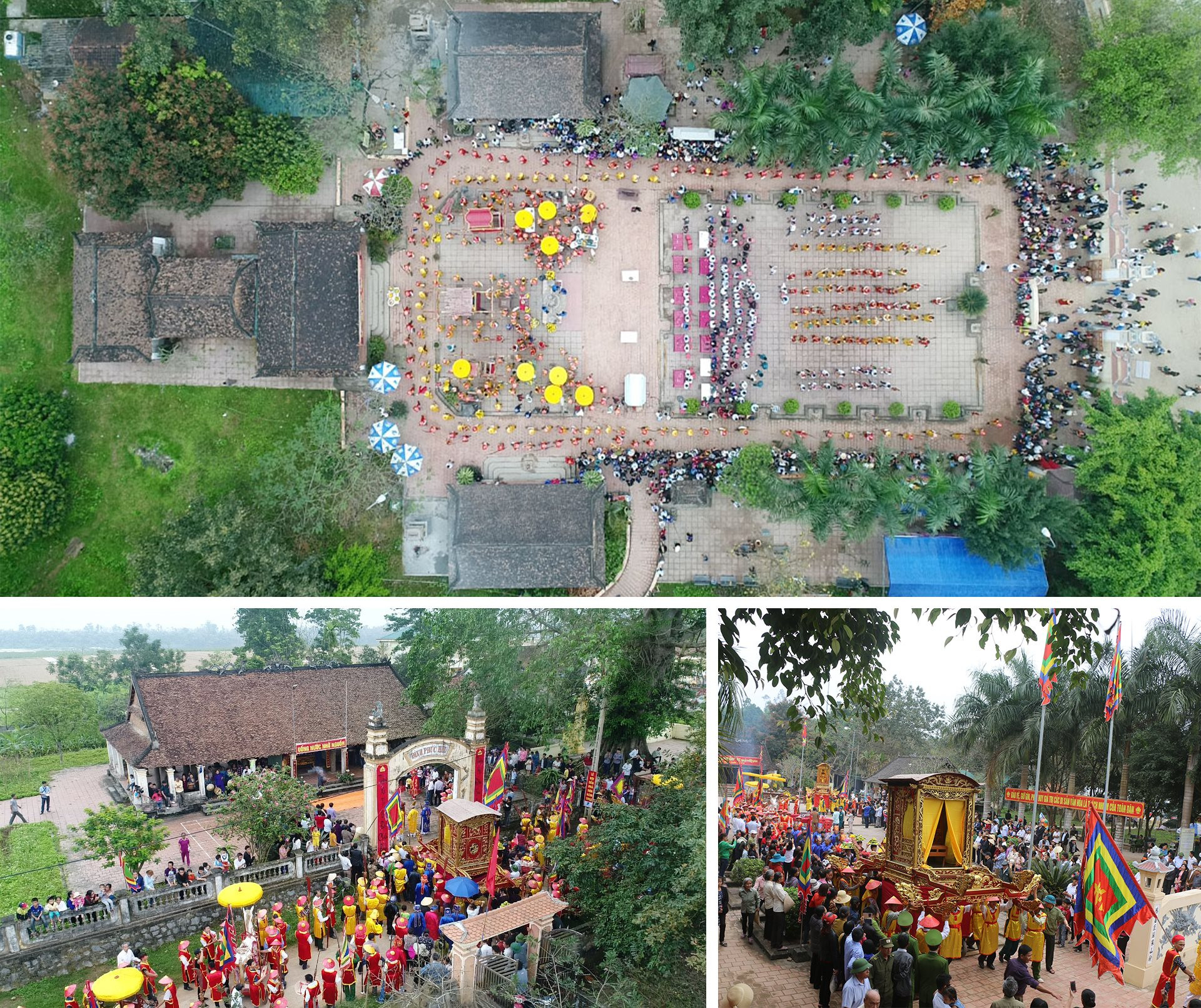
After visiting Quả Sơn Temple, the three members of the family, including Deputy Scholar Sắc, boarded a boat to Thanh Chương. Mr. Sắc taught in Võ Liệt village and left his two children with an acquaintance in Nguyệt Bổng village. Thanh Chương was also the place where Deputy Scholar Nguyễn Sinh Sắc stayed and taught for the longest time. Both Nguyệt Bổng and Võ Liệt villages also hold many childhood memories for President Ho Chi Minh.
According to writer Son Tung's account, Mr. Ca Khiem further stated: It was in January of the Year of the Tiger (1902). After visiting and resting in various places, upon returning to Do Luong to worship at the Qua Son Temple, he would then travel to Thanh Chuong a few days before or after the Qua Son Temple Festival.
- On that trip, besides teaching, my father wanted to meet with scholars in Quỳnh Đôi and Thanh Chương… to find out about the preparations for the second trip with the esteemed scholars Ngô Đức Kế, Đặng Nguyên Cẩn (Phó bảng), and Vương Thúc Quý (Cử nhân) to the North to find like-minded people after Phan Bội Châu established his secret society.
During his second trip to the North in 1903, Nguyen Sinh Con accompanied his father to Hanoi, while his uncle, suffering from a swollen lymph node in his groin and unable to walk for long periods, had to stay in Quynh Doi with the District Chief Dang Nguyen Can at the home of Mr. Ho Phi Thong. Later, by chance, the son of District Chief Dang Nguyen Can, Professor Dang Thai Mai, married Ho Thi Toan, the daughter of Mr. Ho Phi Thong. Mrs. Ho Thi Toan is the mother of Professor Dang Thi Ha, a historian and the wife of the late General Vo Nguyen Giap.
Source: Nghe An Culture Magazine


