
Utilize the Fuel Price Stabilization Fund flexibly to limit price increases.
People's Committees of provinces and centrally-administered cities shall proactively inspect the factors that determine prices in accordance with the Law on Prices and within their authority when goods experience unusual price fluctuations.
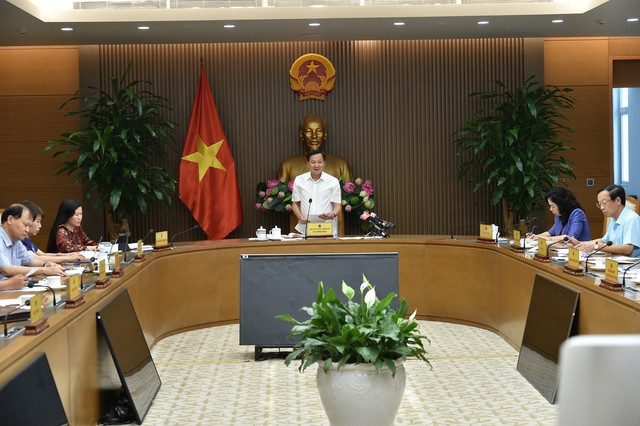 |
Deputy Prime Minister Le Minh Khai: The Ministry of Industry and Trade is proactively managing to ensure that the domestic supply of petroleum products is not interrupted, based on an assessment of the supply capacity from domestic production and imports. |
The Government Office has just issued Notice No. 179/TB-VPCP dated June 22, 2022, summarizing the conclusions of Deputy Prime Minister Le Minh Khai - Head of the Steering Committee for Price Management - at the meeting on June 13, 2022, regarding the price management of several groups of commodities.
In the first five months of 2022, against the backdrop of increasing global inflationary pressure, especially in North America and Europe due to the impact of the Russia-Ukraine conflict on the global supply chain of food, raw materials, fuel, and strategic materials, the Government, the Prime Minister, and the Deputy Prime Minister - Head of the Steering Committee for Price Management directed ministries, sectors, and localities to implement many positive, effective, and synchronized solutions in management and operation to stabilize prices and control inflation in the first five months of the year. As a result, the overall price level remained basically under control, with the average CPI for the first five months increasing by 2.25% and core inflation increasing by 1.1% compared to the same period in 2021.
In the coming period, inflationary pressure is likely to increase, and the prices of raw materials and fuels, especially petroleum products, are subject to significant fluctuations, impacting the price levels of many goods, including essential items such as gasoline, agricultural supplies, construction materials, transportation, and some service groups such as education and healthcare. This poses challenges in price management from now until the end of the year, requiring ministries and agencies, according to their functions in state management, to actively assess and understand the situation, prepare plans and forecast scenarios to advise the Government and the Prime Minister on appropriate solutions to control inflation according to the set targets.
To proactively address the challenges in price management during the remaining 7 months of 2022, based on the notification documents regarding specific solutions for price management in 2022 (Document No. 882/VPCP-KTTH dated February 10, 2022, Notification No. 65/TB-VPCP dated March 2, 2022, Notification No. 81/TB-VPCP dated March 24, 2022), it is requested that ministries, sectors, and localities continue to decisively implement solutions that are closely aligned with the actual situation, develop detailed plans, assign specific tasks to functional units within the system, and strengthen inspection and control to maintain stable market prices and contribute to controlling inflation according to the target.
Continue to closely monitor inflation trends and the response policies of other countries.
Specifically, the State Bank of Vietnam, in coordination with the Ministry of Finance and other ministries and agencies, will continue to implement a proactive and flexible monetary policy, closely coordinating with fiscal policy and other macroeconomic policies to control inflation according to the set target. It will continue to control core inflation in 2022 to create a basis for controlling overall inflation.
The Ministry of Foreign Affairs, in coordination with other ministries and agencies, continues to closely monitor the economic situation, inflation, and response policies of other countries, as well as price developments of fuels and strategic supplies, in order to promptly provide information to relevant agencies.
The Ministry of Finance proactively coordinates with the Ministry of Planning and Investment and the State Bank of Vietnam to further strengthen the work of synthesizing, analyzing, forecasting, and developing specific, detailed scenarios that closely reflect the actual situation, assisting the management and operation of the Government and ministries and agencies.
The People's Committees of provinces and centrally-administered cities shall exercise state management over goods within their jurisdiction, strengthen inspection and supervision, and implement appropriate price stabilization measures; proactively inspect the factors forming prices as stipulated in the Law on Prices and within their authority when goods experience unusual price fluctuations.
The Ministry of Information and Communications, in coordination with other ministries and agencies, continues to focus on information dissemination and public awareness campaigns, ensuring transparency in price information to control inflationary expectations; and limiting misleading information that causes panic among consumers and destabilizes the market.
Regarding the work of drafting and perfecting legislation, the Ministry of Finance closely followed the directives in Official Letter No. 3173/VPCP-PL, which conveyed the instructions of Deputy Prime Minister Pham Binh Minh on the 2023 legislative and ordinance drafting program, adjusted for 2022, to finalize the draft Law on Prices, ensuring timely progress. Ministries and sectors proactively coordinated closely with the Ministry of Finance in providing input as well as implementing the drafting and amendment of related draft laws (such as the Land Law, the Law on Medical Examination and Treatment, the amended Telecommunications Law, etc.) to ensure the synchronization and uniformity of the system of legal documents.
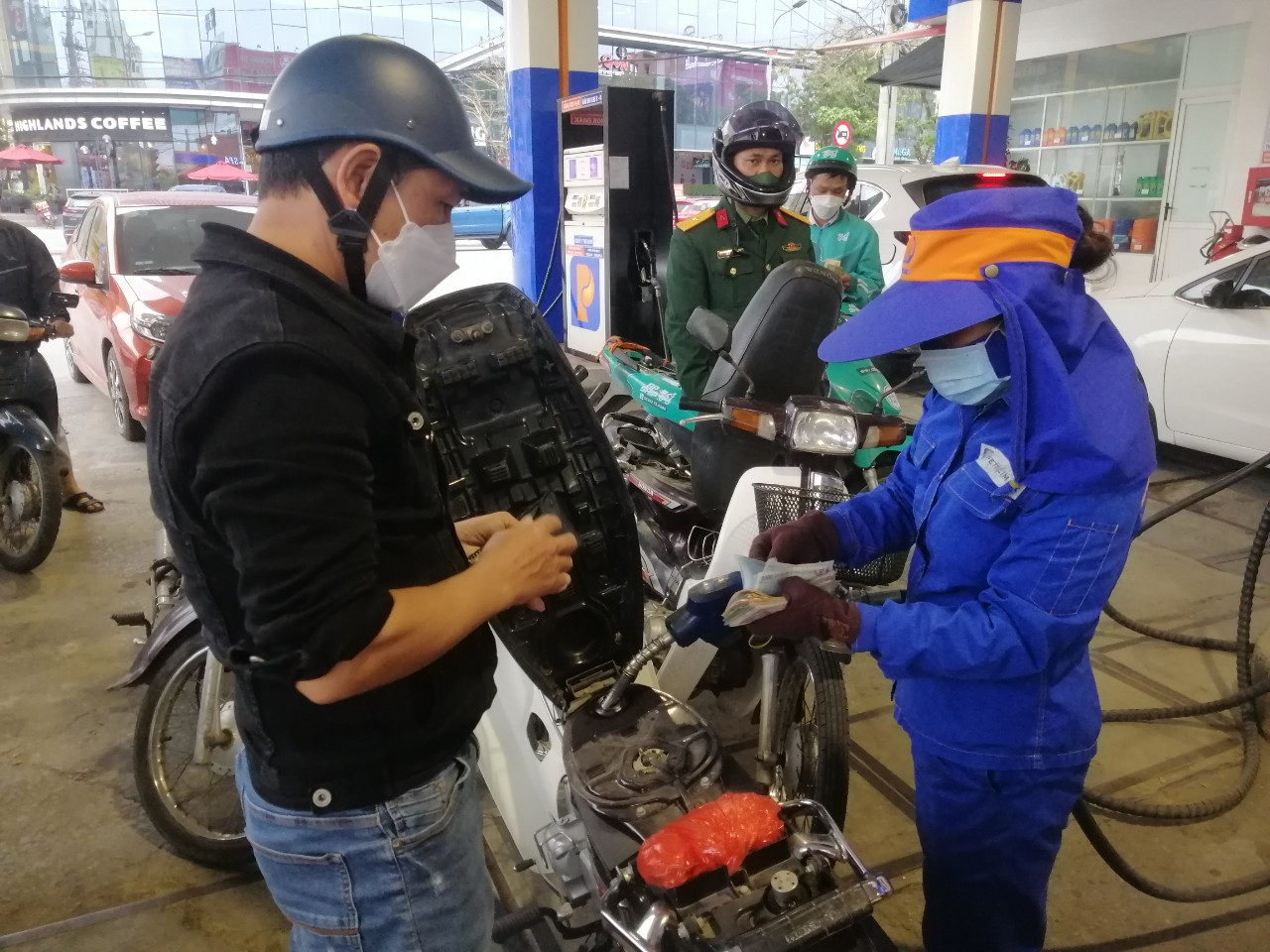 |
People refuel at a gas station in Vinh City (Nghe An province). Photo: Quang An |
Ensure that the domestic supply of petroleum products is not disrupted.
For specific goods, the ministries managing the respective sectors and fields, in coordination with the People's Committees of provinces and centrally-administered cities, will focus on removing obstacles to production and business to ensure sufficient supply of goods to meet consumer demand, facilitating the circulation and distribution of goods and services. In case of significant price fluctuations, based on the provisions of the Price Law, appropriate price stabilization measures will be proposed and implemented.
Specifically, for goods and services whose prices are set by the State, it is necessary to carefully calculate the options and assess the impact on the overall price level and inflation control targets in order to develop specific management plans to report to the Steering Committee for Price Management and the Prime Minister for consideration and decision.
The Ministry of Industry and Trade proactively manages to ensure uninterrupted domestic fuel supply based on an assessment of domestic production capacity and imports; closely monitors world price developments to develop appropriate domestic fuel price management plans; and flexibly utilizes the Fuel Price Stabilization Fund to limit domestic fuel price increases during periods of significant fluctuations. The State Capital Management Committee directs the Vietnam Oil and Gas Group (PVN) to promptly submit a report on the fuel supply plan of the Nghi Son Refinery to the Ministry of Industry and Trade as a basis for developing a plan to ensure fuel supply for the third quarter and the end of 2022.
The Ministry of Transport continues to strengthen inspection and supervision of price declarations, price listings, and the sale of tickets at the listed prices by transport businesses; and reviews price increases to ensure they are consistent with the developments and structure of fuel costs in transport costs.
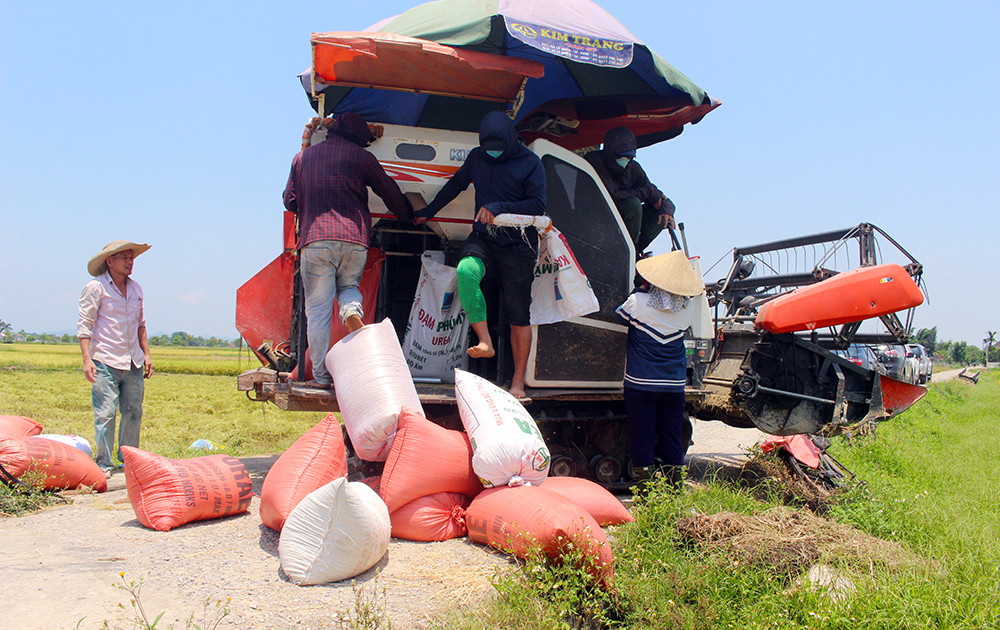 |
The joy of a bountiful harvest for farmers in the spring of 2021. Photo: Phu Huong |
Strengthen inspection and control of the quality and price of input materials for agricultural production.
Regarding construction materials, the Ministry of Natural Resources and Environment and the Ministry of Construction will coordinate with other ministries, sectors, and localities to effectively manage the supply; preventing hoarding and disruptions to the supply chain. The Ministry of Transport and other ministries, sectors, and investors of construction projects will proactively compile a list of construction materials according to the technical requirements of transportation projects, especially materials used for highways, and send it to localities with the necessary resources to determine and announce prices as prescribed. Localities should focus on promptly announcing construction material prices as required; and coordinate with ministries and sectors to ensure the circulation and supply of construction materials.
The Ministry of Agriculture and Rural Development is strengthening inspection and control of the quality and prices of input materials for production; coordinating with the Ministry of Industry and Trade to direct fertilizer production enterprises to maintain and maximize capacity to quickly and promptly supply fertilizers to the market; and serving domestic needs. It is also strengthening inspection and supervision of the production and business activities of animal feed and fertilizers.
Regarding pork products, the Ministry of Agriculture and Rural Development focuses on ensuring supply, especially during the end of the year; the Ministry of Industry and Trade and the People's Committees of provinces and centrally-administered cities strengthen control over intermediate stages and distribution in the market.
Regarding the pricing of medical examination and treatment services, and the pricing of education, training, and vocational education services, the Ministry of Health, the Ministry of Education and Training, and the Ministry of Labour, Invalids and Social Affairs, based on the regulations in Government Decree No. 60/2021/ND-CP dated June 21, 2021, and according to their assigned functions and tasks, shall preside over and carefully assess the impact, propose appropriate solutions, and report to the Prime Minister for submission to competent authorities for consideration and decision, after obtaining the appraisal opinion of the Ministry of Finance, ensuring prudence, limiting the impact on the overall price level and the inflation control target.
The Ministry of Finance, in coordination with the Ministry of Education and Training, will carefully study the law on pricing to manage textbook prices in accordance with the actual situation, with a clear adjustment roadmap; continue to receive price declarations according to legal regulations; and publishing units will continue to review and implement cost-saving measures to further control inflation, ensure social welfare, and share the burden with consumers.


