 |
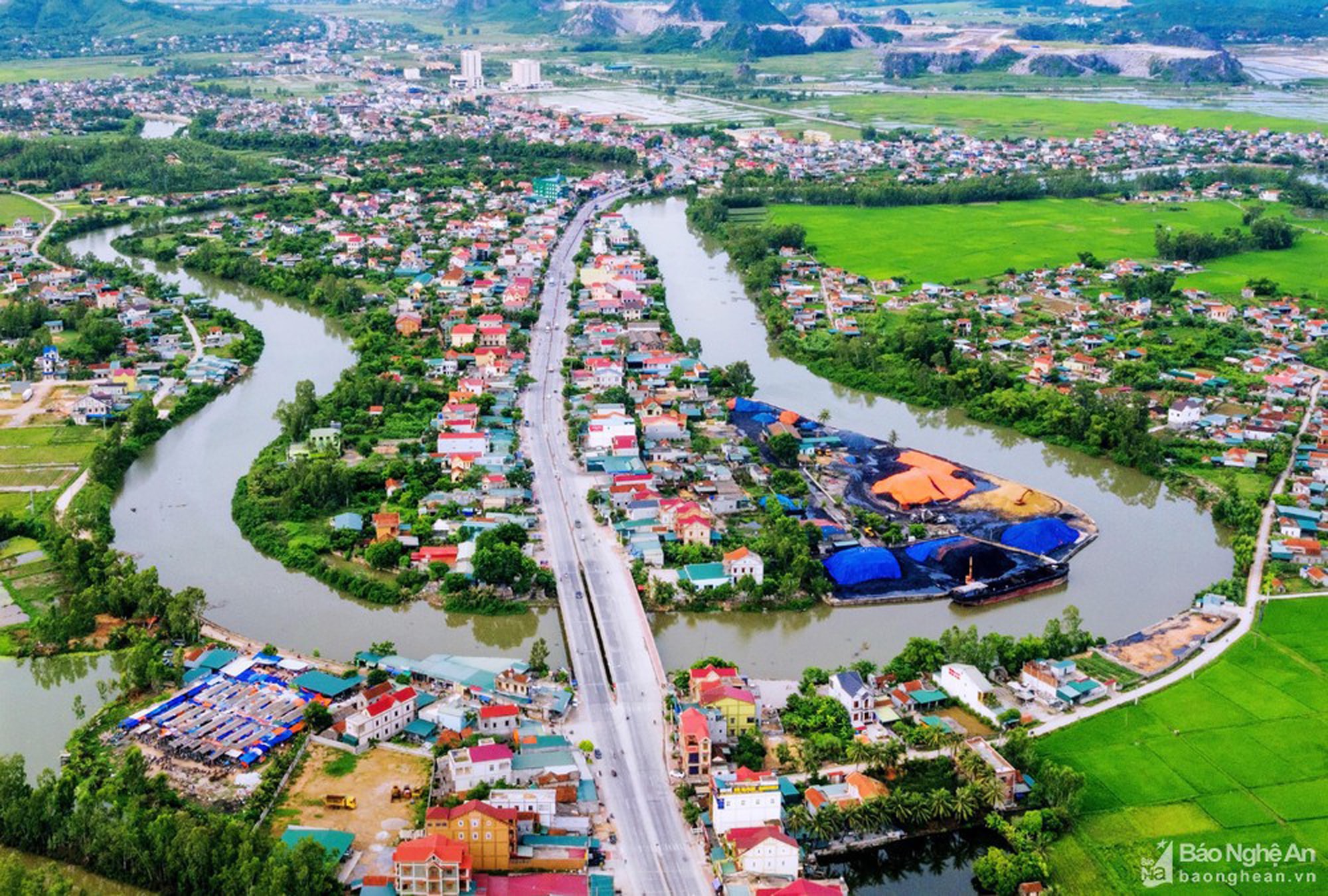
| Hoang Mai town viewed from above. Photo: Nhat Thanh |
RICH IN HISTORICAL AND CULTURAL DEPOSITS
Hoang Mai is the northern gateway to Nghe An province, located about 220km south of Hanoi. The town is situated at the intersection of the two largest cities in North Central Vietnam: Thanh Hoa City and Vinh City. If Nghe An is a microcosm of Vietnam, then Hoang Mai is a microcosm of Nghe An itself: it embodies all three ecological zones of the province – sea, plains, and mountains; the town is traversed by the vital North-South highway – National Highway 1; and the clear, winding Mai Giang River deposits fertile alluvial soil… All of this has created prosperous and charming villages and towns in Hoang Mai. On a national scale, few localities possess such a unique and distinctive geographical location and landscape.
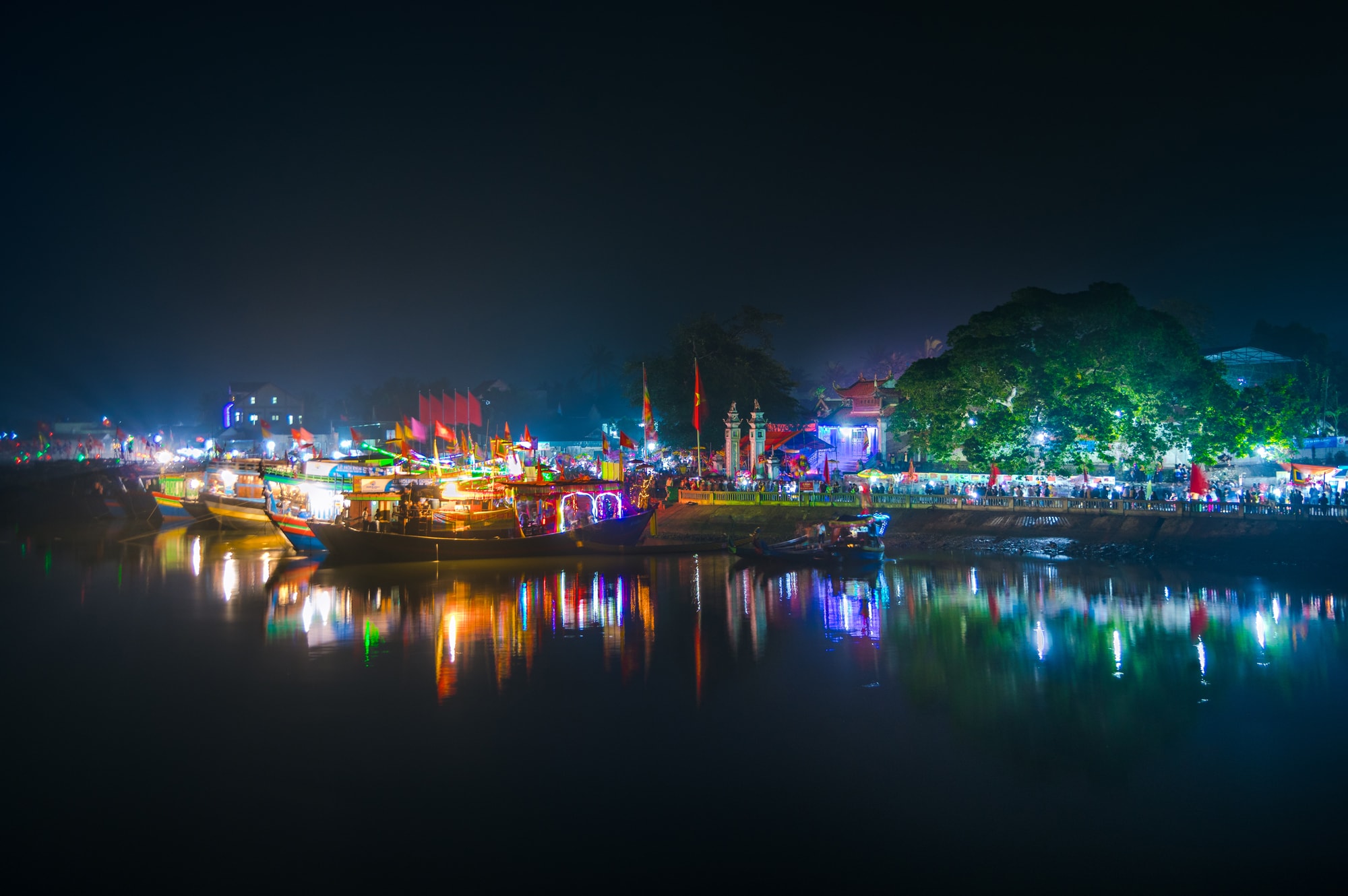 |
| The Cờn Temple festival takes place at night. Photo: Nghe An Department of Tourism. |
Hoang Mai town is very "rich" in historical and cultural values, with 75 historical and cultural relics and scenic spots, and nearly 80 intangible heritage values that have been researched, managed, and ranked (including 6 national-level relics and 7 provincial-level relics). Notable examples include: Corn Temple (Quynh Phuong ward - considered the most sacred place in Nghe An province); Vu Temple (Quynh Vinh commune) dedicated to Uy Minh Vuong Ly Nhat Quang; Xuan Uc Temple (Quynh Lien commune) dedicated to General Dang Te; Xuan Hoa Temple (Quynh Xuan commune) dedicated to Cao Son Cao Cac; Phung Hung Temple (Quynh Xuan commune) dedicated to Phung Hung, Princess Phuong Dung, Princess Bach Y, Princess Uyen Hoa...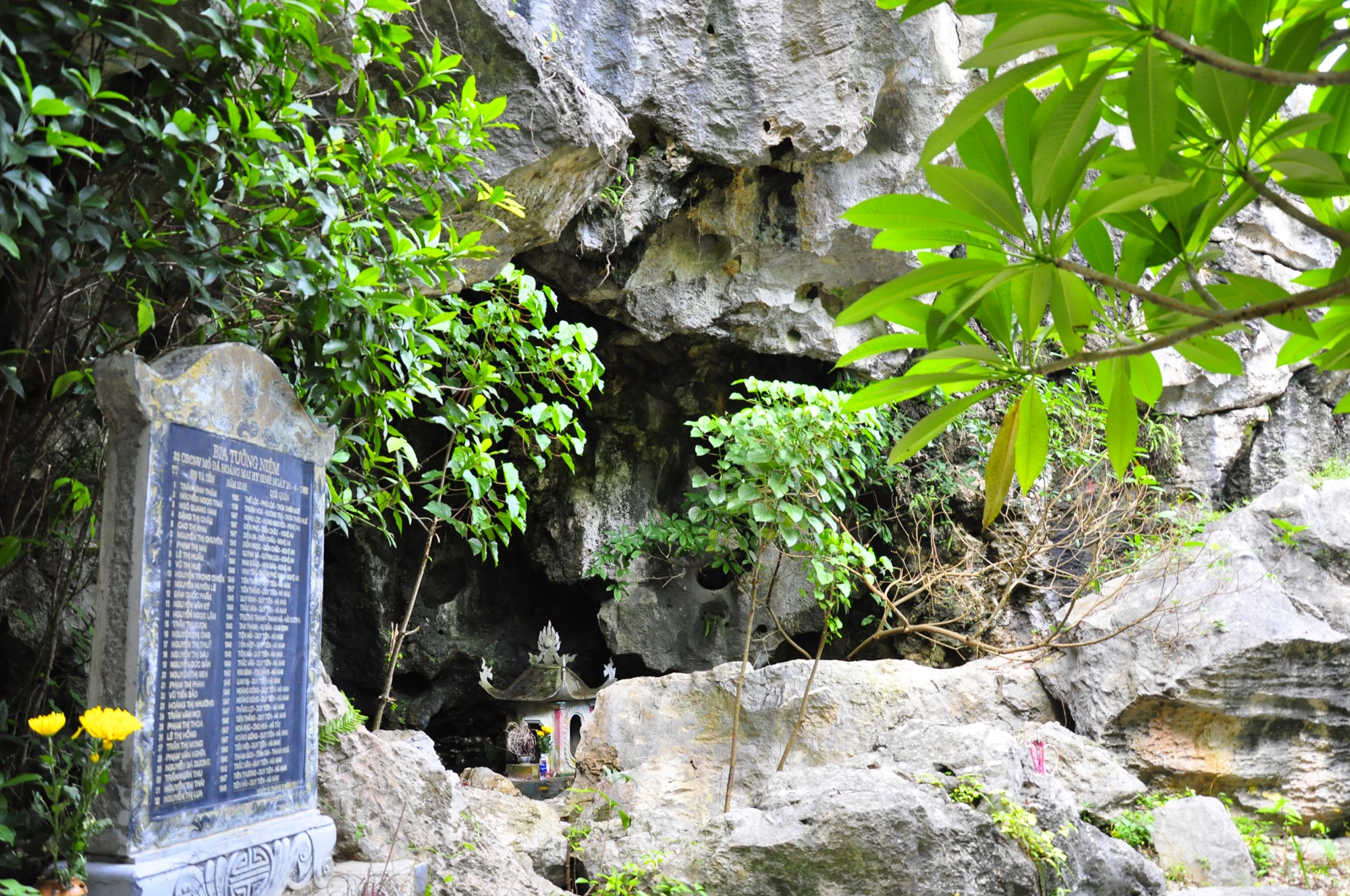 |
| Rocket Cave - a testament to the sacrifice of 33 young volunteer soldiers of the railway industry. Photo by Thanh Chung. |
Among this diverse and rich system of historical sites, the Le Dynasty Canal stands out – a canal connecting the capital Hoa Lu to Deo Ngang Pass. This waterway is considered the first inland waterway in Vietnamese history, dug during the reign of King Le Hoan to transport military supplies to the south of Dai Co Viet, aiming to expand territory and develop the country's agriculture. Later, it was used by the Vietnamese people and army during the resistance war against the US. Currently, many sections of the canal have been recognized as national waterways, and the Le Dynasty Canal in Nghe An has been classified as a national historical site. |
| Boat race at Cờn Temple festival. Photo: Nghe An Department of Tourism. |
Besides the Le Dynasty Canal, Hoang Mai town also has a very important historical site in the history of nation-building and national defense: the Rocket Cave - a testament to the sacrifice of 33 young railway volunteer soldiers during the resistance war against the US to save the country; a tangible epic about a time of bombs, bullets, and smoke in a land still considered the impregnable bulwark of the Fatherland, of a period of "Quynh Luu battlefield/Mai Giang blood-red...", "we did not hesitate to shed blood and bones until the road was open...".Besides its historical sites, Hoang Mai is rich in folk cultural values, specifically manifested in attractive traditional festivals that draw tourists. Most notably, the Corn Temple Festival (recognized as a national intangible cultural heritage in 2016) is associated with the Corn Temple complex.
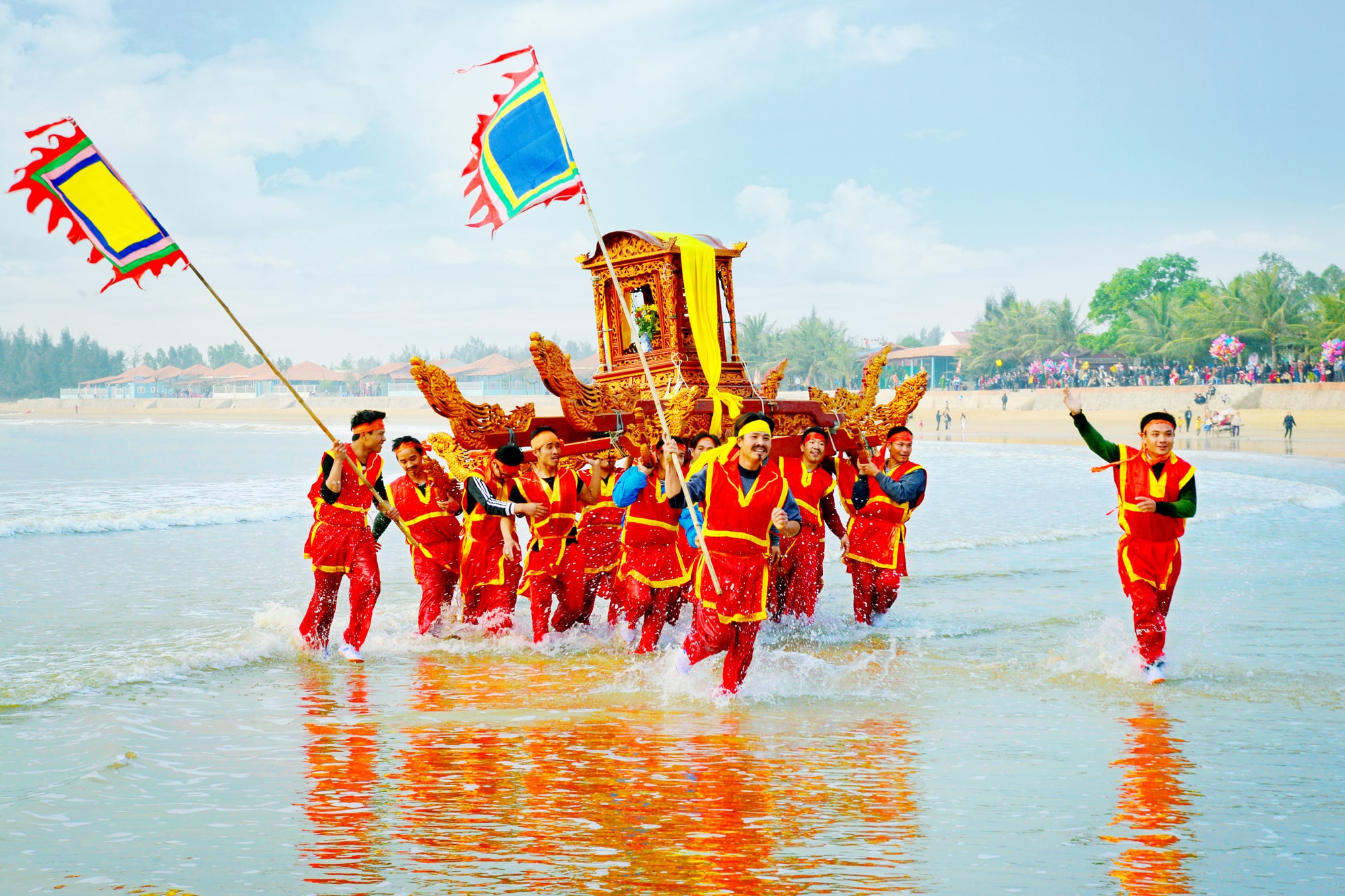 |
| Procession carrying palanquins to the Fishing Bridge. Photo: Nhat Thanh |
This is the largest, oldest, most culturally rich, and longest-running festival in Nghe An province. Visiting the Cờn Temple Festival in early spring, tourists can admire the temple's architectural value, considered one of the most beautiful scenic spots in Nghe An; participate in many traditional folk cultural activities that have been revived, such as the betel nut offering, buffalo offering, cake offering, elephant and horse procession, female official ceremony, and the "running and vomiting" ritual.ABUNDANT SCENERY AND LOCAL SPECIALTIES
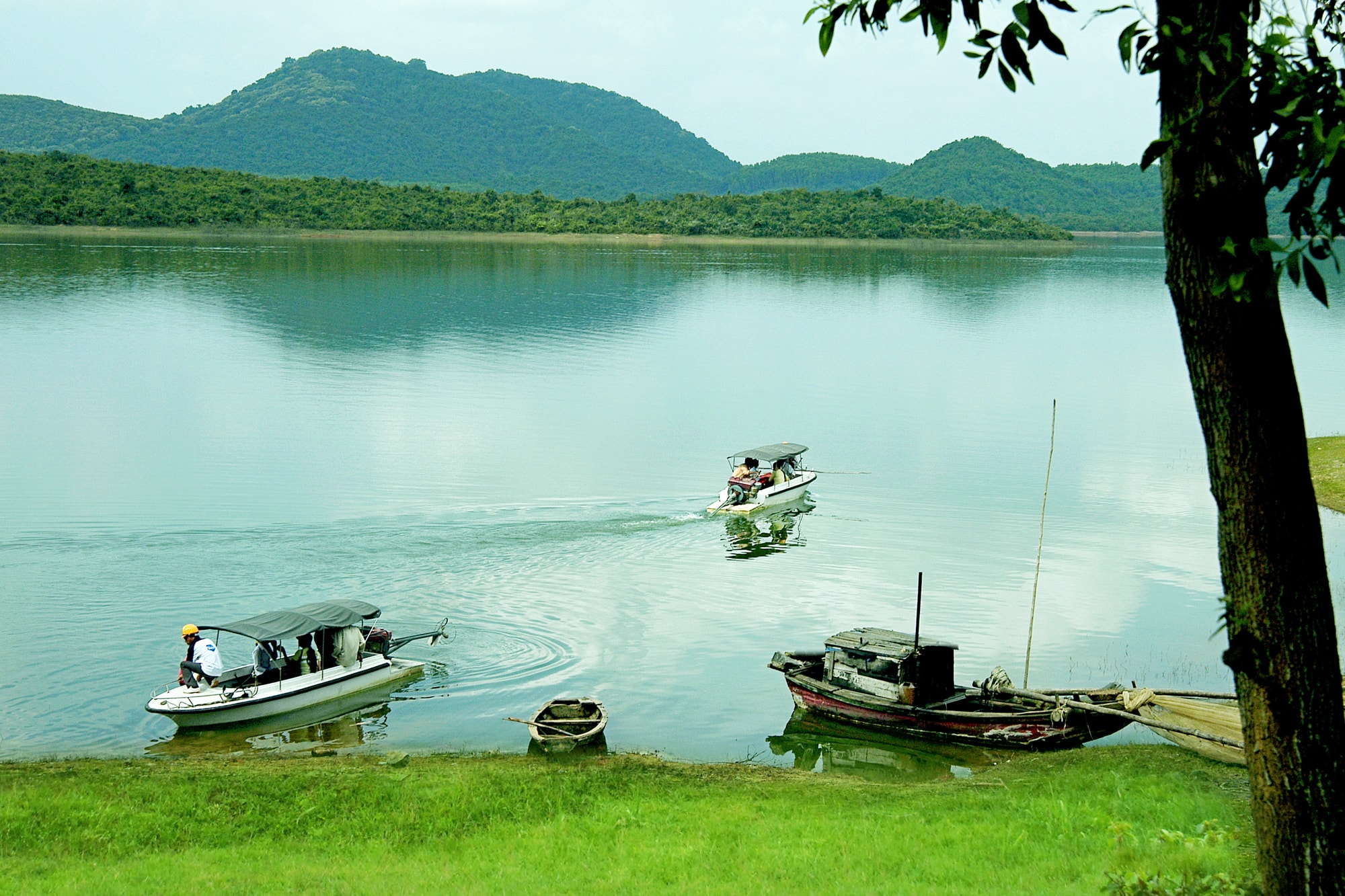 |
| Ecotourism at Vuc Mau Lake. Photo: Nghe An Department of Tourism. |
Besides its rich historical and cultural value, Hoang Mai is also blessed by nature with many rare and beautiful scenic spots where mountains meet the sea; rivers surround the town; and lush green forests reflect their image on the lake's surface... With its undulating mountains, vast lakes, and boundless sea, Hoang Mai also has the gentle Mai Giang river flowing through two estuaries, creating favorable conditions for the town to develop a fishing port in Quynh Phuong ward and the Dong Hoi port, which has been invested in and is about to be put into operation.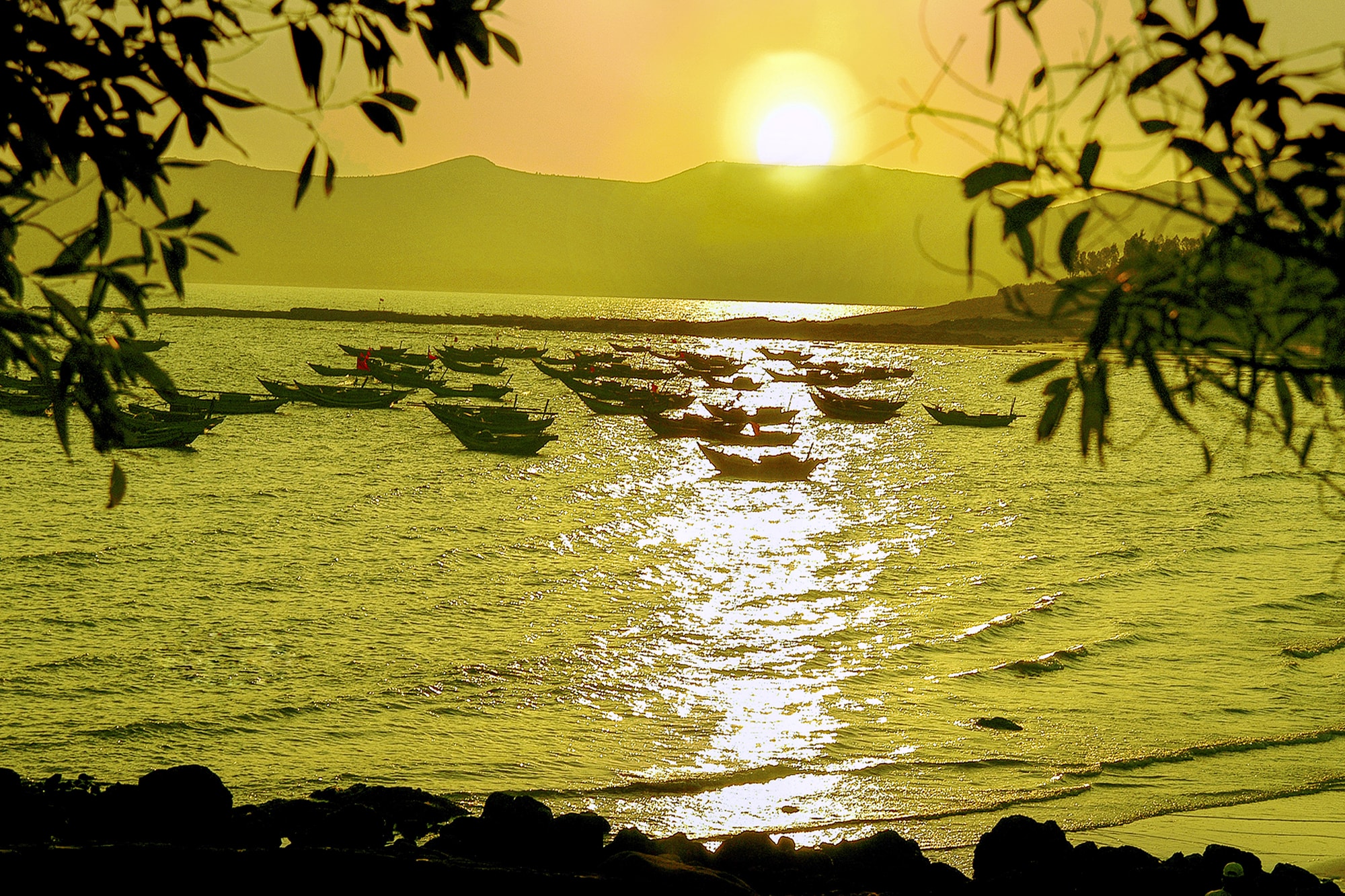 |
| Evening falls over Dong Hoi Port. Photo: Nhat Thanh |
Specifically regarding fishing ports, the Hoang Mai fishing port supplies nearly 40% of the seafood for the entire Nghe An province and neighboring localities. When enjoying seafood from Hoang Mai, any diner will praise the freshness of the shrimp, crab, squid, grouper, mackerel, snapper, and blood cockles. These seafood, along with other local specialties such as Quynh village wine, Quynh Di fish sauce, and Lang leaf soup, have made Hoang Mai famous as a promised land that everyone should visit to "pray, love, and enjoy the cuisine."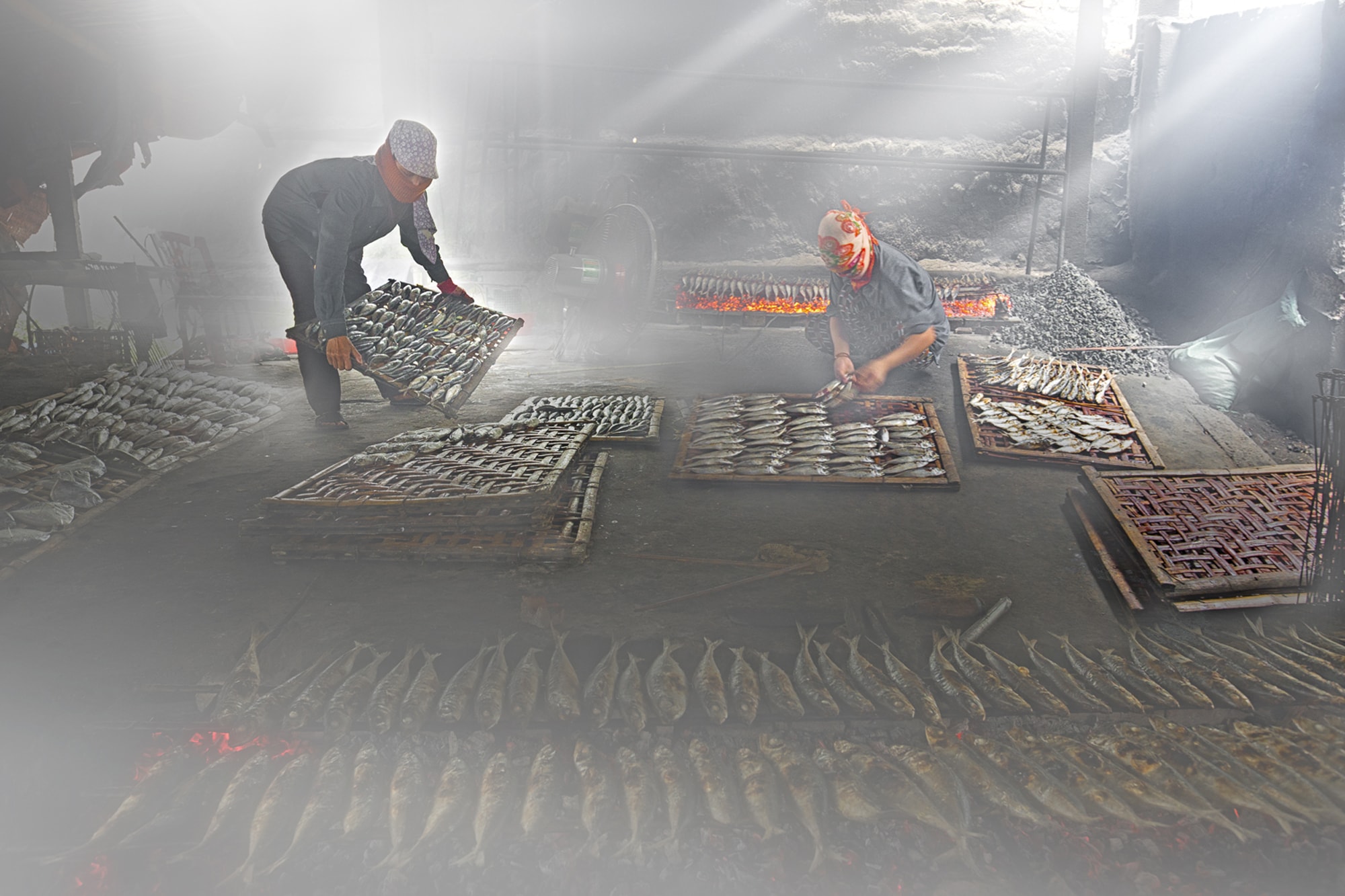 |
| The fish grilling profession in Quynh Phuong. Photo: Canh Hung |
Returning to Hoang Mai, past and present, one can surely feel the profound humanistic values that will always be remembered when far away. Here, people are hardworking, diligent, and live to love. Traditional craft villages such as Quynh Lap boat-building village, Quynh Phuong seafood processing village, Quynh Di anchovy fish sauce village, and Quynh Lien clean vegetable village... are places that fully demonstrate these values.TRANSFORMING POTENTIAL INTO SOCIO-ECONOMIC RESULTS
It can be said that Hoang Mai has all the elements to develop spiritual tourism, cultural tourism, ecotourism, beach tourism, and handicraft village tourism... With its natural appeal, tens of thousands of tourists flock to the town every year to visit, explore, and relax.
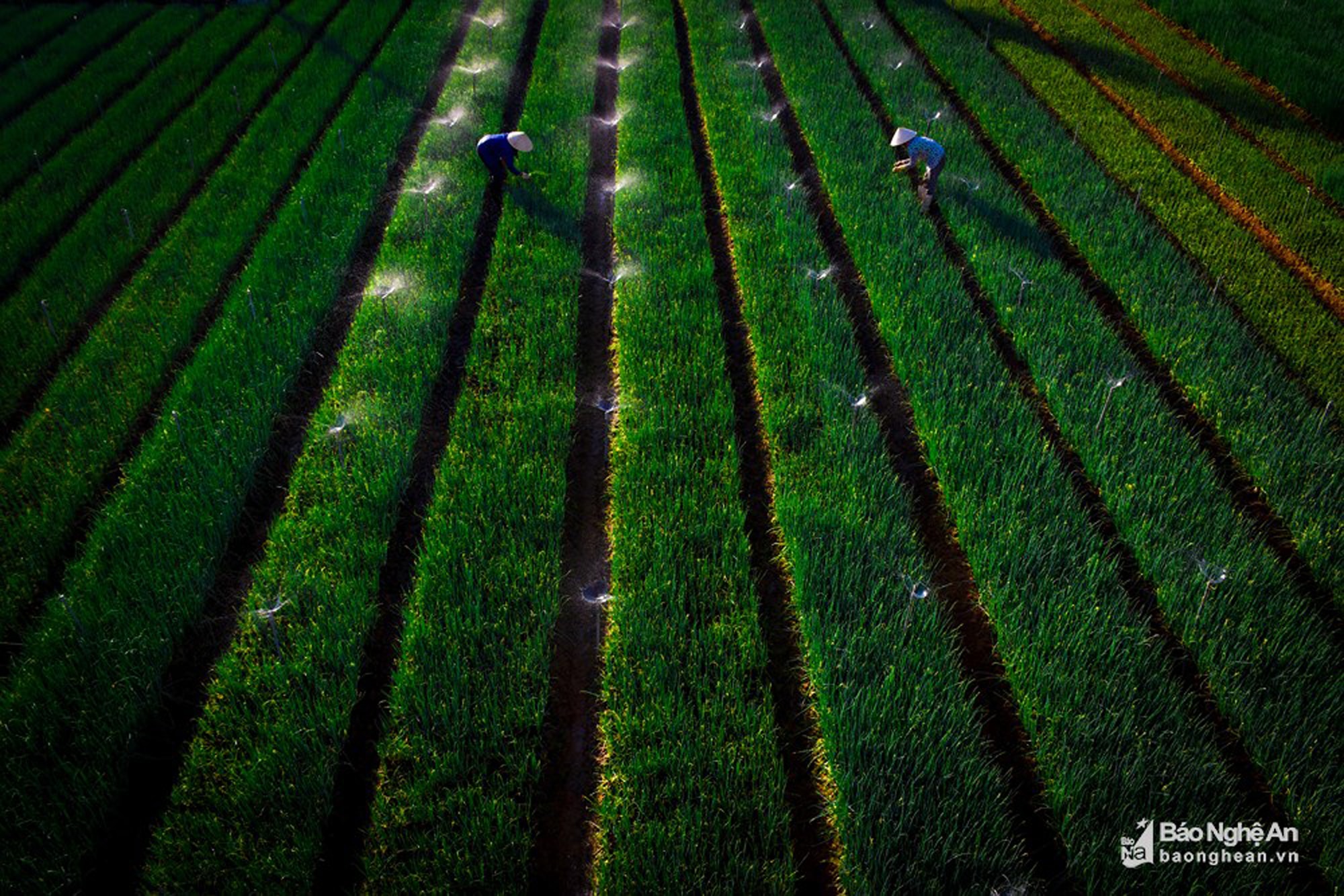 |
| Producing clean vegetables in Hoang Mai. Photo: Archival material. |
Aware of its potential and advantages, over the years, Hoang Mai town has not only implemented solutions to transform these latent values into practical socio-economic benefits, but has also continuously developed and improved its infrastructure and tourism infrastructure in a synchronized manner. Accordingly, the town has promoted the development of various services, including commerce, transportation, food and beverage, accommodation, hotels, healthcare, postal and telecommunications services, and banking, to meet the demands of tourists.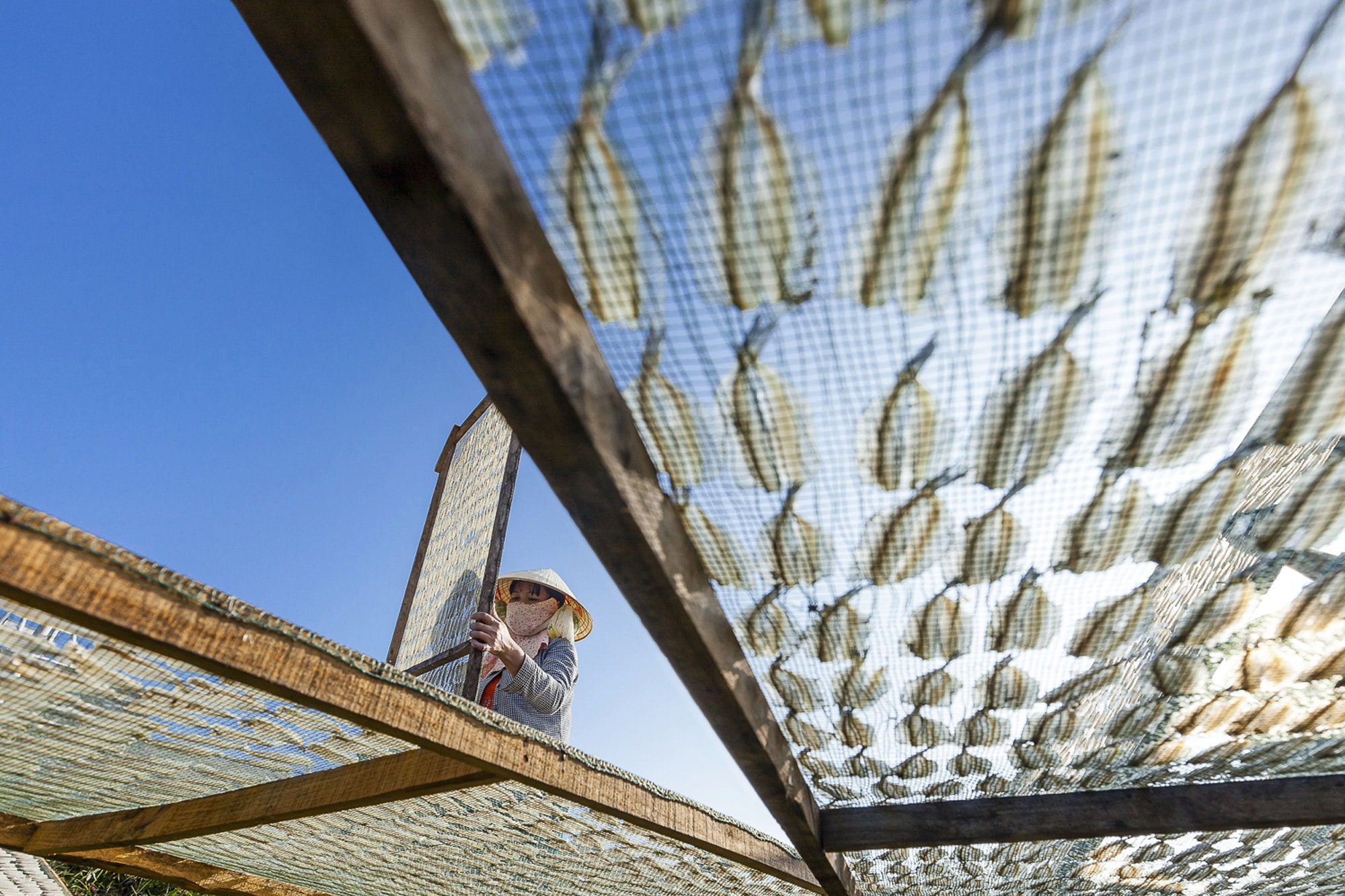 |
| The sun rises over the fishing village. Photo: Canh Hung |
To date, the town has 19 tourist accommodation establishments, including one 3-star hotel and one 4-star hotel complex; four mini-supermarkets and many restaurants in the coastal tourist area, with a total investment of over 500 billion VND. Recently, the town, together with the Vietnam Market Development and Management Cooperative Union, commenced construction of a Commercial Center combined with a traditional market in Quynh Thien ward, with a total investment of over 150 billion VND.Making good use of its existing potential, Hoang Mai has continuously explored and developed new, unique tourism products such as scuba diving, fishing, squid fishing in the sea and on lakes, and river cruises. The town has also been combining beach tourism, ecotourism with spiritual culture to create colorful tours that connect the town's own "cultural specialties".
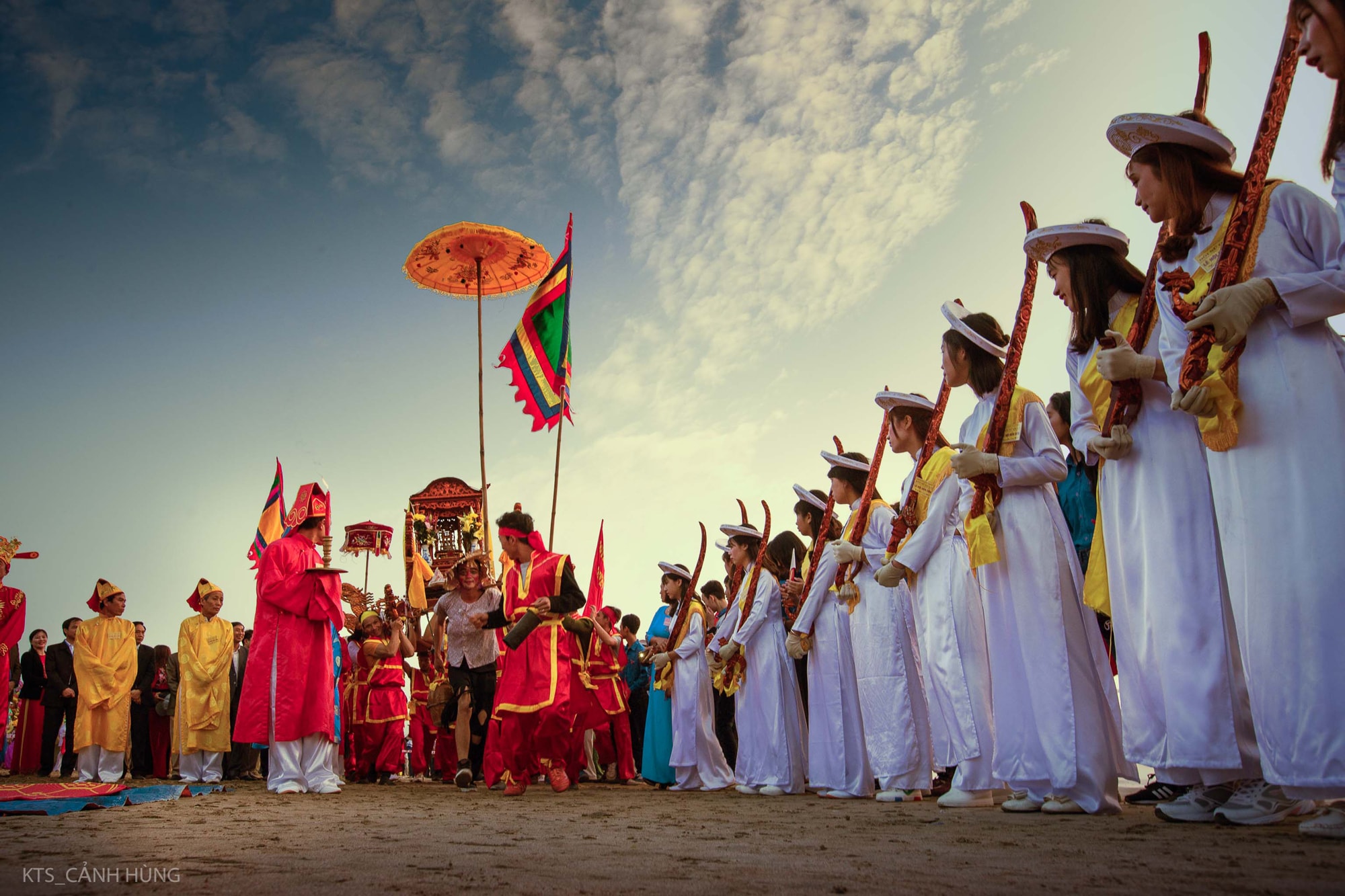 |
| Hoang Mai during the Cờn Temple folk festival. Photo: Canh Hung |
In the new development vision for Hoang Mai town from 2020 to 2025, Nghe An province has oriented Hoang Mai to become a coastal urban area associated with tourism, services, trade, education, healthcare, finance, and banking. The town has been actively promoting development according to this orientation, with solutions to attract and encourage investment, and to provide maximum support for businesses and investors, especially those investing in tourism. Certainly, with these support solutions, Hoang Mai is a promising land for investors to explore and create, helping Hoang Mai to soon become a tourism-developed urban area and a key economic and cultural hub in the northernmost part of Nghe An province, in line with its goals and existing potential.



