
Low fruit set rate worries orange growers in Vinh.
(Baonghean.vn) - At the beginning of the season, continuous cold and rainy spells affected pollination, causing many flowers to fall off, preventing fruit setting, and even causing fruit drop in some trees. This has caused great concern among orange growers as they face a low-yield harvest.
 |
| This year's orange crop saw only 60-70% of the trees flowering and bearing fruit set compared to previous seasons, leaving farmers facing a low-yield harvest. Photo: Thanh Phuc |
The family of Mr. Nguyen Duc Than (Bong Khe commune, Con Cuong district) cultivates over 1 hectare of golden-fleshed oranges. Last year's orange harvest was nearing completion when...fallen orangesWith fruit yield dropping to 1/3 after 70% of the previous crop failed, and market prices were low, resulting in losses. Immediately after harvesting the previous orange crop, his family focused on caring for the trees to help them recover and grow: applying manure, phosphorus, and synthetic nitrogen fertilizers, pruning branches, weeding, and tilling the soil around the base, hoping for a bountiful harvest in the new season. Currently, the orange trees are in the flowering and fruiting stage, but the fruit setting rate is very low.
Mr. Nguyen Duc Than said: "Compared to previous years, this year the fruit setting rate is only about 70%, and the risk of affecting the final yield is unavoidable."
In recent days, the family of Mr. Hoang Van Hoan (Xuan Son hamlet, Van Loi commune, Quy Hop district) has been "on pins and needles" as the fruit setting rate of their 500 orange trees has only reached 60-70% compared to the previous orange season. Many trees,low fruit set rateMoreover, the fruit is falling off, and some orange trees are left with only a few young fruits.
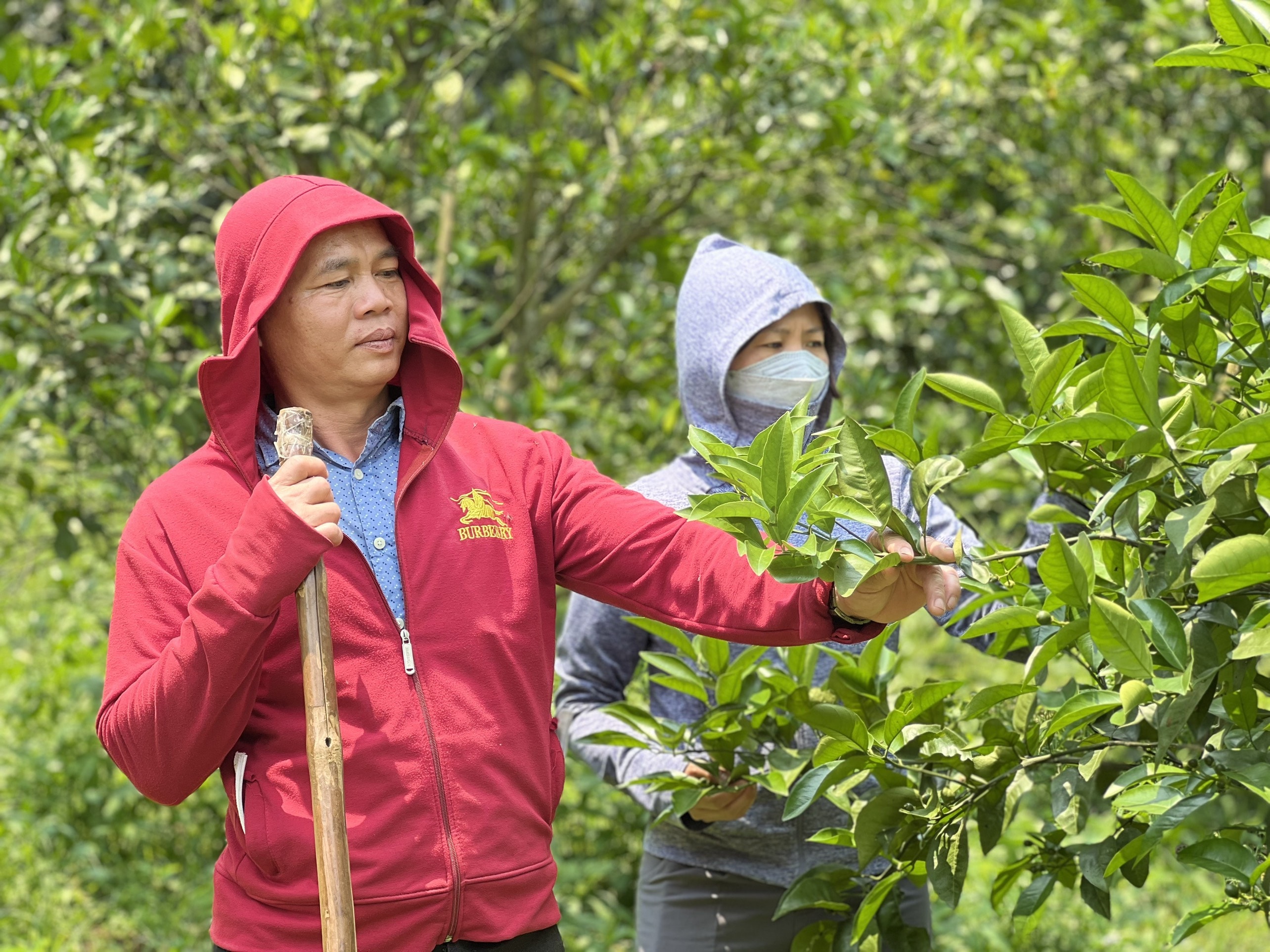 |
| Many orange trees are very healthy and green, but they don't flower or bear fruit. Photo: Thanh Phuc |
Mr. Hoang Van Hoan said: “In previous years, the orange trees bore abundant fruit, and we had to prune away the young and bad fruits so that the trees could focus their energy on developing the main fruit. But this year, the trees have produced very few fruits, and many have fallen off, leaving many bare trees with only leaves. The grass is growing thickly, but we don't dare plow or weed because we're afraid of affecting the trees and causing even more fruit to fall.”
According to Mr. Hoan, right after Tet (Lunar New Year), he invested in manure, nitrogen, and phosphorus fertilizers for his orange trees, spending about 150,000 VND per tree. He also mobilized workers to prune branches and spray biological pesticides to control pests and diseases. The orange trees recovered quite well but produced few flowers, resulting in a very low fruit set rate. Following that, periods of cold rain caused many young oranges to drop fruit. Many trees had no fruit left, so he had to cut them down and plant peanuts instead.
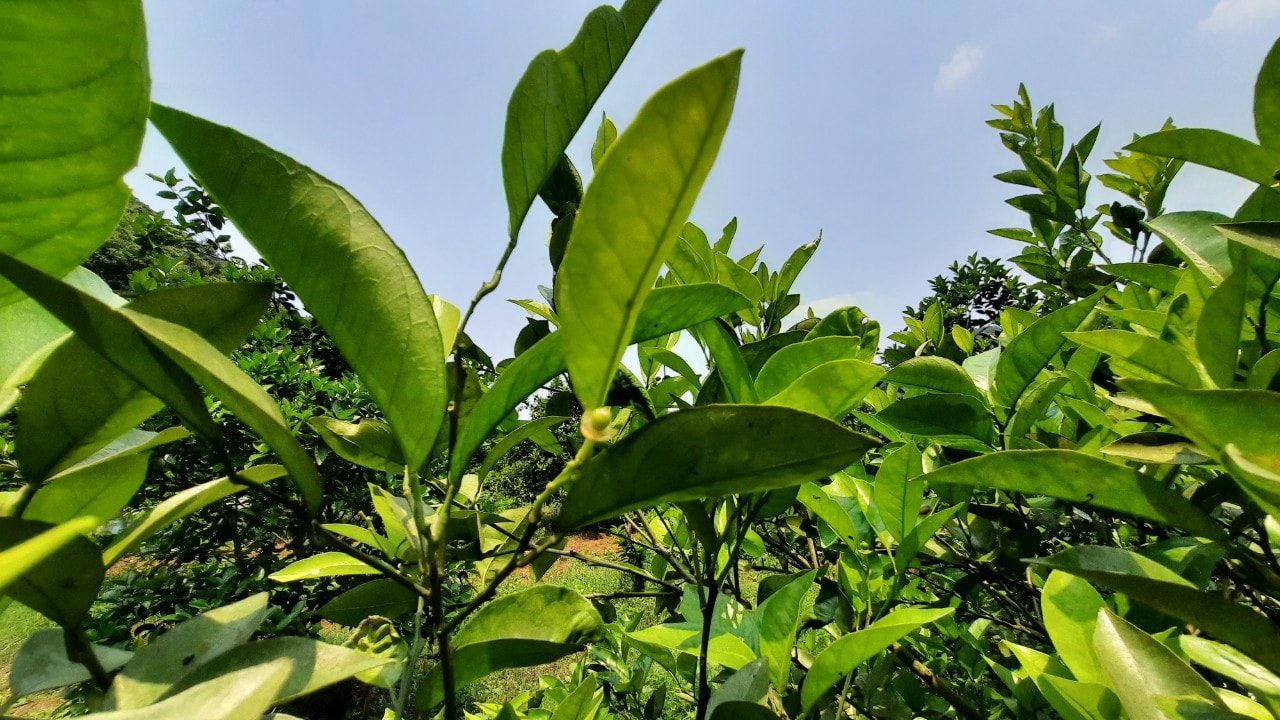 |
| Many oranges are falling off the trees, not to mention the upcoming hot weather and harsh winds from Laos, which will make caring for the orange trees even more difficult. Photo: Thanh Phuc |
Ms. Pham Thi Quynh, head of Xuan Son hamlet (Van Loi commune, Quy Hop district), said: “Before 2022, the entire hamlet had 100 households growing oranges with a total area of 115 hectares. However, after last year's failed orange harvest due to excessive fruit drop and low prices, the orange trees deteriorated, so people cut them down and switched to other crops such as sugarcane, peanuts, tangerines, and apples… Currently, the orange growing area in the hamlet has decreased to 50 hectares. This season, according to residents, the orange trees are flowering less, the fruit setting rate is low, and there is a lot of fruit drop, so the yield will certainly decrease. Meanwhile, the input costs for caring for the orange trees have increased, causing great concern among the people.”
According to the localsorange growing regionThe reason for the low flowering and fruiting of orange trees is that at the beginning of the season, there were continuous periods of cold rain, affecting pollination, causing many flowers to fall off, and preventing fruit set. In some cases, even when fruit did set, it still fell off. In addition, many orange orchards, even those planted only a few years ago, have degenerated, with stunted trees and poor growth, resulting in fewer flowers.
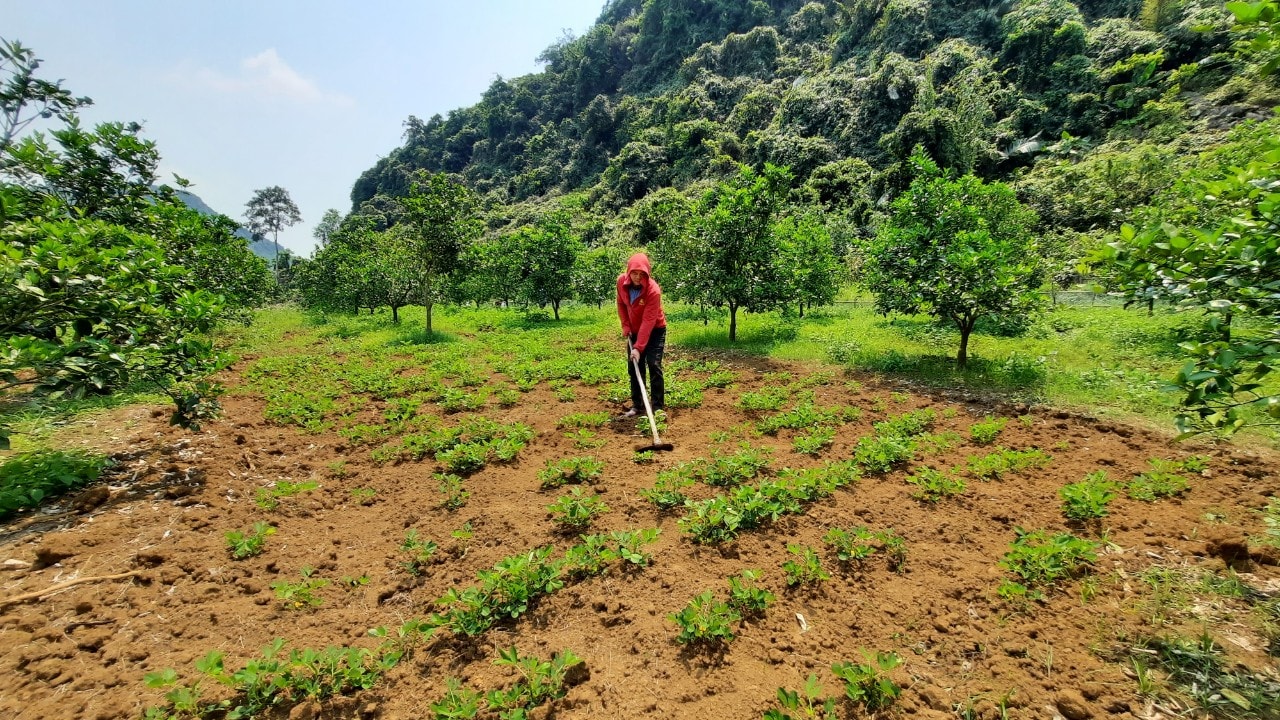 |
| Many low-yielding orange groves have been cut down and replaced with peanuts. Photo: Thanh Phuc |
"The fruit setting rate is low, not to mention that with the upcoming hot and dry season and the hot, dry winds from Laos, the oranges will fall off prematurely and green. Even when it's almost harvest time like last year, many oranges will still fall off, so the final yield will definitely be poor. The income of the households mainly depends on the orange trees, but at this rate, it will be difficult to survive," added Mr. Hoang Van Hoan.
Currently, Quy Hop district has 360 hectares of orange groves (a decrease of 950.6 hectares compared to 2020). Surveys show that this year's orange crop has a much lower flowering and fruiting rate than last year, averaging only 60-70%. Given the lower flowering and fruiting rate compared to last year, the Department of Agriculture and Rural Development has directed local authorities to guide farmers in closely monitoring their orchards and the development of the orange trees, especially during the current period of erratic weather with alternating sunshine and rain. At the same time, it has instructed communes to clean their orchards to prevent pest and disease damage, which could affect the development of the already fruiting areas.
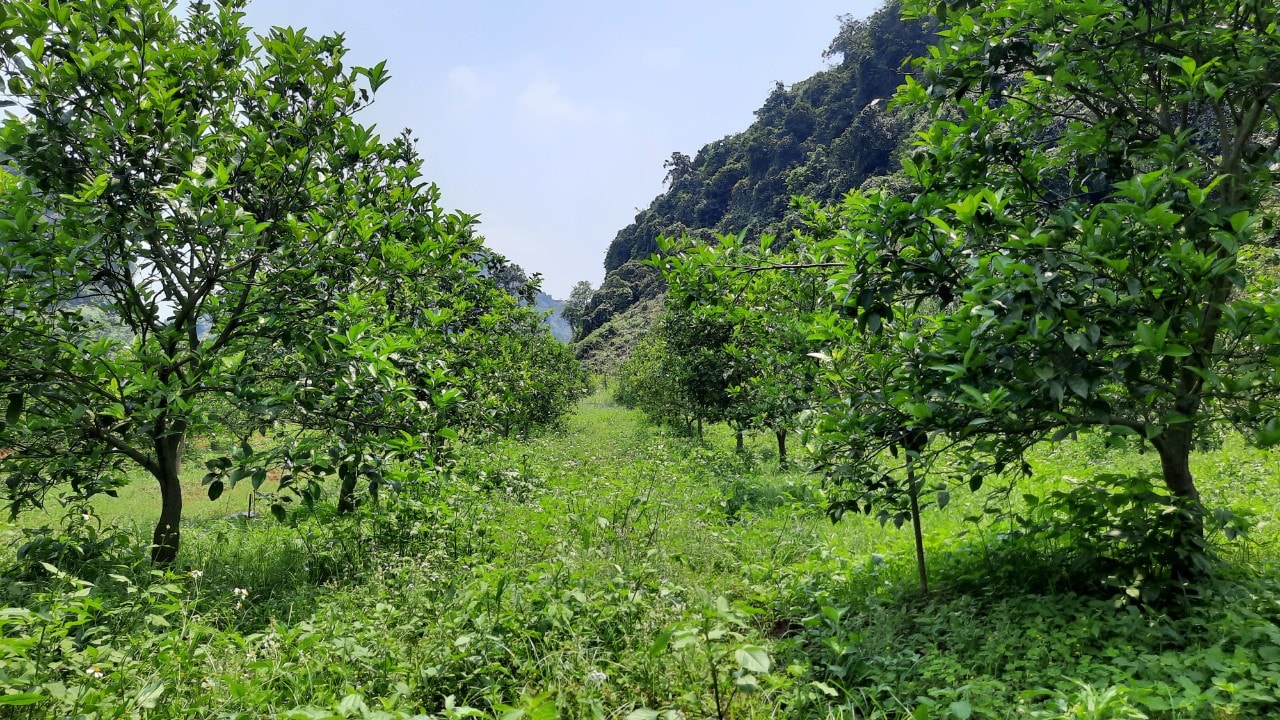 |
| In the orange orchards, weeds grow taller than knee-high, but the locals don't dare clear them or till the soil for fear of the oranges falling off. Photo: Thanh Phuc |
“Recently, the district has coordinated with the Provincial Plant Protection and Crop Production Sub-Department to invite experts from the Central Institute of Plant Protection to provide training on techniques for caring for and controlling pests and diseases in citrus trees in general and orange trees in particular for orange growers in Minh Hop, Nghia Xuan, Chau Dinh, Van Loi, and Ha Son communes. At the same time, in coordination with the Institute of Soil Science, we have conducted soil sampling in key orange-growing communes for analysis to identify the causes.”
 |
| In the 2021 orange harvest season, many farmers lost everything when a large percentage of their oranges fell off the trees prematurely. (Photo: Thanh Phuc) |
The province has approximately 5,300 hectares of orange groves, of which nearly 3,500 hectares are currently producing fruit. After the 2021 orange harvest, farmers invested in fertilizers, biological products, and labor to help the trees recover, grow, flower, and bear fruit, hoping for a productive new season. However, in many localities within the province, the orange trees are degenerating, growing poorly, and the flowering and fruiting rates are lower than last year, causing great concern among the farmers.
Given this situation, relevant authorities need to intervene promptly, clarify the causes, and provide timely solutions so that people can feel secure in producing and investing in orange trees.


