
The difficult land has become less...suffering.
(Baonghean.vn) - As a mountainous commune located on the left bank of the Lam River, Mau Duc commune (Con Cuong district) faces many socio-economic difficulties, but the Party committee and government have implemented appropriate solutions to gradually improve. This "difficult and challenging" land is now transforming itself...
No longer"Expecting, relying"
At the end of March, the scorching summer heat of western Nghe An province could not dampen the enthusiasm of the residents of Group 1, Chom Muong village, Mau Duc commune, in working to improve the road infrastructure. Laughter and chatter filled a corner of the village.
Accompanying us to the site, the Chairman of the Mau Duc Commune People's Committee, Vo Dinh Thanh, stopped to chat, inquire about, and encourage the local people. Mr. Ngan Van Tuyen, representative of residential group No. 1, happily stated: “Our group has 24 households, and each family has mobilized one person to help build the road. We expect it to be completed within a week. The residents all agree that building the road will primarily serve transportation and production, and secondly, contribute to beautifying the village.”
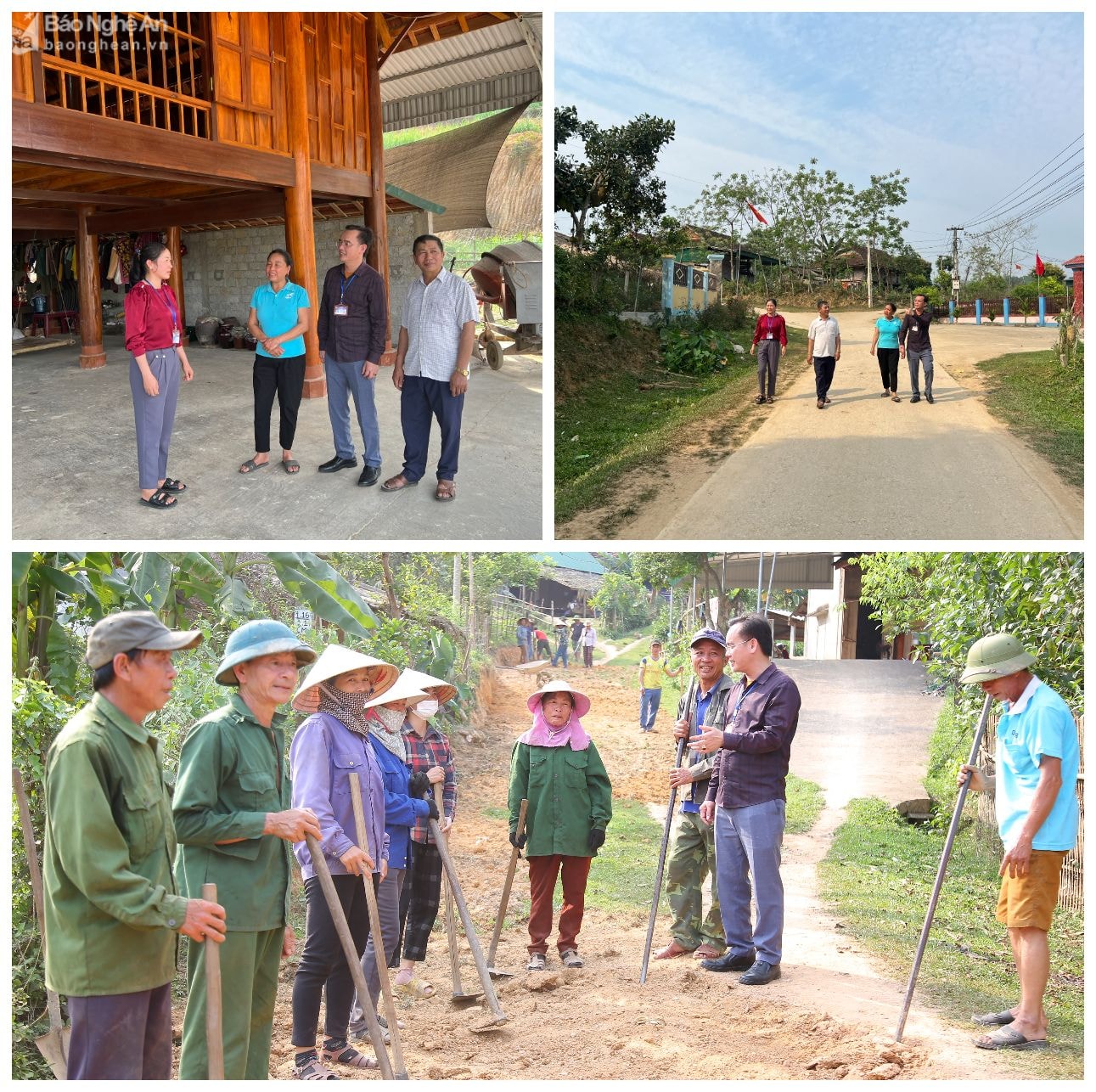 |
| Leaders of Mau Duc commune visit and encourage residents of Chom Muong village. Photo: KL-TN |
It is known that the model of labor and production based on groups and clusters of residents has become a tradition in Chòm Muộng village. According to the village head and Party branch secretary, Ngân Đức Hội: The village has 202 households and 856 people. Although life is still difficult, the people do not "wait and rely" but voluntarily encourage and support each other to develop production and household economy through group, association, and fund models.
For example, in groups for planting acacia or cassava (each group consisting of about 12-15 households), in addition to contributing funds to support each other in buying seedlings, households also exchange labor to help each other plant and harvest, thus saving on hiring costs. Or there are groups that form cement "communes" to help each other build essential structures such as toilets, yards, and gates... but the most active are the groups that produce rice wine and the women's savings associations.
 |
The rice wine production groups need to provide a stable income for the people of Chòm Muộng village. (Photo: KL) |
While busily checking and rearranging the jars of rice wine, Vi Thi Dien (born in 1971), the head of the Women's Association in Chom Muong village, stopped to greet visitors. She explained that the traditional rice wine-making craft in the village has existed for a long time and is closely intertwined with the daily lives of the Thai people. She herself learned the craft from her mother-in-law after marrying into the family.
Initially, the local people made the liquor only for family consumption and to give as gifts to relatives and friends. Gradually, thanks to its rich aroma and unique, delicious flavor, it became popular.(The yeast used for fermenting the liquor (made from various forest leaves gathered by the locals) has created a unique flavor, which is why it has become more well-known and sought after by customers.
Currently, there are 13 groups in the village engaged in the traditional rice wine-making craft, producing 50-60 jars of wine daily, generating an average income of 16-17 million VND per person per year. In 2022, the traditional rice wine-making village of Chòm Muộng was recognized as a traditional craft village by the Provincial Appraisal Council. This is also an opportunity for Chòm Muộng village to maintain and further develop its traditional craft, create jobs, and increase income for its residents.
 |
Residents of Group 1, Chòm Muộng village, are building a rural road. Photo: KL |
Besides the traditional rice wine making group, the women of Chòm Muộng village have also established a revolving savings and livestock farming fund, with some groups having funds up to 40 million VND. The dynamism and creativity of the people have contributed to making Chòm Muộng village one of the five villages achieving the new rural development goals in Mậu Đức commune, with 70% of internal village roads being concreted, and the irrigation canal system meeting the needs for irrigation and agricultural product transportation.
The rural electricity system is safe, cultural facilities, playgrounds, and sports facilities fully meet the criteria, and the ethnic cultural identity is preserved and promoted. Currently, the average per capita income in the village is over 36 million VND/year; the poverty rate is only 11.67%.
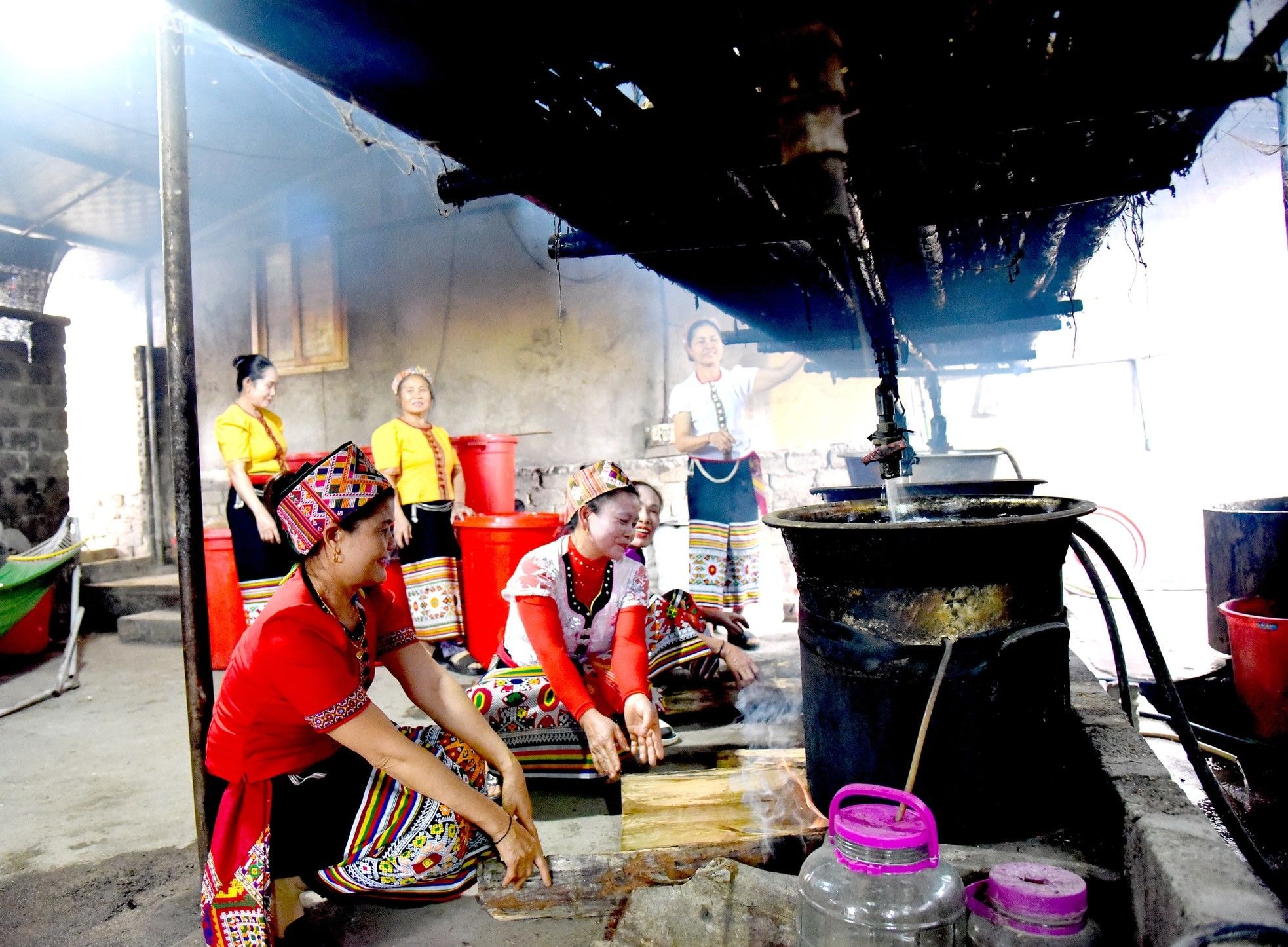 |
| Alcohol production groups in some villages of Mau Duc commune operate continuously day and night. (Photo: Hoai Thu) |
In Mau Duc, some villages with high poverty rates, such as Ke Sung, have seen strong development in many aspects in recent years and have achieved the goals of the new rural development program. This result is thanks to the Party branch and the village management board mobilizing the people to change their mindset and practices in production and livestock farming, such as dividing households in the village into 11 groups to help each other through various specific methods.
Households lacking production methods receive advice and guidance on how to cultivate forest gardens and raise livestock, and are introduced to job opportunities. Households lacking capital are vouched for by associations and organizations to obtain production loans.
The mutual aid groups regularly hold meetings to evaluate models and create a competitive spirit among households and groups. This approach has given the disadvantaged households receiving assistance a strong motivation to improve their lives, primarily focusing on planting acacia trees for raw materials and livestock farming. As a result, from 50% of households being poor, the village of Kẻ Sùng now has only 12% (31% according to the new standard), with an average per capita income of over 36 million VND per year. The village of Kẻ Sùng has also skillfully mobilized community resources to build transportation infrastructure and cultural centers.
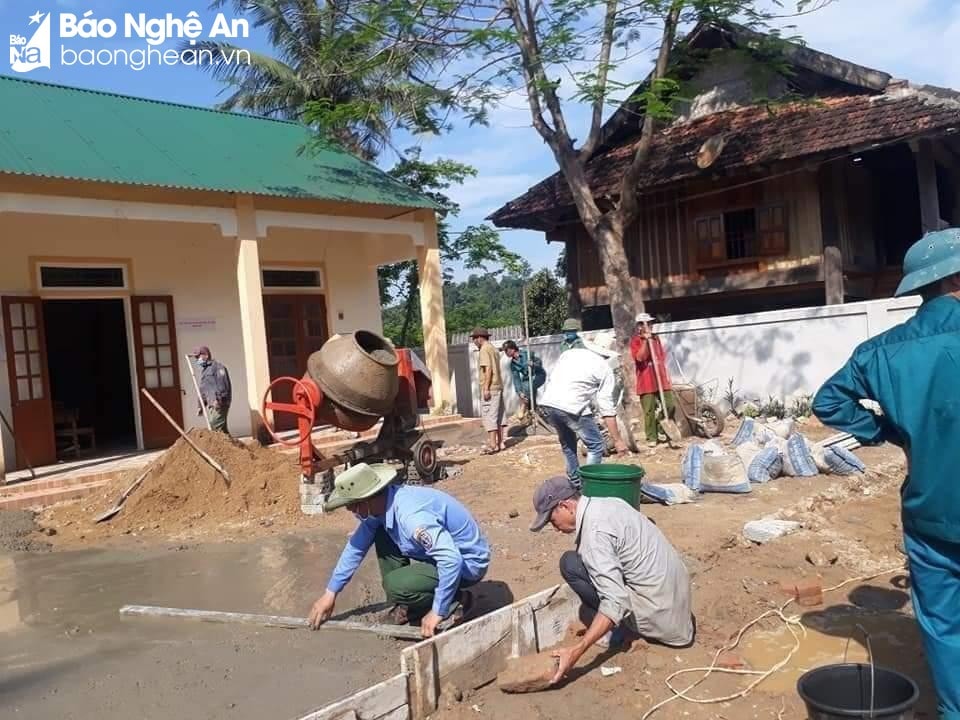 |
| The people of Ke Sung village contributed their labor and resources to build the village's cultural center. Photo: CSCC |
Contributions were divided into several installments to "ease the burden on the people." Those with money contributed financially, while those without money provided labor. As a result, the people actively participated, contributing manpower, resources, land, and building roads, helping the village achieve the new rural development goals. Currently, over 73% of the internal village roads in Ke Sung village are concreted, and 67% of the irrigation canals meet the irrigation needs of over 82% of the inland area.
 |
| The Party Committee and the Front Committee of Ke Sung village listen to and understand the thoughts and aspirations of the people. (Photo: Thanh Chung) |
Local leaders say that, even more encouraging, the ethnic minority people in Mau Duc commune have shown a strong shift in their self-reliance and independence from government support policies. A commodity-based production mindset has replaced the old way of life (self-production, self-consumption), and people in the villages have strived to develop their household economies. A prime example is the family of Mr. Nguyen Van Manh in Na Duoi village, who has transformed their hillside garden into a green, clean, and beautiful living space, simultaneously developing their economy and creating a unique feature like a miniature tourist area, complete with a fish pond and a lush, fruit-filled orchard.
Sharing with us, Mr. Nguyen Van Manh said, "On our forest land of over 2 hectares, in addition to planting acacia trees, my family also raises goats and pigs, averaging 50 animals per litter, and we also have 1,500 square meters of land for farming."2"The fish pond area provides a stable income." Na Duoi village has 202 households and 903 people, and currently 36 households are engaged in forest-garden farming in the production area, like the family of Mr. Nguyen Van Manh.
 |
Mr. Nguyen Van Manh (in black shirt) shares about the process of establishing his farm in the production area of Na Duoi village. Photo: TN |
According to local leaders, starting from a low base with a high poverty rate, poverty reduction has always been a top priority. With a total natural land area of 7028.74 hectares, of which agricultural land accounts for 96.54%, introducing suitable crop varieties to the local soil and hilly terrain has always been a priority for the commune's Party committee and government. In fact, the successful cultivation of acacia trees in Mau Duc over the past years has proven its economic value, contributing to improving the lives of local farmers.
Mr. Vo Dinh Thanh, Chairman of the Mau Duc Commune People's Committee, said: The Commune People's Committee has issued a forest development plan, encompassing both conservation and protection. Currently, the entire commune has 6,800 hectares of forest, of which 2,800 hectares are planted forest. In the spring of 2023 alone, 250 hectares of acacia trees were newly planted. Besides forest planting, Mau Duc commune also promotes and encourages people to develop livestock farming with a herd of nearly 2,000 animals. At the same time, it leverages the role of the Fatherland Front and other organizations to actively promote and encourage the shift in economic and labor structure, develop rational forms of production organization, and boost production, business, and services, while preserving the national cultural identity.
 |
| Residents of Mau Duc commune welcome leaders from all levels to celebrate the National Unity Day. Photo: CSCC. |
As a result, several occupations have gradually developed, providing income for the people, such as civil carpentry, construction, weaving, brocade weaving, rice wine making, and traditional medicine. Through proactive efforts, overcoming difficulties, and staying rooted in the land and forests to develop the economy, the people of Mau Duc commune have undergone significant changes. Currently, the average per capita income in the commune reaches 24 million VND/year, the poverty rate has decreased to 23.69%, the commune has achieved 13 out of 19 criteria for building new rural areas, and 5 out of 8 villages have met the new rural area standards.
Difficulties and concerns
While progress has been made, many concerns and anxieties remain for a disadvantaged commune like Mau Duc. First and foremost are issues related to land management, outstanding problems, and unresolved violations. The encroachment on public land, although addressed, has not been effectively resolved; and illegal deforestation by residents still occurs.
In light of this situation, besides strengthening coordination with relevant agencies to resolve outstanding issues, we must also promote and encourage people to do a good job of protecting forests, preventing and controlling forest fires, and reforesting barren hills.
Local authorities have actively coordinated with the Forest Protection Department to organize patrols and inspections, promptly preventing some households from illegally clearing forests. In 2022 alone, Mau Duc commune, in coordination with the Con Cuong Forest Protection Department, handled 29 cases of illegal forest clearing, transferring them to the district for administrative penalties totaling 179 million VND.
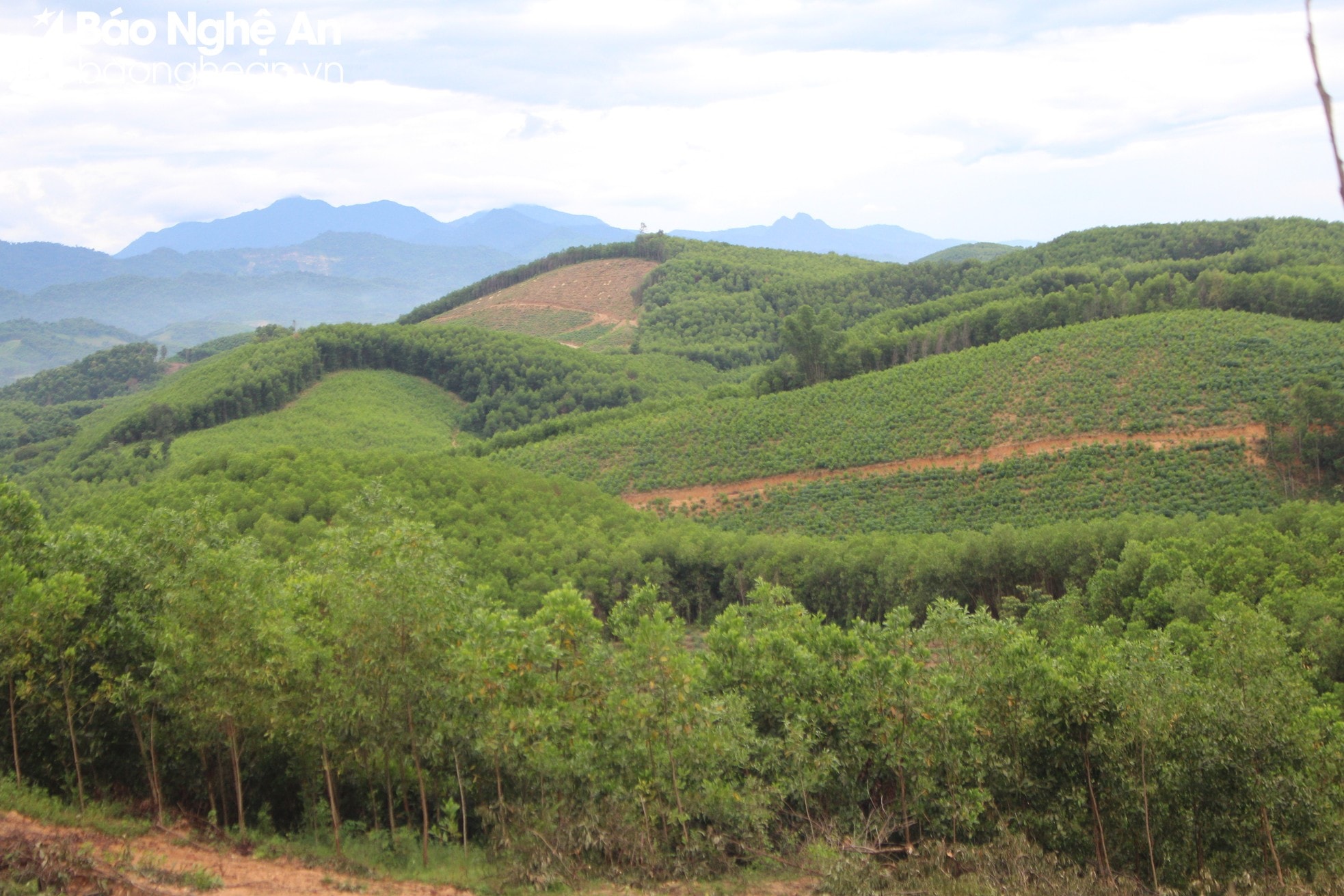 |
An area planted with acacia trees for timber in Mau Duc commune (Con Cuong district). Photo: Ba Hau. |
Another concern for the Party committee, government, and people is the lack of water for production and daily life in some villages, especially during the hot season. Due to the hilly terrain, water sources from small streams and springs are insufficient during the dry season, particularly in villages like Ke Noc, Ke Sung, and Ke Trang. This problem has existed for many years. To partially alleviate the difficulties, the commune is currently implementing a project to build water pipelines to supply water to two schools and three villages (part of Na Duoi village, part of Chom Boi village, and the entire Thong Nhat village) worth 1 billion VND, under the National Target Program, with the commune as the main investor.
Furthermore, to achieve the goal of becoming a new-style rural commune by 2025, in addition to leveraging investment resources from higher levels, the Party Committee and government of Mau Duc commune have directed the application of innovative and effective methods, along with the exemplary conduct of officials and Party members, to promote the strength of national unity and work together to build a new-style rural area.
 |
Outdoor activity time for students in Mau Duc commune. Photo: CSCC |
For example, in fulfilling the criteria for expanding the Mau Duc Secondary School campus to build a national standard school, the commune called on the people to donate 1,500 square meters of land.2land, with the largest donation coming from Mr. Ngo Ba Huyen's family, who donated 1,400 square meters.2"The acacia trees planted on this land are 1.5 years old."
That's the people's heartfelt desire for their children's education; the commune only provided 300 square meters of land.2"The land was from elsewhere, and a small amount of funding came directly from the commune's own fundraising efforts," said Mr. Nguyen Dinh Thanh, Chairman of the Mau Duc Commune People's Committee. It is known that previously, in 2017-2018, when the Mau Duc - Thach Ngan road was under construction, more than 240 households in Mau Duc commune donated 23,265 square meters of land.21,368 trees of various types, over 1,361m2 Various types of fences... with a total value of over 1 billion VND to hand over the land to the investor.
 |
| The Fatherland Front Committee of Mau Duc commune organized cultural and artistic activities reflecting the local identity on the occasion of the National Unity Day. Photo: CSCC |
According to Ms. Ha Thi Linh, Chairwoman of the Fatherland Front Committee of Mau Duc commune: "We must strive to do what benefits the people" is the key to creating consensus in the locality. For example, to support villages in achieving the new rural development goals, the Fatherland Front Committee of the commune called for support in building facilities such as football fields or cultural center grounds. In 2022, the Fatherland Front Committee of the commune, together with the Party Committee and the Management Board of Ke Trang village, mobilized the people to contribute labor to build a volleyball court in the village, worth more than 40 million VND.
In addition, through the "For the Poor" Fund, support was provided to help people renovate 5 "Great Solidarity" houses and build 4 livelihood models for 4 poor and near-poor households in the 3 villages of Chòm Muộng, Chòm Bỏi, and Nà Đười, worth 20 million VND. This support, though small, is a driving force for the people of Mậu Đức commune to proactively and diligently overcome difficulties and gradually improve their lives.
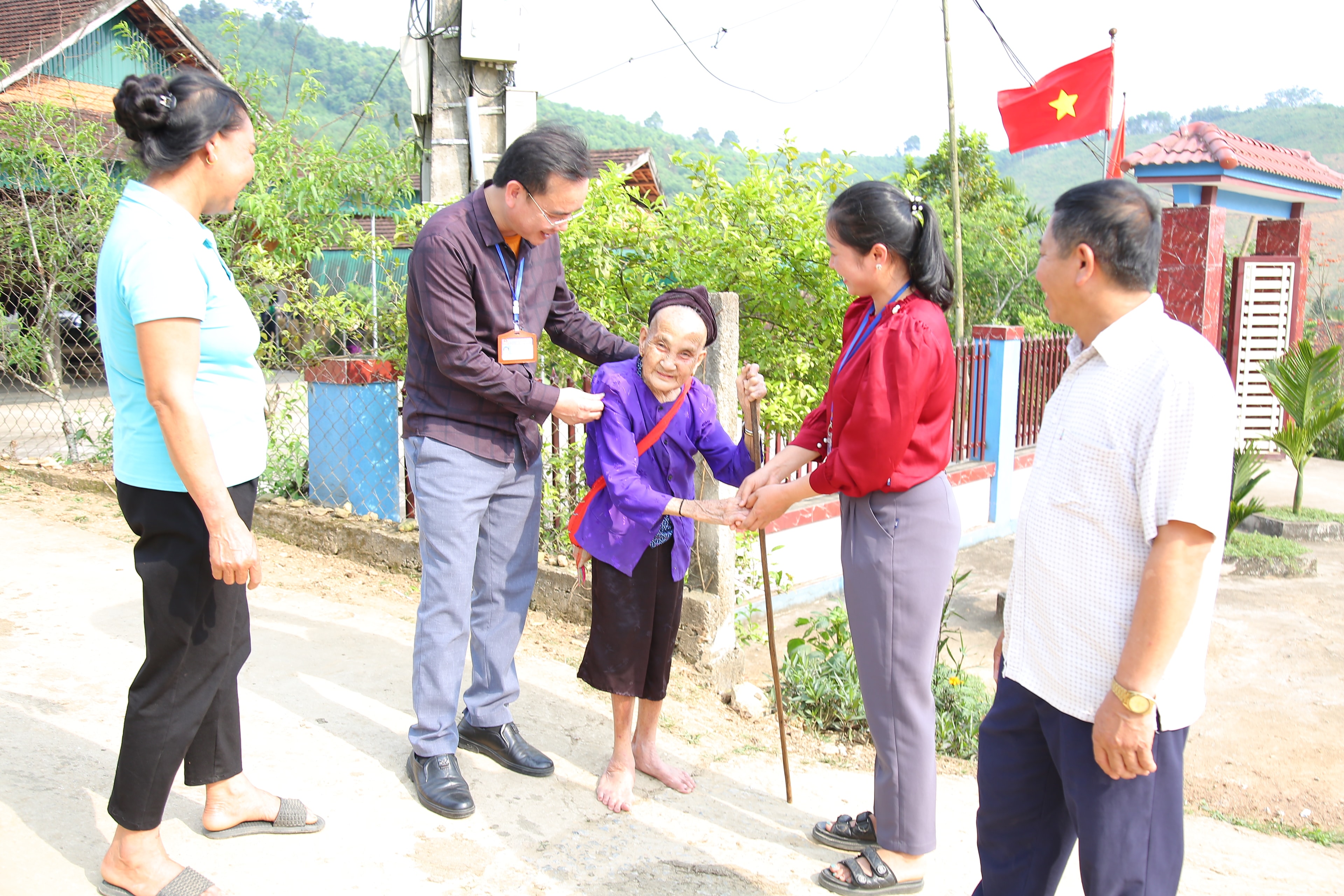 |
"The hardships in this remote area have lessened," Mrs. Ngan Thi Oanh from Chom Muong village happily shared with local officials. Photo: KL |
Late in the afternoon, as we said goodbye to the people of Mau Duc, we will always remember the firm handshake and the words of Mrs. Ngan Thi Oanh, 77 years old, from Chom Muong village: "Thanks to the hard work, construction, and unity of the people, this once impoverished land is now less suffering!"


