
The heartbreaking plight of an elderly mother raising two blind children.
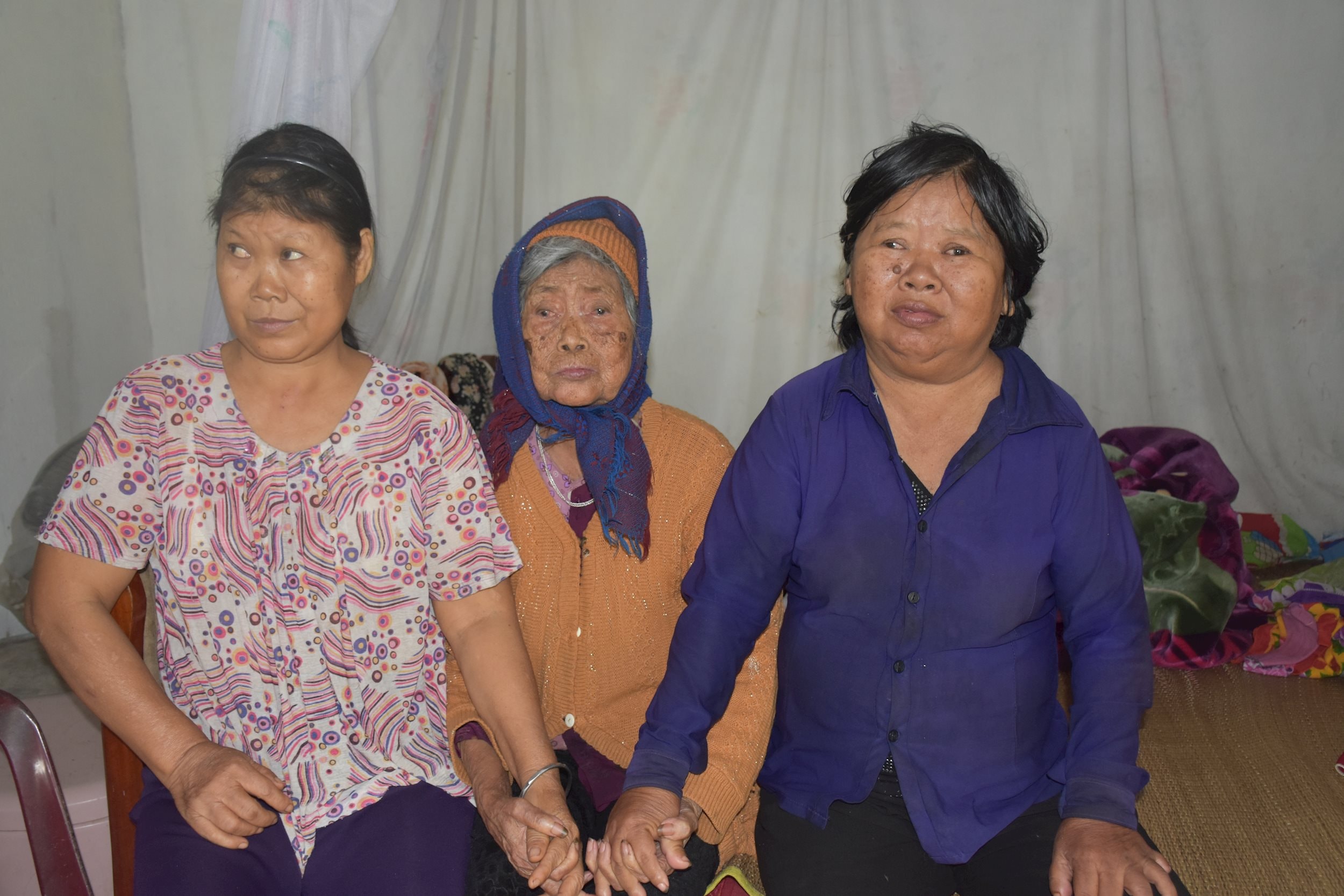
Mrs. Tran Thi Nghi (87 years old), a relative of a fallen soldier, lives with her two blind children in a small house in Vinh Phuc hamlet, Vinh Thanh commune, Yen Thanh district. Relying solely on monthly social welfare benefits for relatives of fallen soldiers, disabled people, and vulnerable individuals, her life is extremely difficult...
One early winter day, we visited the family of Mrs. Tran Thi Nghi. They lived in a small, two-room house with an area of 38 square meters.2This is the daily living space for the three of them (mother and two daughters) and also the place of worship for their ancestors and fallen soldiers. Looking up at the Certificate of Recognition from the Fatherland and the Resistance Medal hanging on the wall, Mrs. Nghi said: "My family is worshipping our grandparents, ancestors, my husband, and also my husband's younger brother - a fallen soldier who died in the resistance war against the US."
When her husband's parents passed away due to old age, Mrs. Nghi and her husband raised her husband's younger brother, Ngo Tri Lam, in place of his parents. During the fierce resistance against the Americans, Lam volunteered to join the army. He was assigned to an engineering unit, building and protecting bridges, roads, trenches, and military depots along National Highway 7 in the Yen Thanh area. In 1968, Lam was killed in action during an American bombing raid on the infrastructure in Vinh Thanh commune.
Mrs. Nghi's husband worked at the Dien Chau Construction Materials Store (located next to the Bung Bridge), which was also a key target for American aircraft. At that time, he was the store manager and repeatedly, along with his colleagues, braved the bombing to evacuate and protect state-owned goods. Later, he was awarded the First Class Resistance Medal for his contributions to the war against the US.
Nineteen years ago, Mrs. Nghi's husband passed away. She single-handedly raised and cared for all four children (three daughters and one son). However, her second and third daughters were born blind. For many years, the three of them relied on each other to survive. Now, Mrs. Nghi is elderly, has difficulty walking, and can no longer work, relying on the care of her blind second daughter.
“Both my sister and I have been blind since birth. I'm more agile than my younger sister, so I can still move around on my own, take care of my mother, and do household chores as usual. Because I can't see, I have to use my hands and feet to sense things, which is very difficult. My mother is old and bedridden, and my sister can't do anything, so I have to try my best. If I don't do it myself, who will take care of all three of us?” shared Ngo Thi Thu (Mrs. Nghi's second daughter).
Seeing her children living in darkness every day, their eyesight failing, fills Mrs. Nghi with sorrow. “Of the four children born, only my youngest son is normal and healthier than his sisters. He’s married and lives 10 kilometers away, and my eldest daughter is also in poor health and can’t come home often to help me. The three of us manage everything at home. Sometimes I blame God for not taking away my eyesight so that my children could live normal lives,” Mrs. Nghi said.
Mrs. Nghi's family is still facing many difficulties. The three of them currently rely solely on monthly allowances for the relatives of fallen soldiers and people with disabilities. This meager amount is used to cover daily meals and medical expenses for all three of them.
Looking up at the portraits of her husband and younger brother, both martyrs, Mrs. Nghi could only wish that in her final days she could build a small house separate from her current one for the whole family to live in, while the old house could be used as a more solemn place to worship her ancestors and the martyrs.
Ms. Nghi shared: "I can only wish for it, because my family's financial situation doesn't allow us to afford building a house. We don't even have enough money for daily expenses and medicine, so where would we get the money to contribute to building a house? I can only pray for my two blind children to be healthy and to properly take care of the ancestral worship in the house so that I can rest in peace when I pass away."
Mr. Nguyen Thanh Hung, Chairman of the People's Committee of Vinh Thanh commune (Yen Thanh district), said that Ms. Tran Thi Nghi's family is classified as a poor household in the commune. Her mother is elderly and frail, and her two children are blind and unable to work, relying solely on subsidies for the families of martyrs and people with disabilities.
Given these circumstances, and because Mrs. Nghi's family is currently honoring fallen soldiers, the local authorities have paid special attention to them. Every year and during holidays, various departments from the commune to the village level visit, encourage, and share with the family.
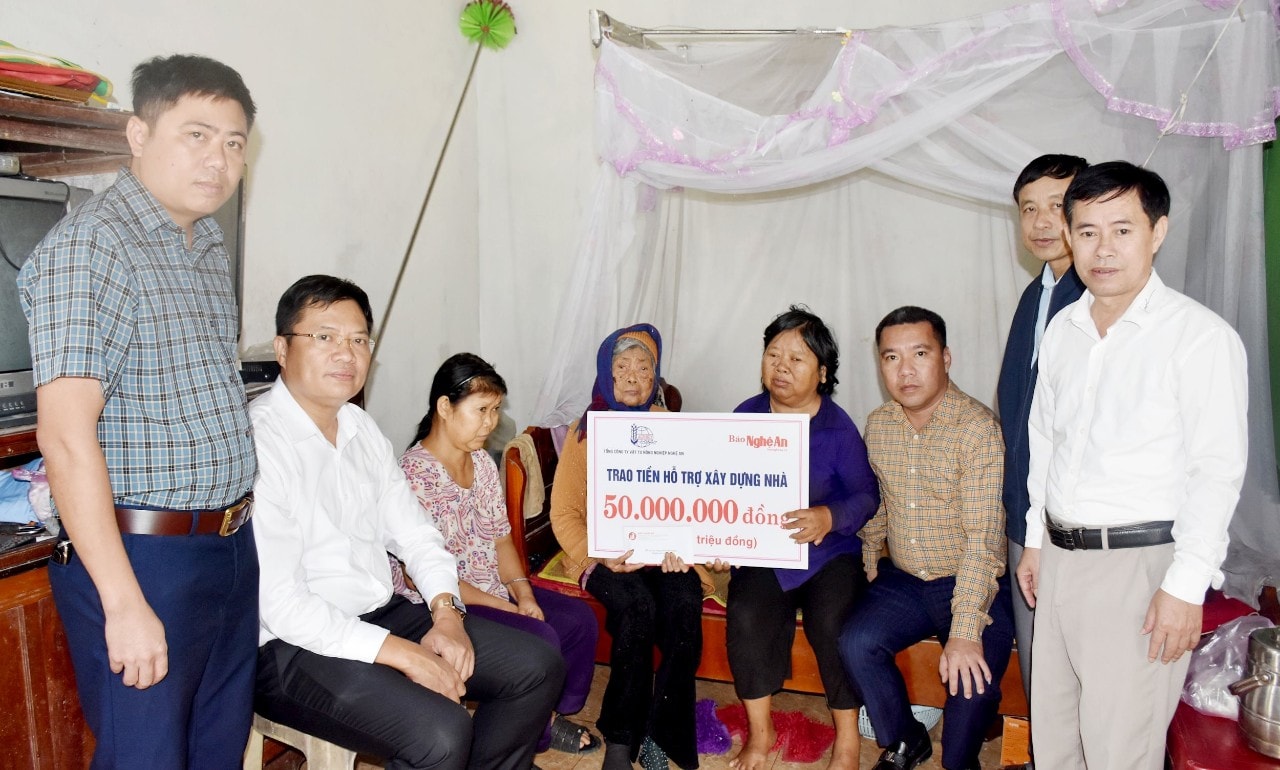
Local authorities will continue to appeal to and mobilize benefactors and philanthropists for the necessary support so that Mrs. Nghi's family can upgrade or build a more spacious house.


