
Huoi Tu highlands - today...
(Baonghean) - Huoi Tu commune (Ky Son district), a remote area, is home to 813 Mong ethnic minority households out of a total of 857 households in the commune. Overcoming the difficulties of natural conditions, the Mong people of Huoi Tu are making new strides in business and improving their quality of life in all aspects...
"A miracle" of reclaiming land and opening up water sources.
Currently, Huoi Tu has 8 farms and family-run agricultural enterprises being developed by local people. This achievement is largely due to the pioneering spirit of many families, including the family of Mr. Ho Ga Vu. He is one of the households representing the Mong ethnic group in Ky Son district that received the title of "Excellent Producer and Businessman" from the province last year. His "miracle" is the opening of roads and the digging of streams to create his farm.
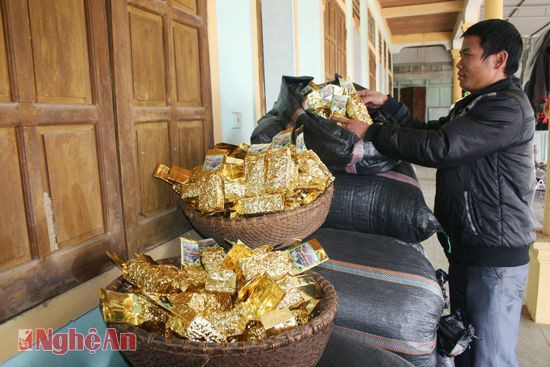 |
| Shan Tuyet tea from Nghe An is made with ingredients harvested in Huoi Tu. |
The valley at the foot of Pha Xac mountain covers an area of 5 hectares, considered a rare flat land area in Huoi Tu commune. However, because the Hmong people usually live on high mountain peaks, the terrain is remote, so this valley remained abandoned for many years. When choosing this land to develop his farm, Mr. Ho Ga Vu faced the difficulty of having no access road. Furthermore, the valley is more than 700 meters from the Pha Xa stream, making it difficult to bring water from the stream. Faced with this situation, he had to mobilize all family members to clear trees and build a road. The whole family began the arduous task of conquering the barren land, carrying cooking utensils and food into the forest; they rested whenever they were tired, and slept in tents in the forest at night. After 40 days, the more than 1.5 km long road leading from the valley to the main road was completed. It can be said that the initial arduous step was overcome.
The next problem was water. Mr. Vu's family continued to cut bamboo and split it into channels to bring water from the stream to the farm. However, the bamboo channels, due to the steep mountainous terrain and water pressure, were frequently damaged, especially after each storm. Mr. Vu decided to borrow money from the bank to buy plastic water pipes. Once the water source was stable, and with support from the District Agricultural Extension Station in providing fish fry, he dug two ponds with a total area of nearly 400 square meters, yielding nearly 500 kilograms of fish each year. This not only provided food for his family but also brought in a significant income.
After initial success with his fish pond, he boldly transformed his family's previously unproductive rice paddy into a 2-hectare fruit orchard. Through research, he learned that varieties like persimmons, jackfruit, mangoes, and peaches were well-suited to the local soil and climate, easy to care for, and fetched good prices. He then traveled to neighboring areas like Tuong Duong and Quy Hop to purchase seedlings for planting. During harvest season, he and his family transport the fruit by motorbike to Muong Xen and the Nam Can border gate for sale. Their average income from selling fruit is over 10 million VND. Fruit trees have a harvesting cycle of over ten years, making the care much easier.
Between 2005 and 2008, recognizing the high value of buffalo and cattle, Mr. Vu boldly expanded his farm and enclosed an additional 6 hectares of forest for grazing, providing a natural food source. At its peak, his herd reached 30 animals, with a total investment of 50 million VND in breeding stock. In addition to natural food sources, he daily utilized corn grown on his family's fields, grinding it and mixing it with banana leaves to supplement the herd's nutrition. He fattened the calves from 3 to 4 months old onwards, as this was their fastest growth period. Each calf purchased for 5 to 7 million VND could be sold for 15 million VND after just one year. Livestock farming became the main source of income for his farm, and Mr. Ho Ga Vu was firmly on his path to wealth in the highlands...
The prospect is called "Snow Shan".
More than 10 years after the Shan Tuyet tea variety was introduced to Huoi Tu by 12 cadres from the 8th Youth Volunteer Brigade (TNXP 8), who lived and worked alongside the local people, the tea plant now holds an important place in the lives of the Mong people here. Currently, the total area of Shan Tuyet tea cultivation in the commune has reached nearly 400 hectares; of which, 6 villages have almost 100% of households growing tea: Huoi Kha, Huoi Khe, Pa Xac, Huoi Mu, Trung Tam, and Huoi Dun. Every year, households and the Youth Volunteer Brigade increase the cultivated area of this crop; the yield from tea is quite high, reaching 120-150 tons/year...
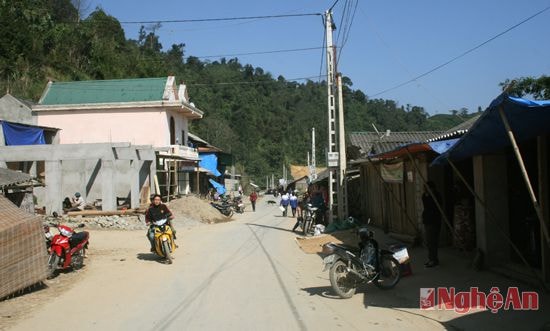 |
| The electricity and road systems leading to the villages of Huồi Tụ have been invested in quite systematically. |
Mr. Ha Ba Ly, Vice Chairman of the People's Committee of Huoi Tu commune, shared: "In Huoi Tu, the Shan Tuyet tea plant has brought prosperity to the people. The tea has thrived on this land for 10 years, and now only less than 58% of households in Huoi Tu are poor, whereas previously almost 90% of the people here were still plagued by poverty. Just persuading the people to plant Shan Tuyet tea was a long story. Initially, the commune campaigned, then asked village elders and heads to go door-to-door, but the people were still hesitant. Thanks to the officers of the Youth Volunteer Brigade 8, they demonstrated the method in their unit, brought seedlings, and guided each household on the hills, from digging holes and planting cuttings to weeding and pruning. The Brigade also acted as a buyer of the product, so the people gradually trusted and developed the tea plant. From here, the Mong people have changed their way of thinking and doing things to escape poverty."
We visited the homes of Mr. Dềnh Như Chò, Mr. Vừ Pá Chống, and Mr. Vừ Khừa Hùa – the Hmong households with the largest tea plantations in Huồi Khả village. They all shared that initially, growing tea was difficult because it required constant weeding and pruning. But now, tea cultivation is as familiar as growing corn or rice, and even more enjoyable because they can harvest several times a month and sell whatever they harvest. Each hectare brings in an annual income of 35 to 40 million VND from tea cultivation. The entire commune has over 200 households growing snow tea. Some households cultivate up to 3 hectares, while others cultivate more than 1 hectare. Of the commune's 400 hectares of tea, about 250 hectares are producing tea; the product is sold both within and outside the province.
Huoi Dun Market is bustling.
Currently, Huồi Đun Market in Trung Tâm village has 36 households engaged in business and services. The wealthiest person in the market is Mr. Vừ Chống Chớ, who owns more than 3 general store stalls and also has a tractor for transportation services. Mr. Chớ shared: "Luckily, my family lives in Trung Tâm village – where the market has existed for a long time. This is a trading and business point for the Hmong, Thai, and Khơ Mú people from neighboring communes such as Phà Đánh, Tà Cạ, Đoọc Mạy, and Na Loi. The demand from the people is increasing, so Mr. Vừ Chống Chớ, like the other 35 businesses, imports all kinds of goods from the lowlands to sell. To save on transportation costs, people have bought their own vehicles to transport goods. From here, many people have learned about business and services as a way to get rich."
Besides selling consumer goods, the households here also sell cattle, chicken breeds, and plants and animals to help people develop livestock farming and crop cultivation. It is estimated that the monthly income of these households ranges from 3 to 4 million VND. For exemplary households like Mr. Vu Chong Cho, this figure is much higher. At the end of 2014, Huoi Tu also received government support to bring electricity to the village, further improving the lives of the people, especially supporting their business activities.
Mr. Ha Ba Ly, Vice Chairman of the People's Committee of the commune, said: "The total natural area of the commune is 11,150 hectares, but flat land is very rare, mainly consisting of rugged hills and mountains, making transportation very difficult. However, 233 Party members here, along with 4,800 people, mainly Mong ethnic minorities, have exploited the potential of the land and advantages to develop the economy. The commune government and the people are hoping that in the future, Huoi Tu will have many new directions in economic development to escape poverty and rise to prosperity."
Thanh Quynh
| RELATED NEWS |
|---|


