
The "Clean from Home to Field" initiative in Anh Son is a shining example.
(Baonghean.vn) - Stemming from the risk of environmental pollution caused by various types of waste, the Anh Son District Farmers' Association has launched the "Clean from Home to Fields" movement to promote the role of people in environmental protection and participation in building new rural areas and civilized urban areas.
CLEAN FIELDS, CLEAN PARK
I arrived in Tuong Son commune on the very day the Farmers' Association was simultaneously deploying its members across 12 branches to collect waste from the fields.
Ms. Nguyen Thi Van from Hamlet 9, Tuong Son Commune, shared: "Previously, walking through the commune's fields, everyone was concerned to see pesticide containers scattered haphazardly along the canals and field edges. I myself used to throw them wherever I pleased after spraying pesticides. For more than two years now, since the Farmers' Association of the commune launched the 'Clean from Home to Fields' campaign, those unsightly images are gone. It has become a habit; at the end of each farming day, the villagers voluntarily collect the discarded containers."pesticide containersThe waste is placed in specially designed concrete tanks located next to the rural roads and transported for proper treatment. In addition, every month, the Farmers' Association of the commune mobilizes all its members to participate in a mass waste collection campaign across all the fields.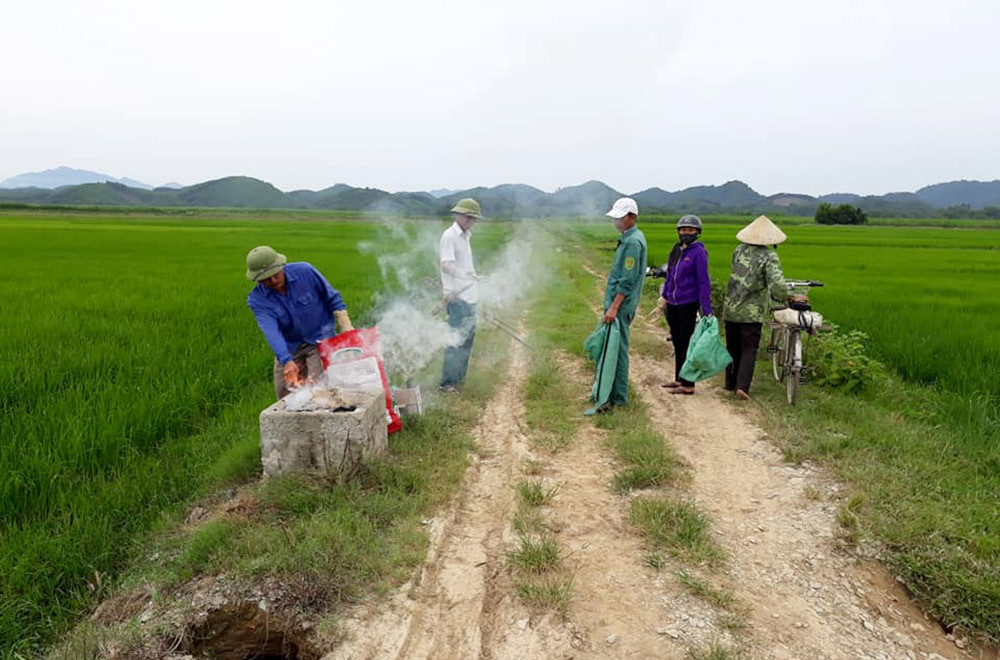 |
| Pesticides are placed in concrete tanks located alongside rural roads and processed according to proper procedures. Photo: Thai Hien |
LIVEAnh Son districtTuong Son commune is a leading locality in cleaning up everything from inside houses to village roads and fields.
Ms. Tran Thi Huong, Chairwoman of the Farmers' Association of Tuong Son commune, said: "In reality, in the past, people in Tuong Son commune only focused on cleaning within their homes and gardens. In recent years, people have changed their awareness of protecting the community environment, focusing on cleaning roads and fields."
Starting in late 2018, the Farmers' Association of the commune, in coordination with the Women's Association, implemented a program for its members to build household waste pits. Officials from the commune to the village level assessed the circumstances of each household to provide appropriate assistance. Families facing difficulties received support. To date, nearly 100% of households in the entire commune have household waste pits. Notably, the people in O O Gia Hop village, where 100% of the population are ethnic Thai people and the area is far from the center, have responded very enthusiastically.
Not stopping there, the commune launched a campaign to create a small flower garden for every household and a flower-lined road for every section of road. To date, Tuong Son commune has planted nearly 3 km of flower-lined roads along the commune and village roads, notably in villages 2, 3, and 12.
Following the motto "Clean house, clean alley" to "clean fields," the Farmers' Association of the commune has also mobilized funds to build collection tanks for pesticide containers in the fields. To date, 80 pesticide collection tanks have been installed in all the fields.
Every month, the Farmers' Association of the commune organizes simultaneous campaigns across all fields to collect pesticide packaging, and ensures that 100% of its members sign commitments to strictly adhere to regulations on maintaining hygiene in their homes, production and business areas, and protecting the environment.
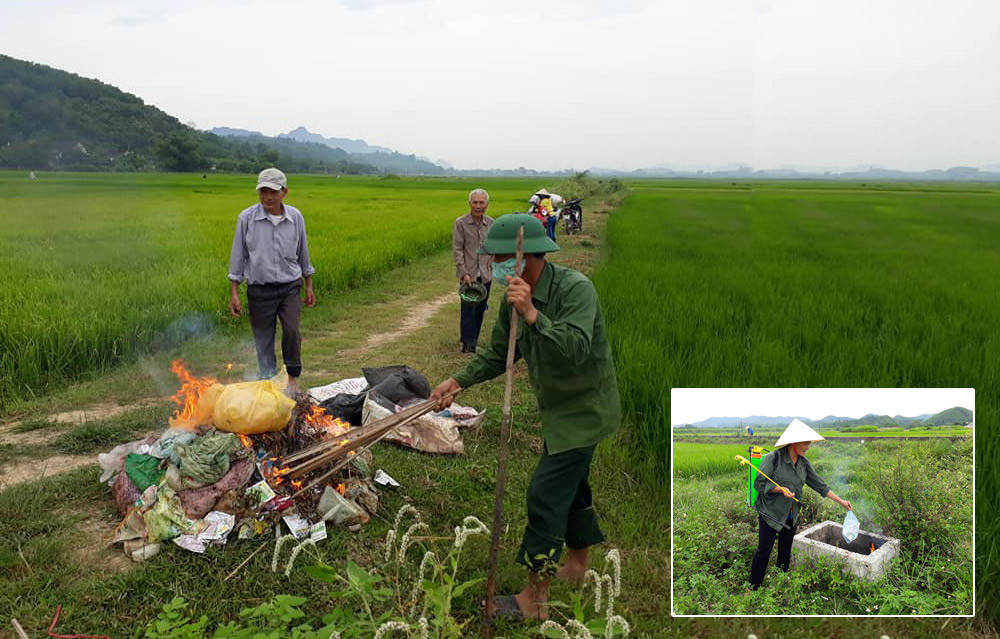 |
| Currently, farmers' associations in Anh Son district are vigorously implementing the "Clean from Home to Field" movement. Photo: Thai Hien |
HOUSEHOLD WASTE DISPOSAL
Hoa Son is also one of the communes that has successfully implemented the "Clean from Home to Fields" movement in Anh Son district. Currently, in terms of environmental criteria, 95% of households in Hoa Son commune have access to clean drinking water; 100% of households have toilets that meet the prescribed standards, with a drainage system that ensures hygiene and does not cause air or water pollution.
Mr. Tran Quoc Khanh, Vice Chairman of the Hoa Son Commune People's Committee, said: Recognizing that the local waste management criteria, which include proper waste disposal, are one of the most challenging aspects, Hoa Son commune has adopted a unique approach different from other communes achieving New Rural Area status in Anh Son district. This involves implementing a policy requiring each household and residential area to construct a waste pit for collection, disposal, and processing. Accordingly, the commune has developed a model waste pit design with dimensions and costs tailored to each household.
To build a waste incinerator, each household only needs to spend over 500,000 VND to buy materials such as sand, gravel, cement, and steel. The incinerator is about 1 meter high, with a 1-meter wide compartment; it has a steel frame to hold the waste and a roof to protect it from rain…
After burning the waste, households utilize the ash to make fertilizer for agricultural production. To date, all 12 villages in the commune have implemented the policy of building household waste pits, with 85% of households using them. Each village has 10-12 model pits built for people to see.
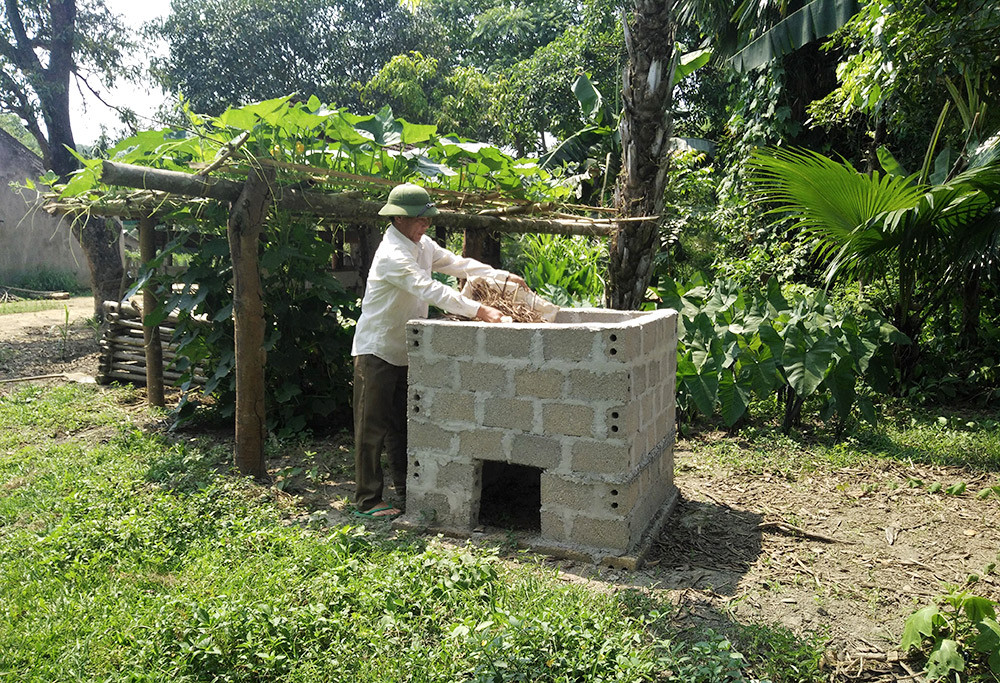 |
| In addition to collecting waste in the fields, the Anh Son District Farmers' Association advocates that each family and residential area should build a waste pit at home to collect, consolidate, and process waste. |
“Identifying environmental protection as one of the 19 criteria of the National Target Program for building new rural areas, the district's Farmers' Association has launched a campaign among all its members to protect the environment, especially by responding to the "Clean from home to the fields" movement. Currently, local associations are implementing the "Clean from home to the fields" movement. From this movement, the model of collecting and processing pesticide packaging waste bins has been widely implemented in the communes of Khai Son, Hoa Son, Linh Son, Tao Son, Phuc Son, Tuong Son, Hung Son, and Cam Son, with over 900 bins. In addition, over 7,000 households in the district have also built waste pits at home.”


