
Hop Minh - A journey of innovation and comprehensive development
Thanks to the Party's determination to innovate its leadership methods, leverage its potential and advantages, and effectively pioneer digital transformation, Hop Minh (formerly known as Vinh Thanh, a place once honored by President Ho Chi Minh's visit) has made remarkable progress on its development journey. The goal of achieving advanced new rural standards by 2026 and model status by 2028 is a testament to the unity and determination of the entire political system and people of the area.
A land rich in historical and cultural traditions.
Hop Minh commune, Nghe An province, was formed from the merger of 5 administrative units: Vinh Thanh, Vien Thanh, Son Thanh, Bao Thanh, and Long Thanh.
After the merger, the commune has a natural area of 54.75 km² and a population of 45,210 people, of which Catholics account for 15.6%. It comprises 47 hamlets, 74 Party branches, and 1,635 Party members.
.jpg)
Throughout history, Hop Minh commune has made immense contributions to the national liberation and reunification of the country. The commune boasts 721 martyrs who bravely sacrificed their lives in the resistance wars against France and the United States, and in defending the homeland, along with 46 Vietnamese Heroic Mothers. Currently, the commune still has 349 wounded soldiers, 110 sick soldiers, 58 relatives of martyrs, and 78 people affected by chemical toxins who are receiving monthly allowances. These figures not only evoke heroic and tragic memories but also affirm the resilient and indomitable tradition of a homeland rich in patriotism.
Hop Minh commune is also a land associated with a special milestone in modern history, as on December 10, 1961, President Ho Chi Minh visited the Vinh Thanh Agricultural Cooperative, now Vinh Thap hamlet, Hop Minh commune. To preserve this sacred memory, the local government and people have built the Ho Chi Minh Visit to Vinh Thanh Memorial Area in Vinh Thap hamlet, displaying many valuable documents, images, and artifacts. This project is not only a historical and cultural relic of the commune but also a significant site, fostering revolutionary spirit, educating about traditions, and reminding today's generations to follow the path that President Ho Chi Minh envisioned.
.jpg)
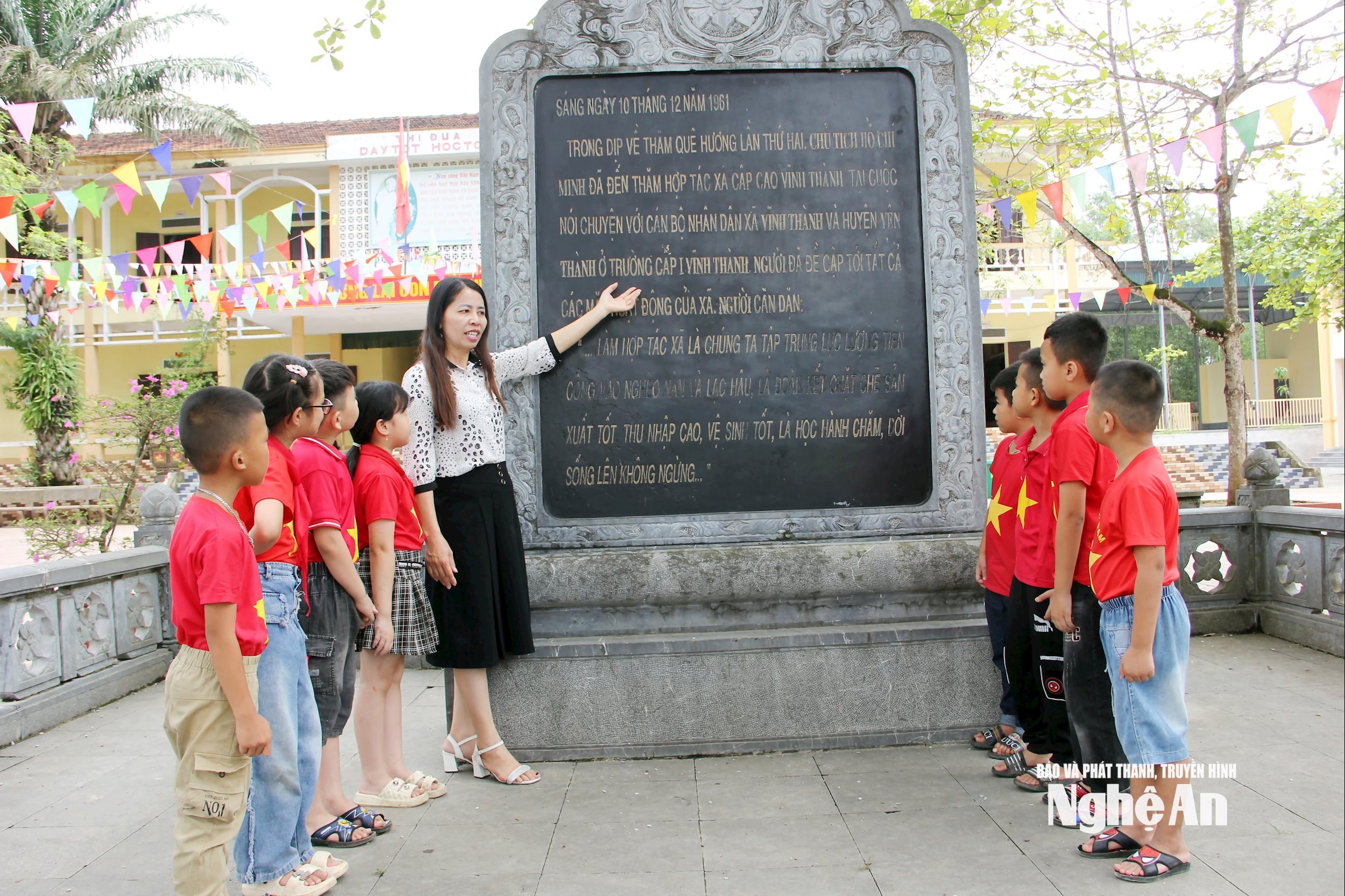
Hop Minh commune currently has 17 historical and cultural relics, including 4 national-level relics and 13 provincial-level relics, creating a diverse picture of cultural and historical depth.
Prominent among them is the Hao Kiet Temple (Hao Cuong hamlet) - a national historical relic recognized in 2023, dedicated to Thai Uy Lai Quoc Cong Phan Cong Tich, a renowned general under the Le Trung Hung dynasty.
The magnificent temple, with its many traditional architectural features, is also the venue for two major annual festivals: the Village of Heroes Festival (February 11-12 of the lunar calendar) and the Six-Month Festival (June 13-16 of the lunar calendar). While the ceremonial part is solemn with rituals such as the Announcement and Grand Sacrifice, the festival part is lively with folk games, sports competitions, and community exchanges, attracting large crowds and contributing to a rich spiritual life.
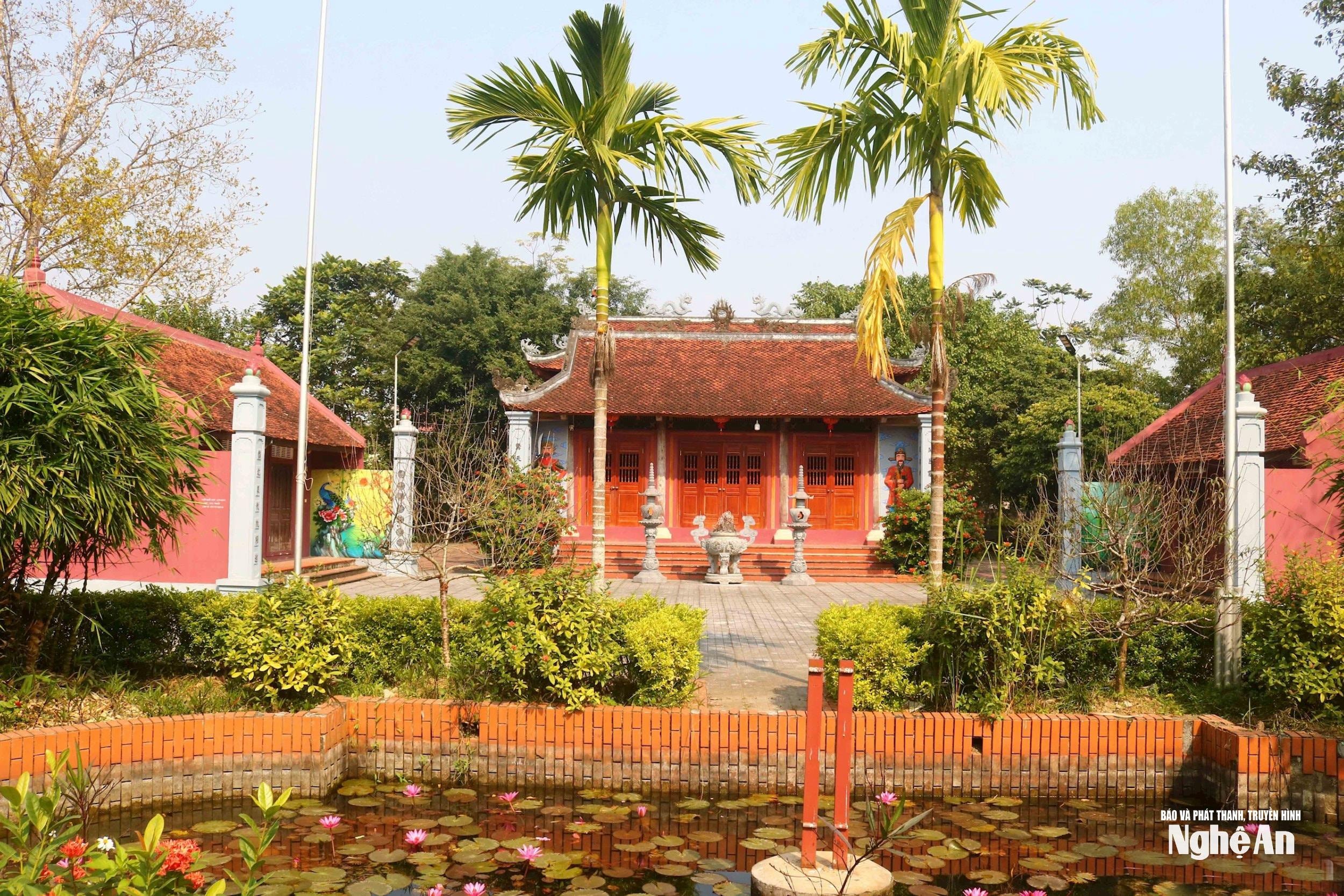
Alongside this, the Le Doan Nha Church (Trang Son hamlet) - a national historical monument - preserves the memory of the patriot Le Doan Nha (1837-1888) and the Can Vuong movement in the locality. The structure was first built in 1892 (during the reign of Emperor Thanh Thai, the 5th year) on the garden of Mr. Le Van Dang, the patriot's father. After being destroyed during the suppression of the Can Vuong movement, the church was rebuilt in 1924 (during the reign of Emperor Khai Dinh) on the same site, and to this day remains a place honoring the indomitable spirit of this outstanding son of the homeland.
It is impossible not to mention the Hoang Ta Thon Church (formerly Van Trang hamlet, Long Thanh commune, now Hop Minh commune) - a national historical monument commemorating the naval general of the Tran Dynasty, Sat Hai Dai Vuong Hoang Ta Thon (1254-1339). He was a renowned general who made great contributions to the resistance wars against the Yuan-Mongol invaders, especially the victory at Bach Dang in 1288. After achieving many glorious victories, he was granted the title "Sat Hai Dai Vuong" and given land in the Thien Bong area (now Van Trang village) to establish a farm.
Over the centuries, this place has become a sacred space, both commemorating the general's contributions and serving as a spiritual anchor for generations of descendants. These relics, along with the preserved traditional festivals, have contributed to the unique cultural life of Hop Minh commune today.
.jpg)
Not only is Hop Minh commune known for its dense network of historical relics, but it also preserves many unique cultural values in its daily life. Local cultural and artistic clubs are still maintained, becoming spiritual gathering places for the people. Notable examples include the Folk Song Club (Vi-Giam style) and the Cheo (traditional opera) Club in Nong Trang hamlet (formerly Son Thanh commune), and the Traditional Opera Club and the Drum Club in Long Thanh commune (formerly). In addition, in Bao Thanh commune (formerly), the arts and sports movement is also vibrant with the Folk Song Club (Vi-Giam style) and the Health and Wellness Club, attracting a large number of members.
These clubs not only foster a love for traditional art but also contribute to strengthening community bonds and creating a rich and distinctive cultural space.
From potential to transformative impact
Over the past five years, despite facing numerous difficulties, Hop Minh commune has affirmed its position with steady progress on the path of development. The commune's economy has grown rapidly, shifted in the right direction, and effectively exploited local advantages.
The total value of products in 2025 is estimated at VND 2,223.8 billion, an increase of VND 923.3 billion compared to 2020, achieving an average growth rate of 10.45%. Average per capita income in 2025 is estimated at VND 76.9 million, an increase of VND 26.1 million compared to 2020, fulfilling the planned target.
.jpg)
.jpg)
.jpg)
The agricultural sector will develop comprehensively, focusing on the application of high technology, enhancing product value, and aiming for sustainability. The value of agricultural products in 2025 is estimated to reach 532 billion VND, an increase of 92.9 billion VND compared to 2020, with an average growth rate of 3.85%.
In the agricultural sector, the commune focuses on producing high-quality rice, establishing product distribution linkages, and flexibly transforming the crop structure towards economic efficiency. Models of greenhouse farming for clean vegetables and fruits have been established, with 5 products achieving OCOP 3-star certification. Average annual food production is maintained at approximately 25,000 tons, affirming the role of agriculture in the local economy. Livestock farming is shifting towards industrial production, applying high technology, while also focusing on breed selection and disease prevention, contributing to increased production value and ensuring disease safety.
.jpg)
In the field of aquaculture, the commune utilizes over 200 hectares of water surface for farming, supplying hundreds of tons of products to the market annually, generating increasingly higher value. Forestry is prioritized for protection and sustainable development, with over 1,000 hectares of forest, both rationally exploited and replanted annually. Simultaneously, the movement to build advanced and model new rural areas is actively implemented, receiving strong support from the people.
The industrial and construction sector made its mark with an estimated product value of VND 1,172.7 billion, an increase of VND 595.9 billion compared to 2020, achieving an average growth rate of 15.25%. Total social investment reached VND 1,656.8 billion, an increase of VND 889.8 billion.
Key trades such as carpentry, mechanics, tailoring, and food processing have expanded, attracting business investment and creating stable jobs for local workers.
Rural and inter-field transportation systems have been concreted and asphalted, meeting the needs of production and travel. Infrastructure such as housing, schools, health stations, and cultural centers have been upgraded, contributing to the transformation of the rural landscape.
.jpg)
The commune's trade and service sector has developed diversely, with product value reaching 519 billion VND, an increase of 234.5 billion VND compared to 2020, and an average growth rate of 12.3%. The total retail turnover of goods and services reached 2,341 billion VND, an increase of 1,057.3 billion VND, reflecting the ever-expanding consumer demand.
Business activities are strictly controlled in terms of food hygiene and safety. The credit and banking system also operates efficiently, with 2 people's credit funds (Vien Thanh and Bao Thanh) and 2 bank branches (BIDV and VietinBank), creating favorable conditions for people to access capital for production and business.
These achievements are clear evidence of the comprehensive development of Hop Minh commune, in which economic, cultural, and social factors are harmoniously combined, creating a new face for the homeland in the new era.
Vision and development direction
Entering a new term, Hop Minh commune has set the goal of comprehensive development, focusing on building a strong political system while promoting the economy, improving socio-cultural life, and ensuring national defense and security.
.jpg)
Digital transformation is being promoted in all areas, from the activities of the Party and government to socio-political organizations. The commune also focuses on attracting investment in industry, construction, and services, while simultaneously socializing education and healthcare, addressing employment issues, achieving sustainable poverty reduction, developing culture, and preserving national identity.
Economically, the focus will be on mobilizing and effectively utilizing resources to boost the economy and shift the economic structure to suit local potential. Investing in synchronized infrastructure, developing large-scale model farms applying high technology, and linking product consumption within planned regions will be key priorities.
.jpg)
By 2030, Hop Minh commune aims for a total product value exceeding 4,000 billion VND, with an economic growth rate of approximately 12% per year. The economic structure will shift towards a more rational direction, with industry, construction, and services accounting for the majority, and agriculture developing sustainably.
The average per capita income is targeted to reach approximately 135 million VND/year, and the transportation infrastructure is almost completely paved, creating a modern and attractive rural landscape. The commune aims to complete the advanced new rural standard by 2026 and the model standard by 2028.
The locality also aims to reduce the poverty rate to just 0.2%; improve cultural and spiritual life, with over 30% of families regularly participating in sports, and nearly 90% of villages achieving cultural standards. Healthcare is prioritized, with the rate of malnutrition among children under 5 years old decreasing to 7.5%. Education continues to be a highlight, with 100% of schools meeting national standards, and two-thirds of them achieving level 2 standards.
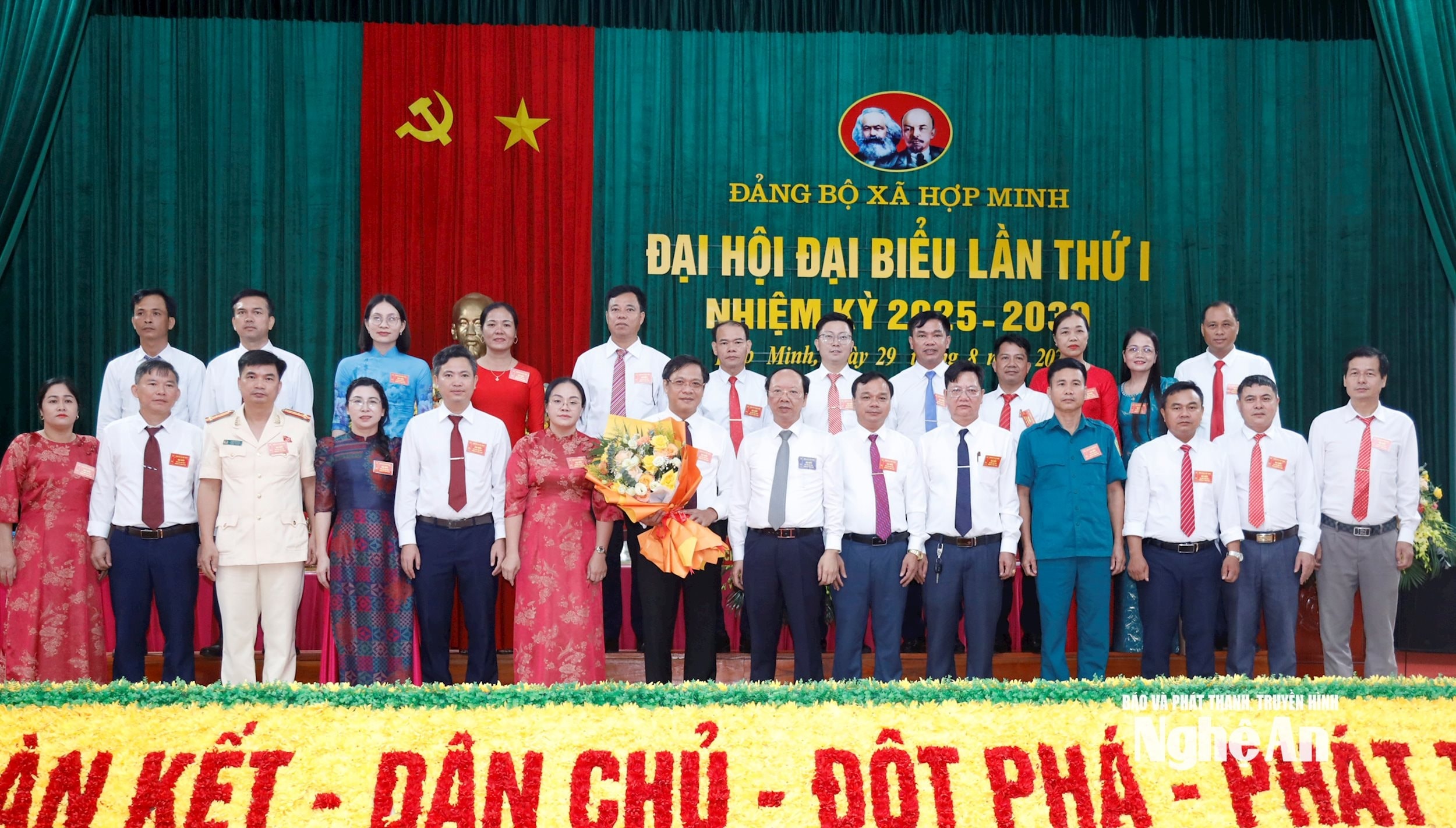
Hop Minh Commune has identified three breakthrough areas for the new term: Building a team of cadres, civil servants, public employees, and Party members, especially key officials, who possess the qualities, capabilities, prestige, dedication, and responsibility to meet the demands of the new era. Alongside this, focusing on digital transformation, building and developing e-government and digital government. Promoting administrative reform, especially the reform of administrative procedures; building a proactive, professional, modern, and people-serving administration. Importantly, strengthening investment attraction; building industrial parks and clusters; actively mobilizing and effectively utilizing all resources to build and upgrade a synchronous rural infrastructure system to meet development requirements.
These directions promise to lead Hop Minh towards a sustainable and harmonious future, closely linked to the overall development of the province and the country.
List of members of the Executive Committee of the Hop Minh Commune Party Committee for the 2025-2030 term:
1. Comrade Vu Tuan Dung - Secretary of the Party Committee, Chairman of the People's Council of the commune;
2. Comrade Nguyen Van De - Standing Deputy Secretary of the Commune Party Committee;
3. Comrade Nguyen Thi Phuong Thao - Deputy Secretary of the Party Committee, Chairperson of the People's Committee of the commune;
4. Comrade Nguyen Khac Dao - Member of the Standing Committee of the Party Committee, Head of the Party Building Department;
5. Comrade Phan Duc Phuong - Member of the Standing Committee of the Party Committee, Chairman of the Party Committee's Inspection Committee of the commune;
6. Comrade Nguyen Van Hung - Member of the Standing Committee of the Party Committee, Chairman of the Fatherland Front Committee of the commune;
7. Comrade Hoang Thi Nhu Quynh - Member of the Standing Committee of the Party Committee, Vice Chairperson of the People's Council of the commune;
8. Comrade Pham Quang Sang - Member of the Standing Committee of the Party Committee, Vice Chairman of the People's Committee of the commune;
9. Comrade Le Anh Tu - Member of the Standing Committee of the Party Committee, Vice Chairman of the People's Committee of the commune;
10. Comrade Tran Van Quy - Member of the Standing Committee of the Party Committee, Head of the Commune Police;
11. Comrade Nguyen Trong Tung - Member of the Standing Committee of the Party Committee, Commander of the Commune Military Command;
12. Comrade Tran Thi Nhi - Member of the Party Committee Executive Board, Deputy Head of the Party Building Department;
13. Comrade Ngo Thi Xuyen - Member of the Party Committee, Deputy Head of the Inspection Committee;
14. Comrade Dang Quang Hoang - Member of the Party Committee, Head of the Economic Department;
15. Comrade Tran Le Anh Duc - Member of the Party Committee, Vice Chairman of the Fatherland Front Committee, Secretary of the Youth Union of the commune;
16. Comrade Thai Thi Quyen - Member of the Party Committee, Vice Chairperson of the Fatherland Front Committee, Chairperson of the Women's Union of the commune;
17. Comrade Nguyen Van Chien - Member of the Party Committee, Vice Chairman of the Fatherland Front Committee, Chairman of the Farmers' Association of the commune;
18. Comrade Dang Trong Ty - Member of the Party Committee, Vice Chairman of the Fatherland Front Committee, Chairman of the Veterans Association of the commune;
19. Comrade Ho Xuan Hoan - Member of the Party Committee, Deputy Head of the Culture and Social Affairs Committee of the People's Council of the commune;
20. Comrade Nguyen Hong Quynh - Member of the Party Committee, Deputy Head of the Economic and Budget Committee of the People's Council of the commune;
21. Comrade Le Trong Linh - Member of the Party Committee, Deputy Director of the Commune Public Administrative Service Center;
22. Comrade Nguyen Duc Cuong - Member of the Party Committee, Principal of Long Thanh Primary School;
23. Comrade Tran Vinh Tuong - Member of the Party Committee, Principal of Vinh Thanh Secondary School;
24. Comrade Ho Thi Hoi - Member of the Party Committee, Principal of Vien Thanh Kindergarten;
25. Comrade Dang Trong Chien – Member of the Party Committee, Principal of Bao Thanh Secondary School.


