
Van Tu Commune - Accelerating on the path to development
Established from the three communes of Vân Tụ, Liên Thành, and Mỹ Thành, Vân Tụ is not only a new administrative unit but also represents the connection of resources, aspirations, and potential of a rapidly developing rural area. With the spirit of "Unity – Democracy – Innovation – Development," Vân Tụ is gradually asserting its position and contributing to a new face for its homeland in Nghệ An province.
Strategic Land
Van Tu commune was formed by merging three communes: My Thanh, Van Tu, and Lien Thanh, which were formerly five old communes (My Thanh, Cong Thanh, Khanh Thanh, Lien Thanh, and Ly Thanh). The commune has a total natural area of 48.73 square kilometers.2The total population of 43,992 people is distributed across 45 hamlets. The locality has two parishes, six sub-parishes (of which 17% of the population are Catholic), one Buddhist temple (Huong Pagoda) and two Buddhist establishments.
Van Tu borders the communes of Hop Minh, Quan Thanh, Van Du, Van Hien, and Van Kieu. This location offers significant advantages in terms of transportation connectivity and economic development, especially in the context of Nghe An province's efforts to promote inter-regional transportation infrastructure projects.
.jpg)
The locality currently has 19 historical relics, including 4 national-level relics and 15 provincial-level relics. Among them, the Trang Ke relic site – where 72 Soviet soldiers from Nghe Tinh were executed – was classified as a special national relic in September 2025. Trang Ke, also known as Thung Co Hung, was formerly located in the old My Thanh commune, now Trang Nien hamlet, Van Tu commune.
During the demonstration commemorating the 13th anniversary of the Russian October Revolution (November 7, 1930), the people of the former My Thanh commune, now Van Tu commune, participated very enthusiastically in the struggle. Following this demonstration, the colonial and feudal forces intensified their repression by establishing the strongest military outpost in the former Yen Thanh district. At the same time, they built a system of district and commune-level administrative offices to sabotage the local revolution.
They also used Thung Co Hung (a high mound next to National Highway 7, near Trang Ke market) as a place to shoot and kill revolutionary fighters to intimidate the people's fighting spirit. From November 7, 1930, to September 1931, they executed 72 Soviet fighters, sons of the Nam Dan, Do Luong, and Yen Thanh areas; 20 comrades from My Thanh commune alone fell.
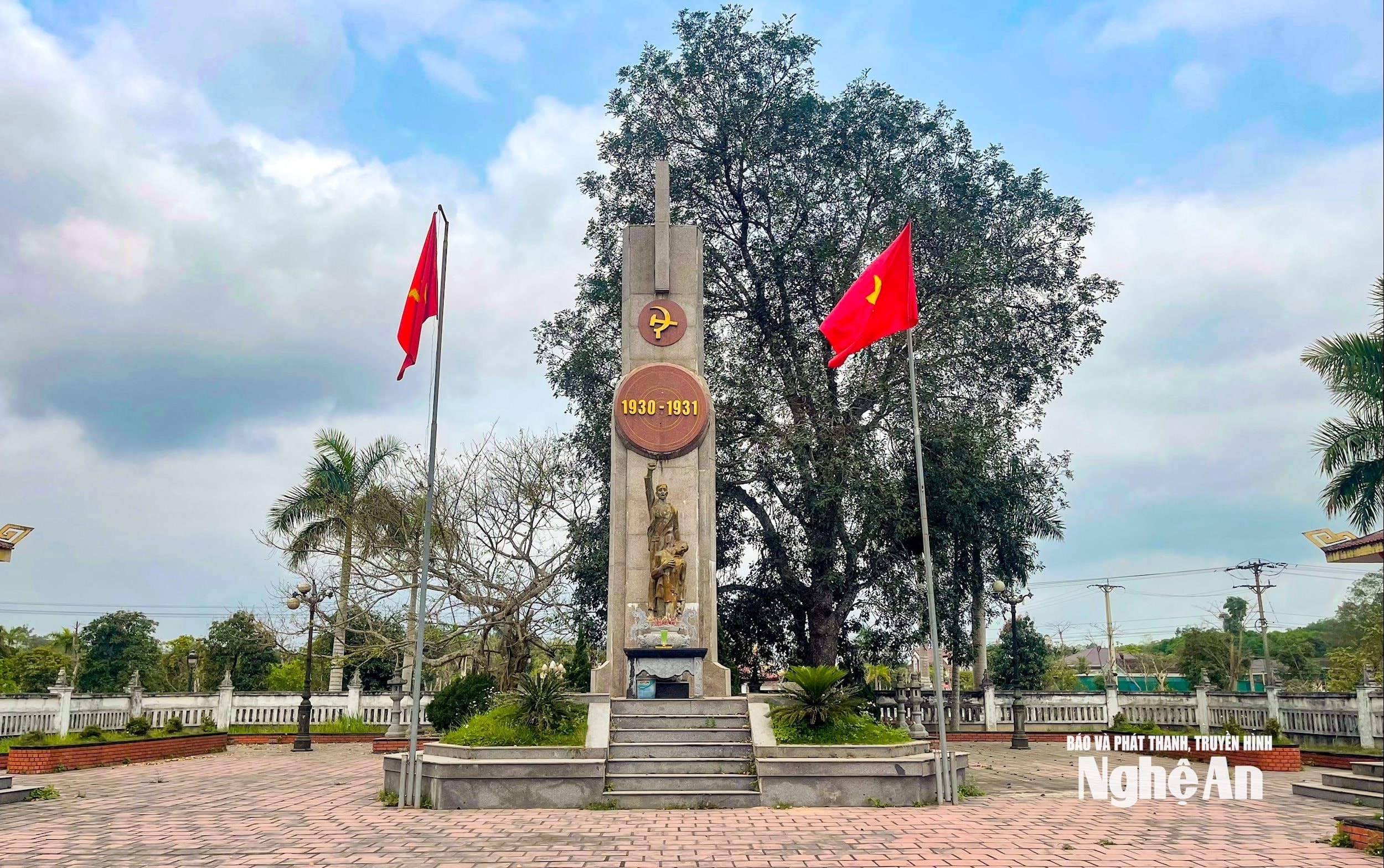
To show respect to the generations of ancestors who sacrificed for the revolutionary cause and to serve as a "red address" for educating about patriotic traditions, Nghe An province has implemented a project to invest in the construction of a memorial temple for martyrs at the Monument to the 72 Communist Soldiers of 30-31.
With its unique natural landscapes and preserved traditional cultural values, Van Tu commune has the potential to develop community-based tourism and spiritual tourism models linked to historical sites such as Long Son Thuy Quoc Temple, Cao Son Temple, Huong Pagoda, the National Special Historical Site of the Temple of 72 Communist Soldiers 1930-1931 (also known as Trang Ke Historical Site), Tru Phap communal house, Lien Tri communal house, etc., attracting tourists to experience local culture and explore traditional craft villages.
.jpg)
Overcome challenges, make your mark.
During the 2020-2025 term, Van Tu commune faced numerous difficulties, but the local authorities transformed these challenges into opportunities, creating solid progress. The total product is estimated to reach VND 2,077.24 billion by 2025, an increase of VND 658.45 billion compared to 2020, equivalent to a 46.41% increase. The average annual economic growth rate for the 2020-2025 period is estimated at 10.31%.
The economic structure has shifted positively, with agriculture, forestry, and fisheries accounting for 32.66%, industry and construction 32.02%, and services 35.33%. Per capita income reached 80.25 million VND/year, and total social investment reached 419 billion VND, an increase of 168 billion VND compared to the beginning of the term.
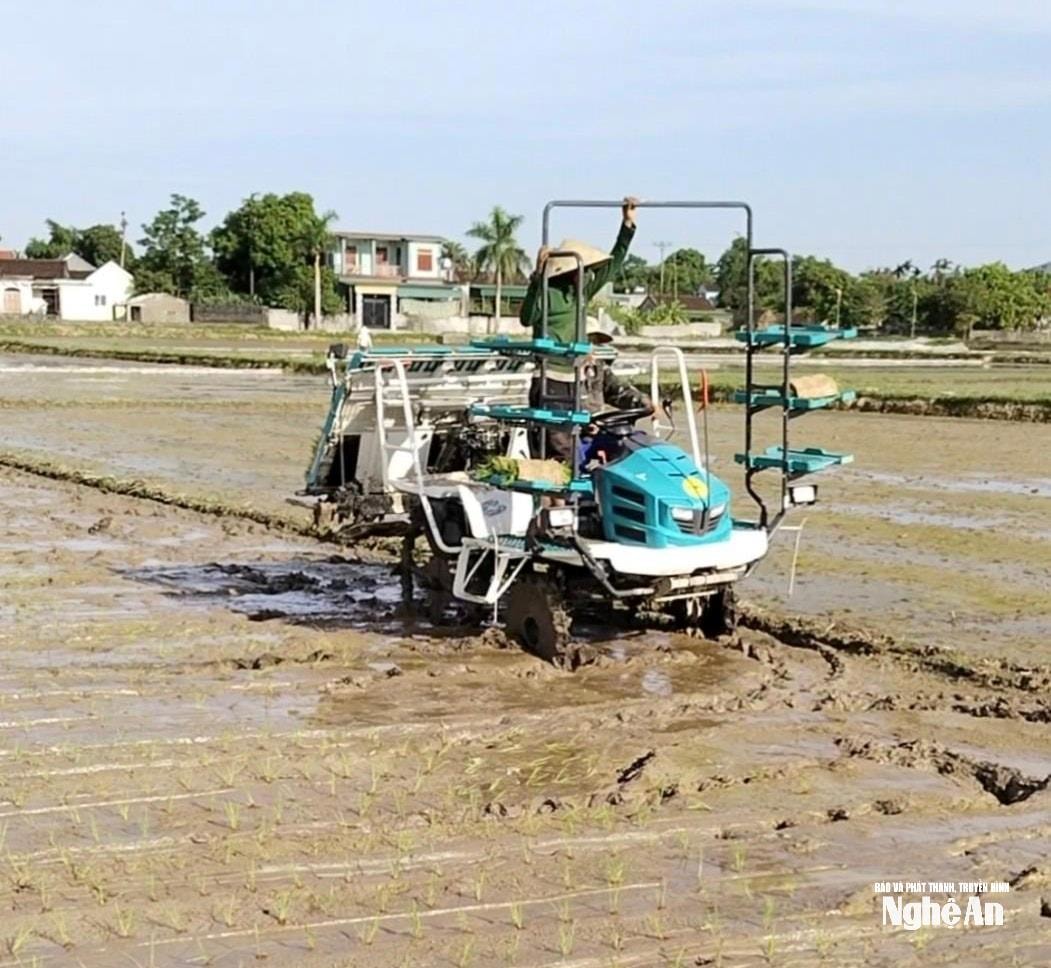
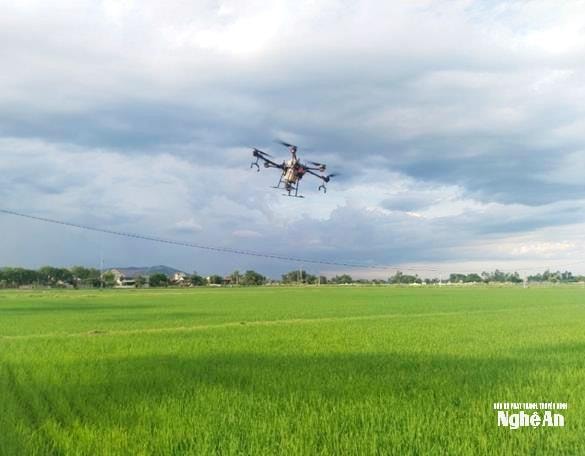
Agriculture has undergone a significant transformation, with production value reaching 585.35 billion VND and average food production reaching nearly 22,000 tons. The sector's structure has shifted in the right direction, reducing crop cultivation and increasing livestock farming and services. Production models adhering to VietGAP standards, cooperative linkages, and traceability labels have been promoted. Livestock farming has shifted to concentrated farms with mechanization, while forest protection and disease prevention are implemented systematically.
.jpg)
.jpg)
The industrial and construction sector recorded a value of VND 975.29 billion, of which basic construction accounted for VND 745.97 billion. Industrial park planning attracted investment and created jobs for thousands of workers. Transportation infrastructure, schools, and markets were upgraded to meet development needs. The service and trade sector reached VND 496.67 billion, with more than 1,500 business households, from e-commerce to traditional markets, promoting the circulation of goods and increasing people's income.
Budget revenue and expenditure are managed transparently and economically, with budget revenue reaching VND 13.31 billion in 2024 and budget expenditure at VND 61.1 billion. The planning for the period 2021-2030, with a vision to 2045, focuses on building a synchronous infrastructure and efficient transportation connectivity. Administrative reform has achieved outstanding results, with the rate of timely processing of applications exceeding 98%, and nearly 90% of applications processed online. Document management software and population databases are widely applied, improving service efficiency.
.jpg)
Resource management and environmental protection are implemented synchronously, with inspection and pollution treatment at farms and border areas, combined with disinfection and sterilization. Education has seen positive changes, with schools meeting national standards and the quality of good and excellent students improving. The movement to build a cultured way of life achieved 83% of hamlets and 86% of households as cultured families in 2024.
The poverty rate decreased to 1.6% in 2024. Vocational training and job placement efforts were effective, with 16 vocational training classes for 495 workers and 790 new jobs created each year.
These achievements serve as a foundation for Van Tu to continue its development journey, aiming towards many sustainable goals.
Sustainable development orientation
Van Tu commune, Nghe An province, aims to become a comprehensively and sustainably developed locality during the 2025-2030 term. With a focus on high-tech agriculture, processing industries, and services, Van Tu strives to improve the lives of its people, maintain national defense and security, build a strong political system, and achieve advanced new rural standards by 2030.
Specific objectives are clearly defined. Regarding Party building, the commune sets a target of 95% of grassroots Party organizations successfully completing their annual tasks, with no organizations failing to complete their tasks, and simultaneously recruiting at least 3% new Party members each year.
.jpg)
Economically, the average growth rate is set at 11-12%, with a total product of 3,500 billion VND. The economic structure is shifting towards modernization: agriculture, forestry and fisheries 20-25%, industry and construction 38-41%, services 39-42%. State budget revenue is projected to reach 34-36 billion VND, per capita income 110-120 million VND/year, and total social investment 750-800 billion VND. 95% of transportation infrastructure is paved, and 2-3 products achieve OCOP standards of 3 stars or higher.
In the socio-cultural field, Van Tu aims to control the population growth rate to below 1.2%. The percentage of culturally advanced families and hamlets reaches 95% and 90% respectively, and the poverty rate decreases by 0.1-0.2% annually. The percentage of the population participating in health insurance reaches 95.5%, social insurance reaches 33%, and the percentage of trained workers reaches 82.8%. Education aims for 93% of schools to meet national standards level 1, 20-26% to meet level 2, and the number of hospital beds reaches 12.5/10,000 people. Regarding the environment, 98% of the rural population has access to clean water, and 97% of solid waste is collected and treated.
.jpg)
National defense and security are ensured with a strong and comprehensive foundation, meeting annual security and order standards. To achieve these goals, Van Tu focuses on key tasks: building an effective political system, investing in educational infrastructure, preserving cultural heritage, managing resources, promoting digital transformation, strengthening national defense and security, developing a comprehensive planning framework, and promoting distinctive agricultural and handicraft products. Key products will be developed sustainably, meeting quality standards and market demands.
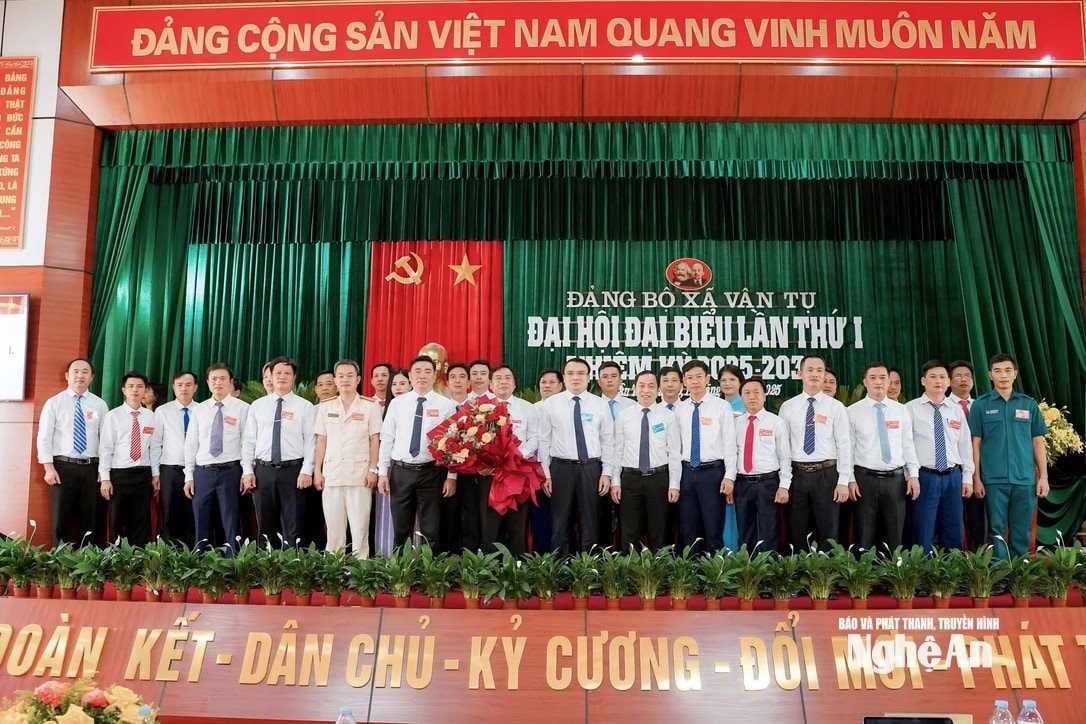
The three breakthroughs include: breakthroughs in building a strong political system, personnel work, and improving the quality of human resources; Breakthroughs in administrative reform, digital transformation and application of science and technology, effective implementation of the two-tiered local government model; Breakthroughs in infrastructure development.
With the concerted efforts of the people, the Party committee, and the government, it is promising that the above goals will be realized, leading Van Tu towards a future of comprehensive and sustainable development.
List of members of the Executive Committee of the Van Tu Commune Party Committee for the 2025-2030 term:
1. Comrade Hoang Danh Truyen - Secretary of the Party Committee, Chairman of the People's Council of the commune.
2. Comrade Pham Xuan Thach - Standing Deputy Secretary of the Party Committee.
3. Comrade Nguyen Van Thuan - Deputy Secretary, Chairman of the People's Committee of the commune.
4. Comrade Nguyen Van Le - Member of the Standing Committee of the Party Committee, Head of the Party Building Department.
5. Comrade Hoang Van Duong - Member of the Standing Committee of the Party Committee, Chairman of the Party Committee's Inspection Committee.
6. Comrade Nguyen Van Dong - Member of the Standing Committee of the Party Committee, Vice Chairman of the People's Council of the commune.
7. Comrade Nguyen Nhu Hoan - Member of the Standing Committee of the Party Committee, Vice Chairman of the People's Committee of the commune.
8. Comrade Nguyen Dai Minh - Member of the Standing Committee of the Party Committee, Chairman of the Fatherland Front Committee of the commune.
9. Comrade Nguyen Dinh Thi - Member of the Standing Committee of the Party Committee, Vice Chairman of the People's Committee of the commune.
10. Comrade Duong Anh Chinh - Member of the Standing Committee of the Party Committee, Head of the Commune Police.
11. Comrade Phan Dinh Quyet - Member of the Standing Committee of the Party Committee, Commander of the Commune Military Command.
12. Comrade Nguyen Van Hoa - Member of the Party Committee, Chief of the Party Committee Office.
13. Comrade Phan Van Khoi - Member of the Party Committee, Deputy Head of the Party Building Department.
14. Comrade Nguyen Dang Minh - Member of the Party Committee, Deputy Head of the Economic and Budget Committee of the Commune People's Council.
15. Comrade Nguyen Ba Tan - Member of the Party Committee, Head of the Economic Department.
16. Comrade Pham Cong Su - Member of the Party Committee, Head of the Culture and Social Affairs Department.
17. Comrade Nguyen Van Nham - Member of the Party Committee, Deputy Director of the Public Administration Center.
18. Comrade Phan Bá Sỹ - Member of the Party Committee, Deputy Head of the Party Committee's Inspection Committee.
19. Comrade Nguyen Vinh Son - Member of the Party Committee, Vice Chairman of the Fatherland Front, Chairman of the Veterans Association.
20. Comrade Nguyen Thi Thanh - Member of the Party Committee, Vice President of the Fatherland Front, President of the Vietnam Women's Union.
21. Comrade To Viet Tri - Member of the Party Committee, Vice Chairman of the Fatherland Front - Chairman of the Farmers' Association.
22. Comrade Nguyen Van Truong - Member of the Party Committee, Deputy Head of the Culture and Social Affairs Committee - People's Council.
23. Comrade Nguyen Hong Oai - Member of the Party Committee, Vice Chairman of the Fatherland Front - Secretary of the Youth Union.
24. Comrade Dong Van Nguyen - Member of the Party Committee, Principal of Khanh Thanh Primary and Secondary School.
25. Comrade Ho Dang Son - Member of the Party Committee, Principal of Phan Thuc Truc High School.
26. Comrade Vu Van Tri - Member of the Party Committee, Principal of My Thanh Secondary School.
27. Comrade Pham Thi Thao - Member of the Party Committee, Principal of Nguyen Ba Du Secondary School.
28. Comrade Nguyen Van Minh - Member of the Party Committee, Head of Khanh Thanh Health Station.


