
The progress in reclaiming agricultural and forestry land for allocation to the people is still slow.
(Baonghean.vn) - During the discussion in Group 4, provincial People's Council delegates from mountainous districts paid particular attention to the work of reclaiming agricultural and forestry land to allocate to people for production. Although this policy has been implemented for many years, progress is still slow.
On the afternoon of July 12th, during the 7th session of the 18th Provincial People's Council, delegates from the electoral units of the districts of Quy Hop, Quy Chau, Que Phong, Con Cuong, Tuong Duong, and Ky Son held group discussions. Mr. Vuong Quang Minh, Secretary of the Quy Chau District Party Committee, chaired the discussion of Group 4.
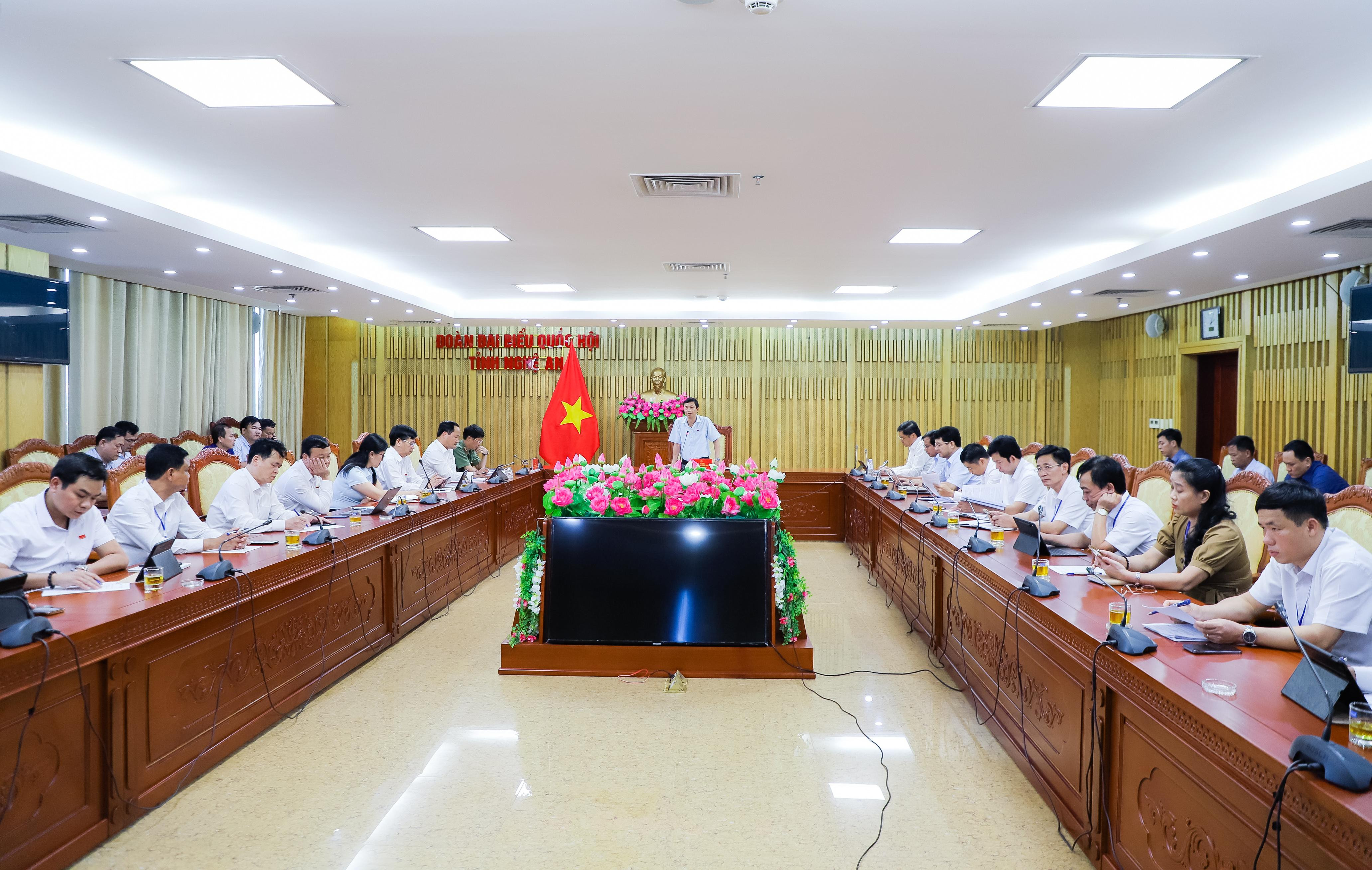 |
Overview of the discussion session in Group 4. Photo: Pham Bang |
Participating in the group discussion were: Hoang Nghia Hieu - Member of the Standing Committee of the Provincial Party Committee, Vice Chairman of the Provincial People's Committee; Nguyen Nhu Khoi - Vice Chairman of the Provincial People's Council; Pham Trong Hoang - Chief of the Provincial Party Committee Office; and leaders of various departments and agencies.
People in mountainous areas lack forest land for production.
Opening the group discussion, delegate Luc Thi Lien (from Con Cuong district) highly appreciated the leadership and management of the Provincial People's Committee in the first six months of the year. She also requested that in the coming period, the Provincial People's Committee pay attention to investing in the construction of irrigation canal systems for mountainous areas; expedite the land reclamation process from agricultural and forestry farms to hand over to the people, as progress is currently slow; and implement specific policies to support cement supply to mountainous localities for rural development.
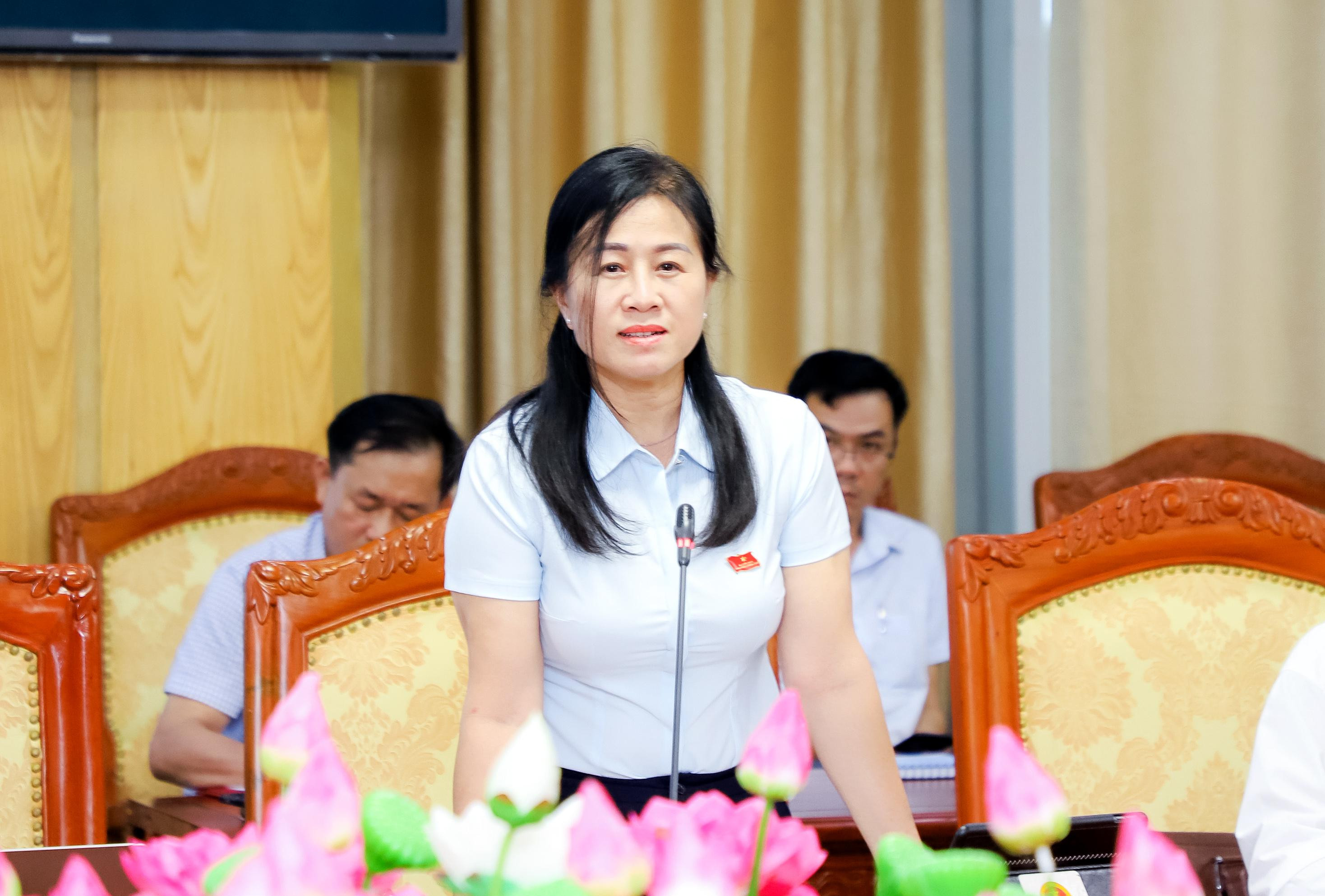 |
Delegate Luc Thi Lien (Con Cuong constituency) expresses her opinion during the group discussion. Photo: Pham Bang. |
Regarding the issue of agricultural land for ethnic minorities in mountainous areas, delegate Que Thi Tram Ngoc (from Quy Chau district) emphasized that a large portion of the mountainous population depends on the forest for their livelihood but lacks forest land for production, while land for rice cultivation is extremely scarce. The process of reclaiming land from agricultural and forestry farms to hand over to the people has been underway for many years, but many people still lack forest land for production.
In addition, Representative Ngoc also suggested that specific guidelines for the implementation of the three national target programs should be issued soon to ensure effective implementation by localities. Regarding public investment, there is still a problem of slow capital disbursement, causing difficulties for investors. Therefore, this process needs to be accelerated, preventing localities from rushing projects due to pressure to disburse public investment funds, which could affect the quality of the projects.
Concerned about the difficulties faced by people in mountainous areas, delegate Nguyen Van Hai (from Tuong Duong district) noted that creating livelihoods for these people is very challenging, with a situation of "high input costs but low output." The prices for environmental protection services and forest conservation are low, resulting in low income for people from forestry. Strict management and use of forest land is creating a conflict between forest and agricultural land.
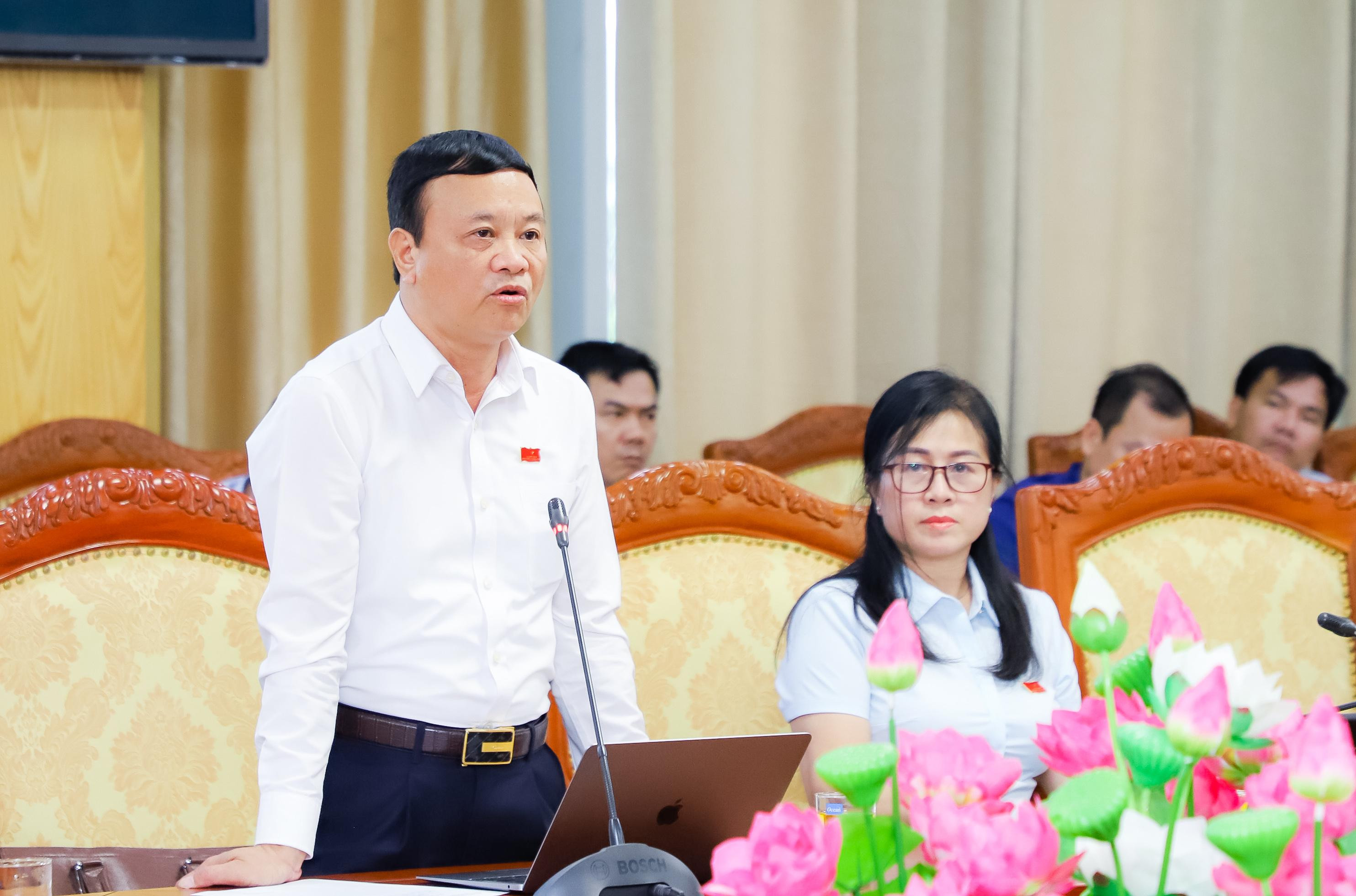 |
Delegate Nguyen Van Hai (from Tuong Duong district) expresses his opinion at the group discussion. Photo: Pham Bang. |
Representative Hai also raised concerns about the localized shortage and surplus of officials between communes and districts; the excessively long examination period has hindered the completion of the administrative apparatus, and the regulation transferring commune officials to the district level needs to be removed. The long-standing localized shortage and surplus of teachers remains unresolved, affecting the quality of education and training; timely measures are needed to address this through monitoring of stalled projects, projects behind schedule, projects using land for purposes other than intended, and projects that are not feasible, which should be decisively terminated to avoid wasting land.
Delegate Vi Van Quy (from Quy Hop district) requested the Provincial People's Committee to pay attention to determining the administrative boundaries between Yen Hop commune (Quy Hop district) and Chau Binh commune (Quy Chau district), and between Chau Ly commune (Quy Hop district) and Giai Xuan commune (Tan Ky district); to decisively direct the handling of oversized and overloaded vehicles in the province in general and in localities with mineral exploitation in particular; and to continue paying attention to upgrading Provincial Road 532 in Quy Hop district.
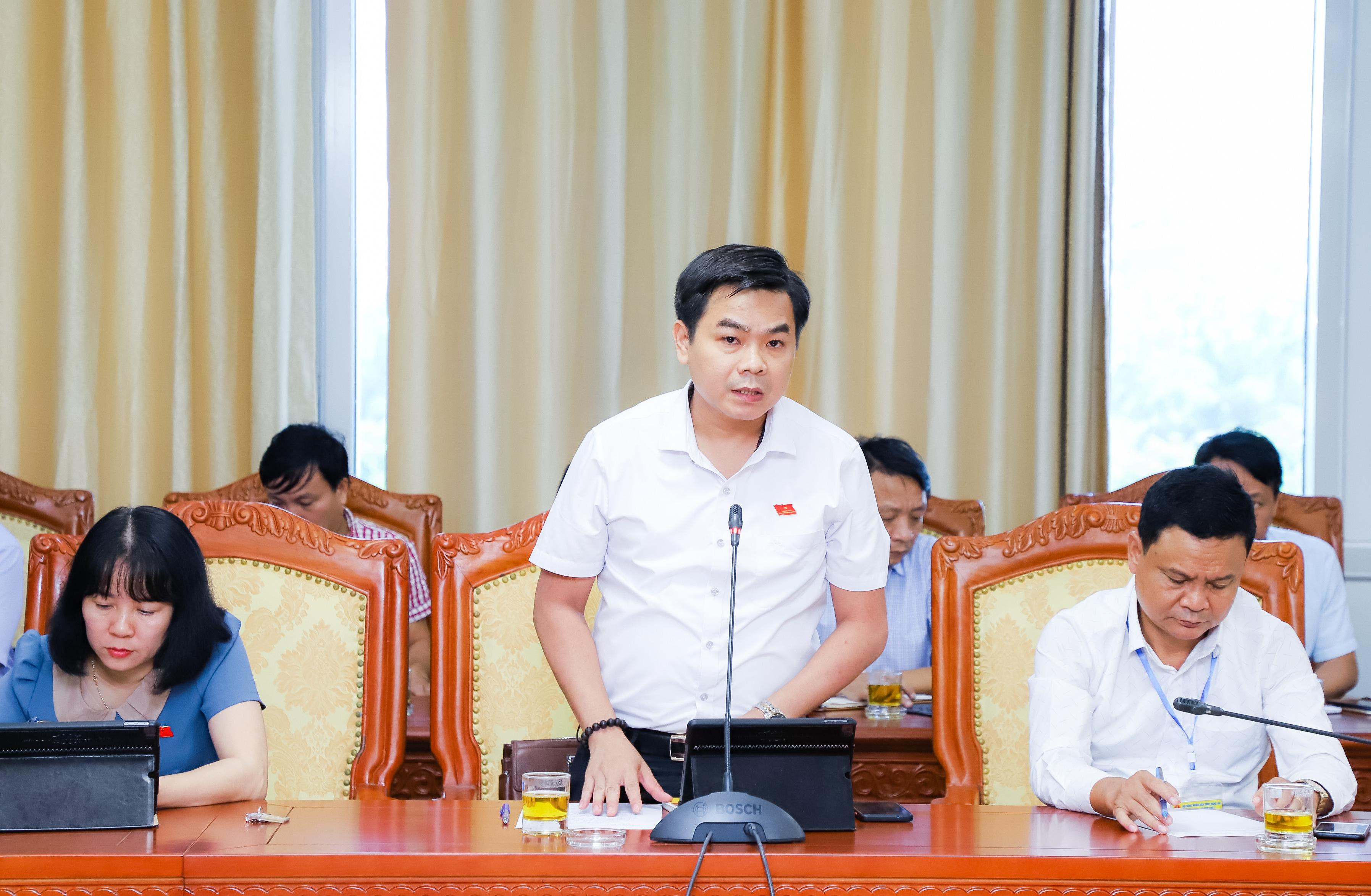 |
Delegate Vi Van Quy (from Quy Hop district) expresses his opinion at the group discussion. Photo: Pham Bang |
Delegates also raised concerns about the complex issue of oversized and overloaded vehicles in mountainous districts, affecting transportation infrastructure; the inadequate attention to clean water quality in mountainous areas; the continued prevalence of child marriage and third births; and the shortcomings and disadvantages of foreign language instruction for students in mountainous areas compared to those in lowland areas.
During the group discussion, representatives from the Department of Agriculture and Rural Development, the Provincial Ethnic Affairs Committee, the Department of Health, the Department of Finance, etc., exchanged views and clarified the opinions of the delegates.
According to Mr. Hoang Quoc Viet, Director of the Department of Natural Resources and Environment, regarding the land reclamation of agricultural and forestry farms, the Provincial People's Committee recently issued a decision to reclaim over 10,000 hectares from 11 agricultural and forestry companies to be handed over to local authorities for management.
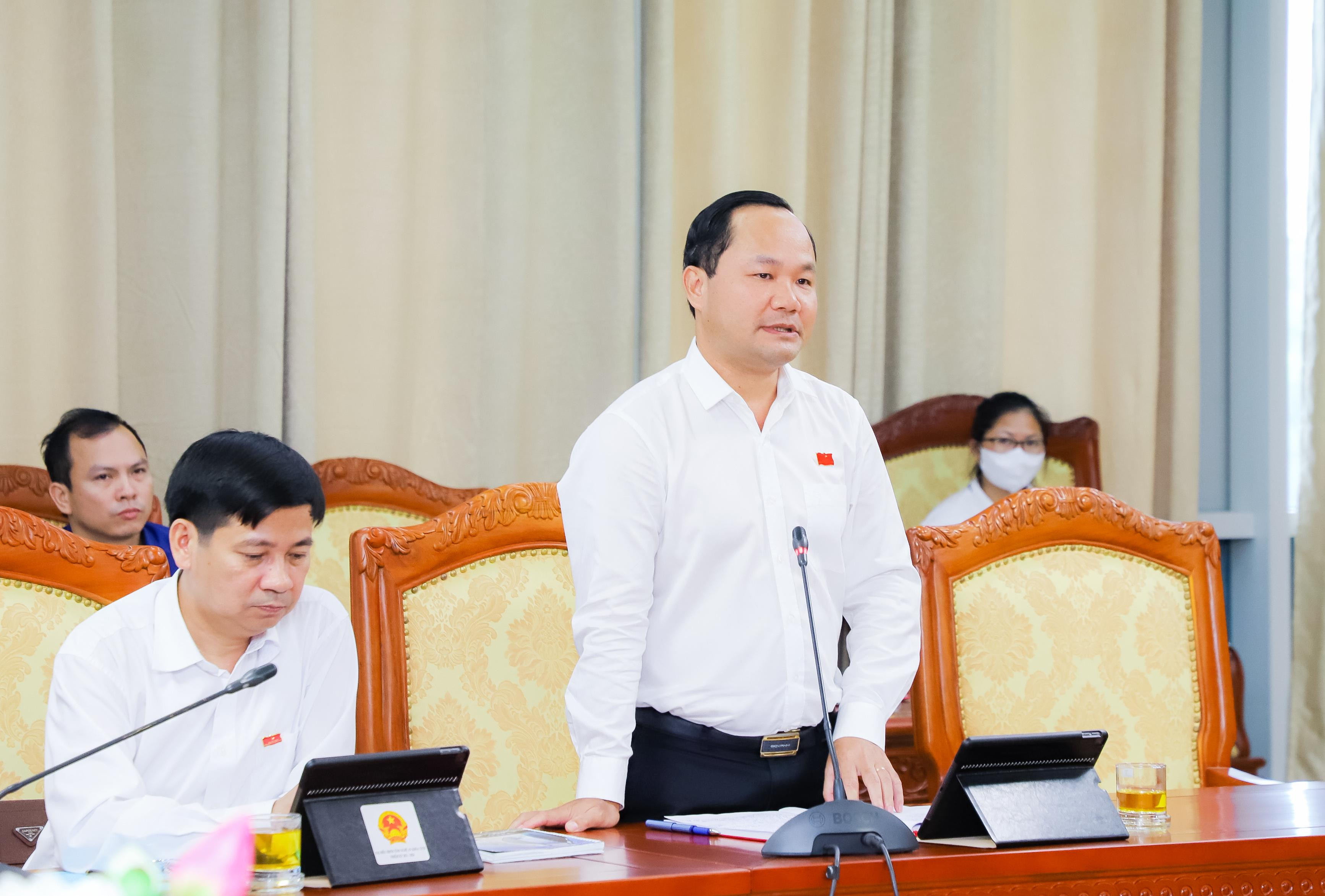 |
Mr. Hoang Quoc Viet - Director of the Department of Natural Resources and Environment, answers questions from delegates. Photo: Pham Bang |
"Currently, the Department is advising the Provincial People's Committee to allocate funds to conduct land surveying for agricultural and forestry farms. Therefore, we hope that localities will coordinate with relevant departments and agencies to continue to effectively manage agricultural and forestry land. The province's stance is that if agricultural and forestry farms use land inefficiently, they must hand over the land to the people for production," Mr. Viet said.
Regarding the delegates' opinions on the exploitation of mineral resources for public works projects, the Director of the Department of Natural Resources and Environment stated that in the past, many localities proposed delegating the authority to grant mineral exploitation licenses to district-level authorities for the purpose of maximizing resource extraction. However, according to regulations, the authority to grant mineral exploitation licenses rests with the central government and the provincial government, and cannot be delegated to the district level. The Department has reported this to the Ministry of Natural Resources and Environment for compilation and inclusion in the draft amendment to the Mineral Law.
There are still many obstacles in allocating forest land to the people.
Speaking at the group discussion session, Vice Chairman of the Provincial People's Committee Hoang Nghia Hieu said that despite facing many difficulties, with the determination and efforts of the entire political system and the consensus of the people and businesses, the socio-economic picture of the province in the first six months of the year has many bright spots.
However, there are still limitations such as high tax arrears, low disbursement rates of public investment capital, and declining crop yields... Besides objective reasons, subjective reasons include a lack of decisive and flexible leadership and management in some areas.
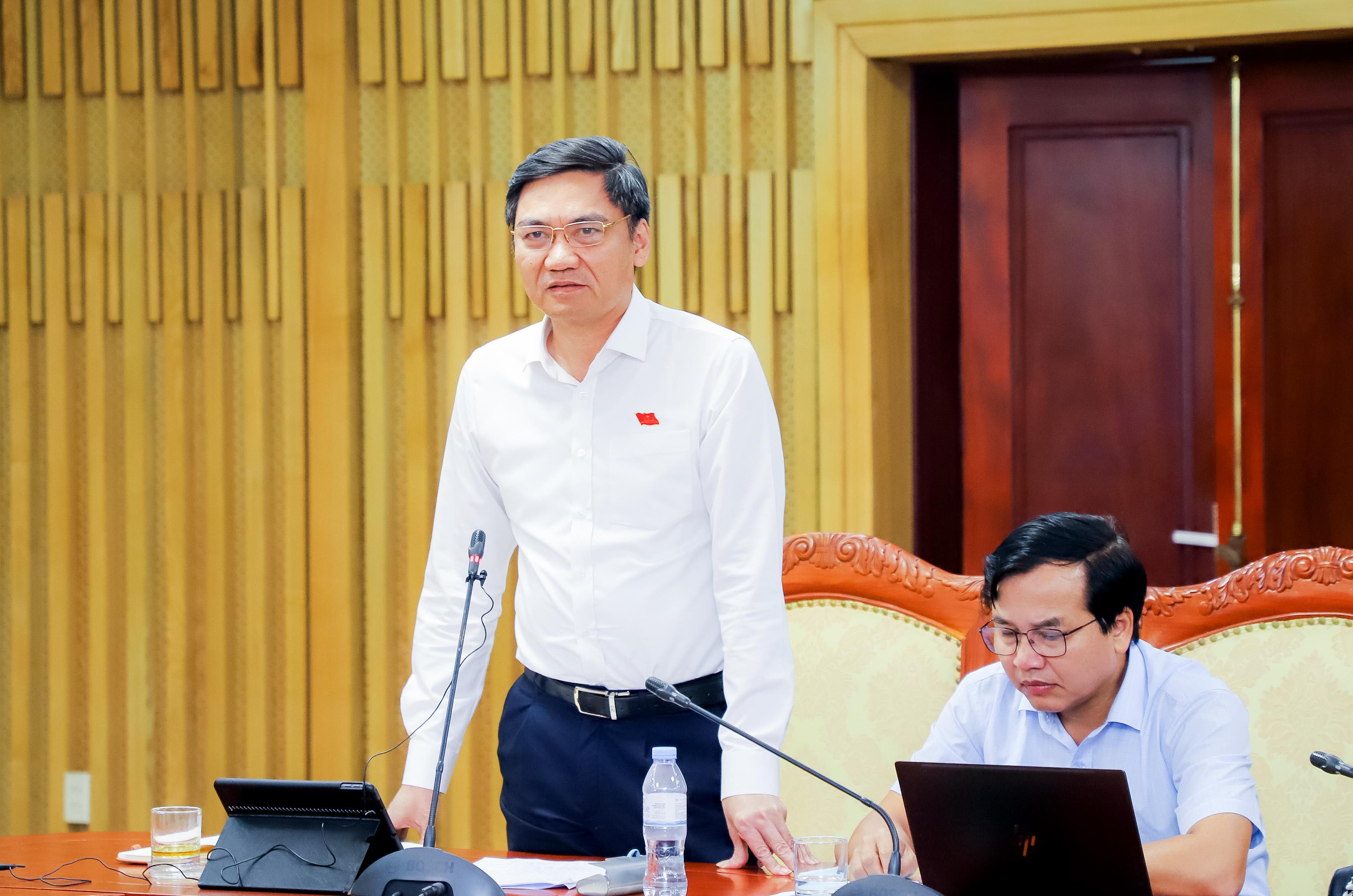 |
Vice Chairman of the Provincial People's Committee Hoang Nghia Hieu speaks at the group discussion session. Photo: Pham Bang |
Delving into the opinions of the delegates, the Vice Chairman of the Provincial People's Committee stated that the socio-economic infrastructure of mountainous areas is currently limited and challenging, requiring investment. The current issue is that localities need to effectively implement the three national target programs for the 2021-2025 period, prioritizing the selection of effective investment projects and avoiding scattered spending.
To ensure the effective implementation of these programs by localities, the Provincial People's Committee has submitted to the Provincial People's Council six resolutions on resource allocation levels and allocation quotas. In the near future, the Provincial People's Committee will direct relevant departments and agencies to provide specific guidance to localities, creating a detailed list of projects to facilitate the fastest possible implementation.
Regarding the issue of agricultural land for people in mountainous areas, Vice Chairman of the Provincial People's Committee Hoang Nghia Hieu stated that this issue has been discussed and addressed in many sessions of the Provincial People's Council, but has not yet achieved high effectiveness.
However, according to the Vice Chairman of the Provincial People's Committee, this issue needs to be viewed comprehensively. Since the issuance of Resolution 30 by the Politburo and Decree 118 by the Government, the Provincial People's Committee has issued decisions to reclaim nearly 24,000 hectares of land from agricultural and forestry farms, transferring it to local authorities. To date, localities have allocated nearly 14,000 hectares to the people; currently, 10,000 hectares remain under local government management.
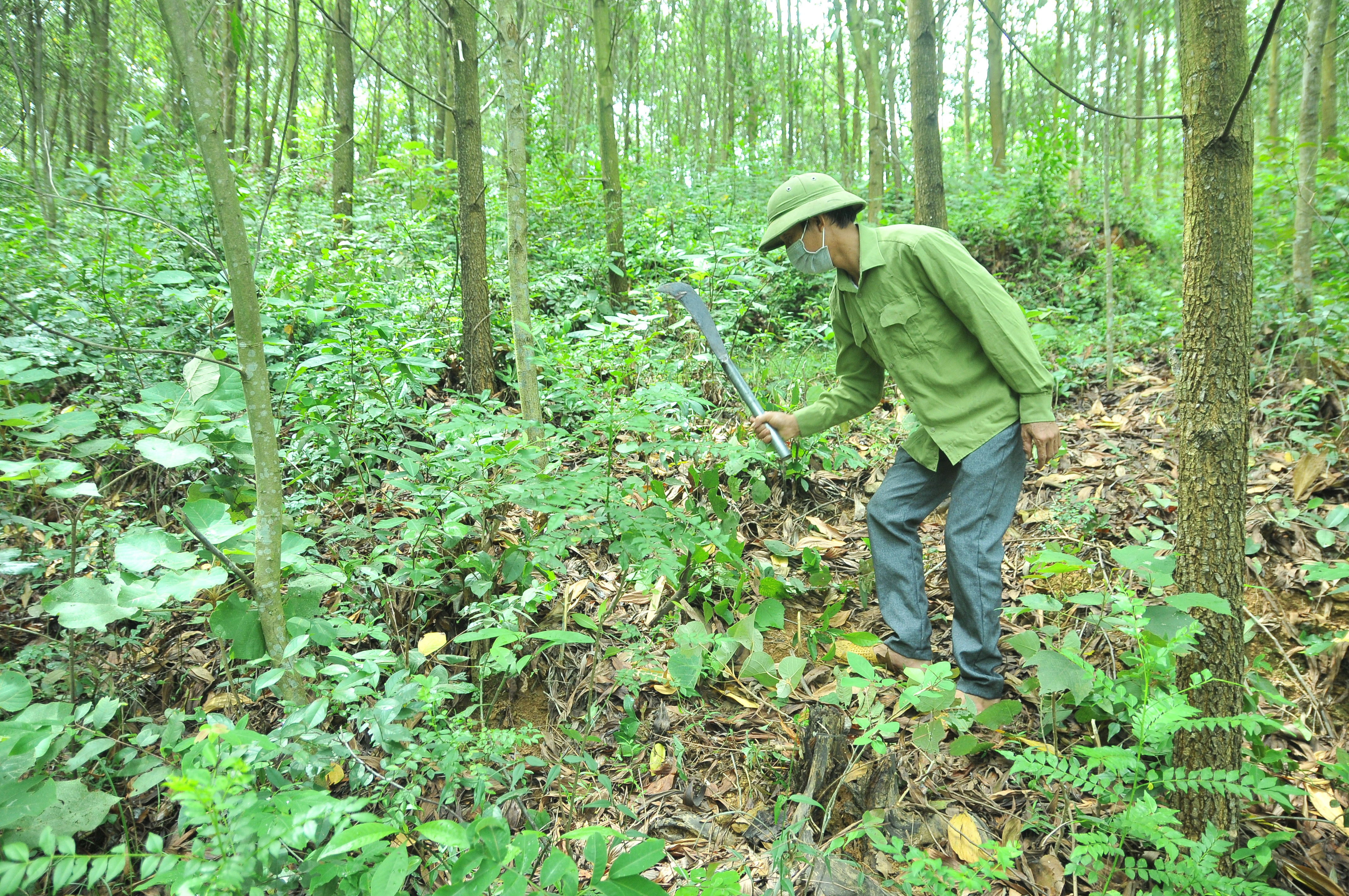 |
The work of reclaiming agricultural and forestry land and allocating it to the people received attention from the delegates. (Photo: Archival image) |
"The process of allocating land to the people is facing two obstacles. Firstly, there is a lack of resources for surveying and then dividing the land among landless households. Secondly, there are still difficulties in handling assets on the land, the root cause of which is also a lack of resources. In the near future, the province will try to allocate funds to carry out this work," said Vice Chairman of the Provincial People's Committee Hoang Nghia Hieu, adding that the province is also actively allocating forests to localities for people to manage, helping them to have sustainable livelihoods.
Agreeing with the provincial People's Council representative's opinion on the low amount of forest protection funds, Mr. Hoang Nghia Hieu stated that the province allocates approximately 110 billion VND annually to this fund and is currently requesting central government subsidies. Regarding the extraction of minerals for the construction of public works in mountainous districts, he added that regulations must be followed and the province must await changes in the law before implementation.
Vice Chairman of the Provincial People's Committee Hoang Nghia Hieu, on behalf of the Provincial People's Committee, also acknowledged some of the delegates' opinions and affirmed that the relevant departments and agencies would focus on resolving them in accordance with regulations, achieving high efficiency in practice.


